


How to read knitting charts?
Added: 17.09.2017 в 14:35 Views: 32451
How to read knitting charts?Klubokhttp://klubok.work/1/203/7048/Klubokhttps://klubok.work/css/image/top-logo-en.png

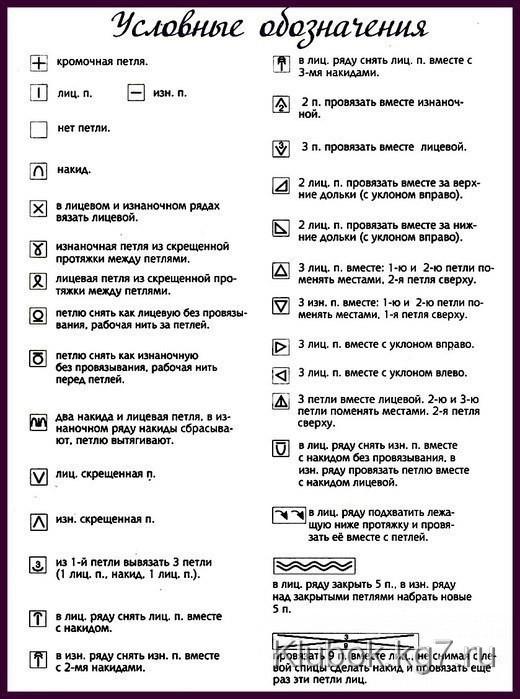
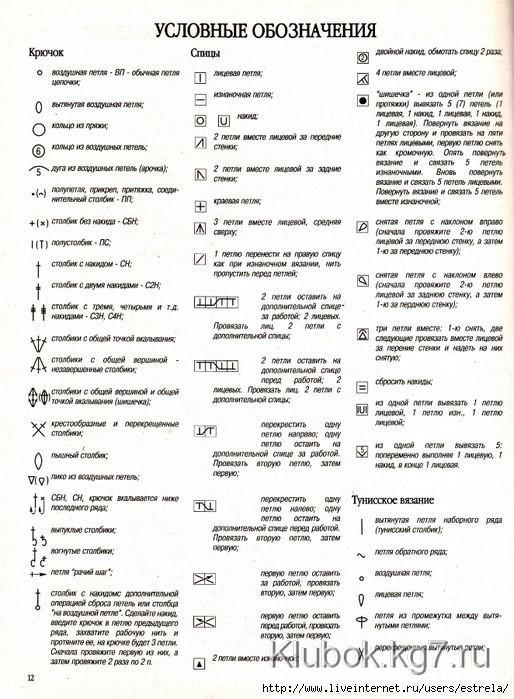
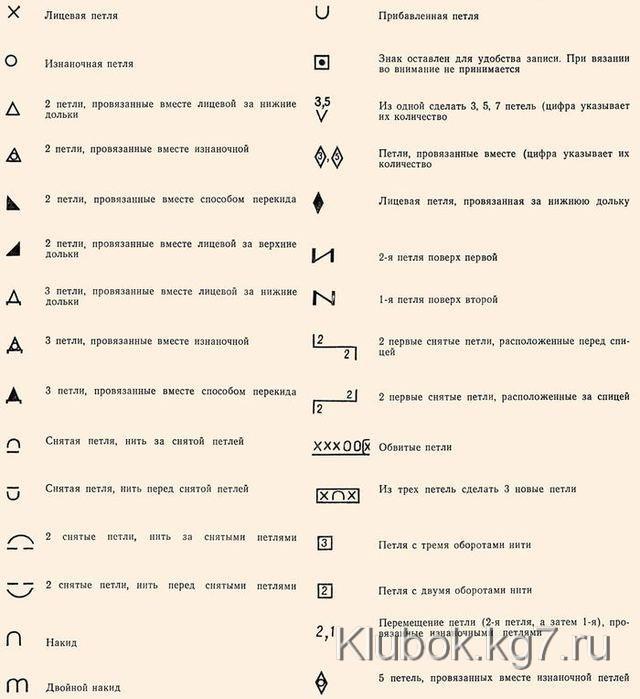
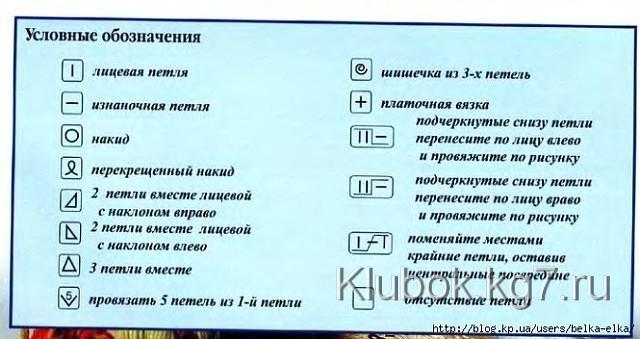
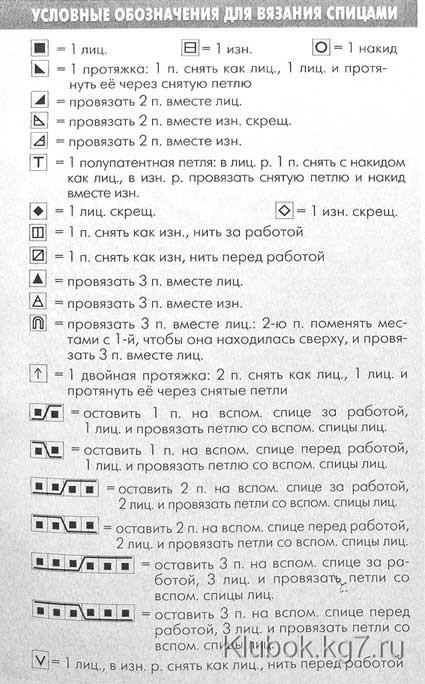
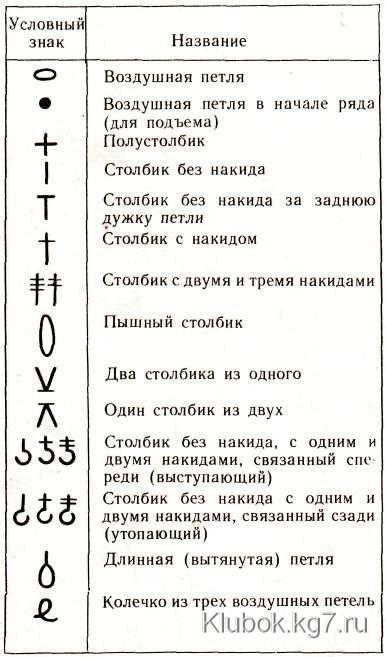
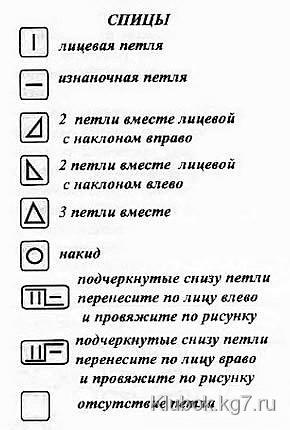
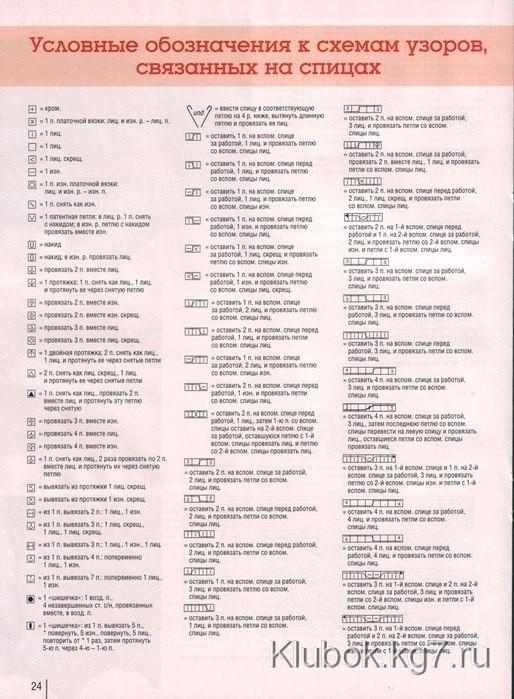
How to read knitting charts? There are two types of charts - graphic charts representing patterns and descriptive charts. The graphic representation of knitted patterns has advantages such as ease of use, clarity, and compactness. A chart drawn with symbols can be used by people who do not even know foreign languages. However, graphic representations also have disadvantages: there are no unified rules for denoting each type of stitch, so the pattern chart requires decoding of the symbols; reading charts requires skill; some knitting nuances need additional text explanations. Nowadays, pattern charts are more often created in a graphic way. This is due to the fact that modern fashionable patterns require many rows and various stitches for reproduction. Using a written record of such a pattern would take more than one page, and all the elegance would be lost, while the probability of error would increase, making it difficult to find and correct mistakes. Crochet pattern charts Let's discuss how to read crochet patterns. Each pattern always has a specific number of stitches and rows, both in width and height. The number of odd stitches on the right side of the chart shows how the right-side rows are worked. The number of even stitches on the left side of the chart indicates the wrong-side rows, worked in the opposite direction. Simple designs can be explained only by the repeat, while more complex patterns, such as lace patterns, require long and not always clear descriptions. Therefore, it is easier to use a chart for knitting complex patterns. The chart shows which stitches to knit and how to arrange them. A chart usually resembles the finished work since the symbol in the chart roughly equals one stitch in size. Charts are typically read from the bottom and move upwards. The first row is read from right to left, the next from left to right, and so on; for circular rows, you need to read from right to left. Using symbols on the charts, repeats are performed. The main types of stitches on the charts are represented by the following symbols: - oval – chain stitch, - filled oval – half double crochet, - cross – single crochet, - T – double crochet, - T with a crossed line – single crochet with one yarn over, - T with two crossed lines – double crochet with two yarn overs, - T with three crossed lines – double crochet with three yarn overs. Before starting to knit a pattern, you need to carefully examine the chart and knit a sample. Additionally, charts may have extra conditional signs and symbols, for example: a filled arrow indicates the start of work when knitting in the round, an unfilled arrow indicates the joining of fragments, and a curved arrow shows the direction of work. In circular knitting, the first rows are described, with their beginning indicated on the chart by a number. When performing circular knitting, the chart shows only a few repeating fragments in the shape of a wedge. The description usually notes the number of repeats of these wedges. Knitting pattern charts Let's look at how to learn to read knitting charts. Knitters often have to get acquainted with a new pattern in several ways: from a detailed description of all the stitches worked and in the form of a chart. When encountering a chart for the first time, you need to know how to read knitting charts. In the chart, stitches are read in the right-side rows, starting from the right and moving to the left, and from left to right in the wrong-side rows. Sometimes the chart indicates only the right-side rows, and there is always an explanation that the wrong-side rows are worked just as the stitches already on the needles, meaning where there is a knit stitch, you knit it, and where there is a purl stitch, you purl it. Charts use conditional symbols for various stitches. Here are some of them: - cross – this is a knit stitch, - diamond or dot – this is a purl stitch, - a circle indicates a yarn over, - a filled triangle indicates two stitches worked as a purl stitch - an empty right-angled triangle indicates two stitches worked as a knit stitch, - an empty triangle with a right angle on the left indicates when one stitch is slipped, and the next is knitted, pulling the formed stitch over the slipped one, - an empty square indicates stitches worked in garter stitch.