



Field Sweater
Added: 30.07.2025 в 15:16 Views: 7879
Field SweaterKlubokhttp://klubok.work/1/3/8962/Klubokhttps://klubok.work/css/image/top-logo-en.png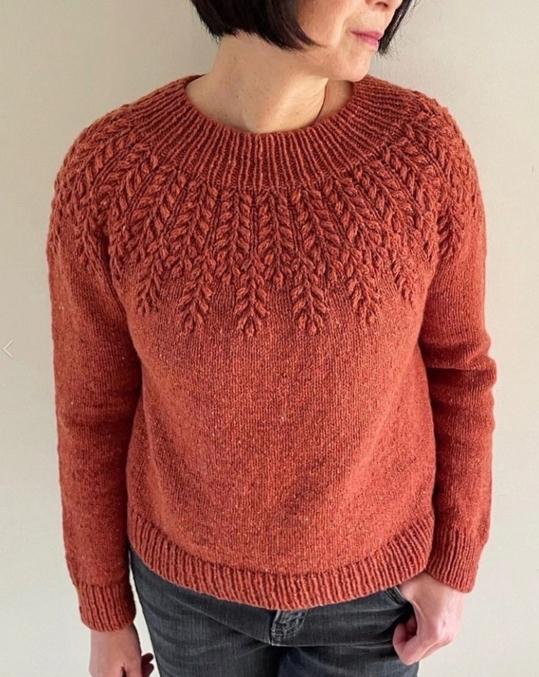
Field Sweater
(Solid Color)
A soft and cozy sweater with a beautiful pattern of ears near the yoke. Knitted from top to bottom, in the round, with no seams. Perfect for both pants and skirts. Comfortable for any season.
Sizes
1 (2) 3 (4) 5 (6) 7 (8) 9 (Russian sizes 40-60)
Width at the back and front: 94 (100) 106 (112) 120 (126) 132 (138) 142 cm.
Length: 32 cm
Sleeve length from the armhole: 44 cm
Total length: 56 (57) 58 (59) 60 (61) 62 (63) 64 cm
Yarn
Isager Eco Baby (68% baby alpaca + 32% organic cotton, 150 m/50 g.) 350 (350) 400 (400) 450 (450) 500 (500) 550 g. of light gray color.
Needles
Circular needles 3.5 mm and 4.0 mm (with a comfortable length cable)
1 auxiliary needle
Gauge
20 sts x 28 rows = 10 x 10 cm in stockinette stitch, on 4 mm needles.
Note!
Increases for ease of fit
Recommended increases from 0 to 15 cm for ease of fit.
Keep in mind that the final sizes of garments made from this yarn may increase, i.e., they stretch a bit when worn.
The sweater is knitted in the round without seams, starting from the top. To achieve good results, follow the specified gauge.
Patterns:
Stockinette Stitch
Ribbing 1*1 = 1 knit stitch, 1 purl stitch “grain”
Knit 3 stitches from 1 stitch: = knit stitch through the front loop, yarn over, knit stitch, transfer the new stitches to the right needle. These 3 stitches form a grain ear “Big Grain”
Knit 5 stitches from 1 stitch: = knit stitch through the front loop, yarn over, knit stitch, yarn over, knit. Transfer the new stitches to the right needle. These 5 stitches form an ear of grains.
Short Rows
The author recommends knitting German short rows for the neck. You can knit them in any convenient way.
Abbreviations
k = knit stitch
p = purl stitch
st = stitch
row = row
M = marker
RMM = row marker
PM = place marker
Description
Neckline
Cast on 96 (100) 104 (108) 108 (112) 112 (112) 112 stitches using a stretchy method with 3.5 mm needles.
Join in the round. Make sure the knitting is not twisted!
Knit ribbing 1*1; Place Row Marker (RMM).
Knit 17 more rows. A total of 18 rounds of ribbing. If desired, the total number of ribbing rows can be reduced to 12.
Change needles to 4 mm
For sizes 5 (6) 7 (8) 9: increase the number of stitches to 112 (116) 120 (124) 128.
For this, in the next row knit
For sizes 5 (6) 7 (9): * 27 (28) 14 (7) knit, raise and knit 1 stitch from the yarn over through the back loop *, repeat from ** another 3 (3) 7 (15) times.
For size 8: knit 11 knit, raise and knit 1 stitch from the yarn over through the back loop, * 9 knit, raise and knit 1 stitch from the yarn over through the back loop *, repeat from ** another 9 times, 11 knit, raise and knit 1 stitch from the yarn over through the back loop.
Knit 1 row of knit stitches.
Increase Row.
In the next round, increase for all sizes:
*2 knit, yarn over, 2 knit*, repeat from * * to the end of the row
A total of 120 (125) 130 (135) 140 (145) 150 (155) 160 stitches on the needles.
Yoke with Pattern
The pattern starts with 5 stitches and is repeated 24 (25) 26 (27) 28 (29) 30 (31) 32 times in the row (the execution order is described above). The number of stitches in the rapport is indicated in parentheses.
The pattern consists of a total of 43 rounds.
Note! Be sure to mark the row where you stopped, if you need to set the knitting aside. Since in this pattern it is difficult to count the rows. It would be very disappointing to frog all the knitting back to the neckline if you make a mistake.
So, let's get started!
We plant the first "grain" and grow our ears, row by row.
Row 1:(5 st) 1 knit, small grain, knit the yarn over knit through the back loop, small grain, 1 knit.
Row 2: (5 st) 1 knit, slip the stitches of the “grain” unknit (working yarn behind), 1 knit through the back loop, slip the stitches of the “grain” unknit (working yarn behind), 1 knit.
Row 3: (5 st) leave knit stitches on the auxiliary needle behind the work, knit 3 stitches of the “grain” together knit, knit the knit stitch from the auxiliary needle, slip the next stitch unknit (working yarn behind), leave the stitches of the “grain” on the auxiliary needle in front of the work, knit 1 knit stitch, knit 3 stitches of the “grain” together knit through the back loop.
Row 4: (5 st) 2 knit, 1 knit through the back loop, 2 knit.
Row 5: (5 st) yarn over, 1 knit, “grain”, slip the next stitch unknit (working yarn behind), “grain”, 1 knit.
On the needles 144 (150) 156 (162) 168 (174) 180 (186) 192 st.
Row 6: (6 st) knit the yarn over as knit through the back loop, 1 knit, slip the stitches of the “grain” unknit (working yarn behind), 1 knit through the back loop, slip the stitches of the “grain” unknit (working yarn behind), 1 knit.
Row 7:(6 st) 1 knit, leave knit stitches on the auxiliary needle behind the work, knit 3 stitches of the “grain” together knit, knit the knit stitch from the auxiliary needle, slip the next stitch unknit (working yarn behind), leave the stitches of the “grain” on the auxiliary needle in front of the work, knit 1 knit stitch, knit 3 stitches of the “grain” together knit through the back loop.
Row 8: (6 st) 3 knit, 1 knit through the back loop, 2 knit.
Row 9: (6 st) 2 knit, knit 1 stitch from the yarn over through the back loop, “grain”, slip the next stitch unknit (working yarn behind), “grain”, knit 1 stitch from the yarn over through the back loop, 1 knit.
On the needles 192 (200) 208 (216) 224 (232) 240 (248) 256 st.
Row 10: (8 st) 3 knit, slip the stitches of the “grain” unknit (working yarn behind), 1 knit through the back loop, slip the stitches of the “grain” unknit (working yarn behind), 2 knit.
Row 11: (8 st) 1 knit, leave 2 knit stitches on the auxiliary needle behind the work, knit 3 stitches of the “grain” together knit, knit 2 knit stitches from the auxiliary needle, slip the next stitch unknit (working yarn behind), leave the stitches of the “grain” on the auxiliary needle in front of the work, knit 2 stitches from the auxiliary needle knit, knit 3 stitches of the “grain” together knit through the back loop.
Row 12: (8 st) 4 knit, 1 knit through the back loop, 3 knit.
Row 13: (8 st) 3 knit, “grain”, slip the next stitch unknit (working yarn behind), “grain”, 2 knit.
Row 14: (8 st) 3 knit, slip the stitches of the “grain” unknit (working yarn behind), 1 knit through the back loop, slip the stitches of the “grain” unknit (working yarn behind), 2 knit.
Row 15: (8 st) 1 knit, leave 2 knit stitches on the auxiliary needle behind the work, knit 3 stitches of the “grain” together knit, knit 2 knit stitches from the auxiliary needle, slip the next stitch unknit (working yarn behind), leave the stitches of the “grain” on the auxiliary needle in front of the work, knit 2 knit stitches, knit 3 stitches of the “grain” together knit through the back loop.
Row 16: (8 st) 4 knit, 1 knit through the back loop, 3 knit.
Row 17: (8 st) 3 knit, “grain”, slip the next stitch unknit (working yarn behind), “grain”, 2 knit.
Row 18: (8 st) 3 knit, slip the stitches of the “grain” unknit (working yarn behind), 1 knit through the back loop, slip the stitches of the “grain” unknit (working yarn behind), 2 knit.
Row 19: (8 st) 1 knit, leave 2 knit stitches on the auxiliary needle behind the work, knit 3 stitches of the “grain” together knit, knit 2 knit stitches from the auxiliary needle, slip the next stitch unknit (working yarn behind), leave the stitches of the “grain” on the auxiliary needle in front of the work, knit 2 knit stitches, knit 3 stitches of the “grain” together knit through the back loop.
Row 20: (8 st) 4 knit, 1 knit through the back loop, 3 knit.
Row 21: (8 st) slip 1 stitch unknit, raise the left leg of the stitch below the slipped stitch and knit it through the back loop, 2 knit, “grain”, slip the next stitch unknit (working yarn behind), “grain”, 2 knit.
On the needles 216 (225) 234 (243) 252 (261) 270 (279) 288 st.
Row 22: (9 st) 2 knit through the back loop, 2 knit, slip the stitches of the “grain” unknit (working yarn behind), 1 knit through the back loop, slip the stitches of the “grain” unknit (working yarn behind), 2 knit.
Row 23: (9 st) make 1 “grain” in the first 2 stitches, 1 knit, leave 1 knit stitch on the auxiliary needle behind the work, knit 3 stitches of the “grain” together knit, knit 1 knit stitch from the auxiliary needle, slip the next stitch unknit (working yarn behind), leave the stitches of the “grain” on the auxiliary needle in front of the work, knit 1 knit stitch from the auxiliary needle knit, knit 3 stitches of the “grain” together knit through the back loop, 1 knit.
Row 24: (9 st) * slip the stitches of the “grain” unknit (working yarn behind), knit 1 stitch from the yarn over through the back loop, slip the stitches of the “grain” unknit (working yarn behind), 3 knit, 1 knit through the back loop, 3 knit.* repeat from ** to the last 9 stitches in the row: slip the stitches of the “grain” unknit (working yarn behind), knit 1 stitch from the yarn over through the back loop, slip the stitches of the “grain” unknit (working yarn behind), 3 knit, 1 knit through the back loop, 2 knit, slip the next stitch unknit, remove the marker, transfer the slipped stitch back to the left needle, place a marker (this will be the new start of the row)
On the needles 240 (250) 260 (270) 280 (290) 300 (310) 320 st.
Row 25: (10 st) leave 1 stitch on the auxiliary needle behind the work, knit 3 stitches of the “grain” together knit, knit 1 knit stitch from the auxiliary needle, slip the next stitch unknit (working yarn behind), leave the stitches of the “grain” on the auxiliary needle in front of the work, knit 1 knit stitch, knit 3 stitches of the “grain” together knit through the back loop, 1 knit, “grain”, slip the next stitch unknit (working yarn behind), “grain”, 1 knit.
Row 26: (10 st) 2 knit, 1 knit through the back loop, 3 knit, slip “grain” unknit (working yarn behind), “grain”, 1 knit through the back loop, slip “grain” unknit (working yarn behind), 1 knit.
Row 27: (10 st) 1 knit, “grain”, slip the next stitch unknit (working yarn behind), “grain”, 1 knit, leave the next stitch behind the work, knit 3 stitches of the “grain” together knit, knit 1 knit stitch from the auxiliary needle “big grain”, leave the stitches of the “grain” on the auxiliary needle in front of the work, knit 1 knit stitch, knit 3 stitches of the “grain” together knit through the back loop.
Row 28: (10 st) 1 knit, slip the stitches of the “grain” unknit (working yarn behind), 1 knit through the back loop, slip the stitches of the “grain” unknit (working yarn behind), 3 knit, slip the stitches of the “big grain” unknit (working yarn behind), 2 knit.
Row 29: (10 st) leave 1 stitch on the auxiliary needle behind the work, knit 3 stitches of the “grain” together knit, knit 1 knit stitch from the auxiliary needle, slip the next stitch unknit (working yarn behind), leave the stitches of the “grain” on the auxiliary needle in front of the work, knit 1 knit stitch, knit 3 stitches of the “grain” together knit through the back loop, 2 knit, knit 5 stitches of the “big grain” together knit through the back loop, 2 knit.
Row 30: (10 st) 2 knit, 1 knit through the back loop, 4 knit, 1 knit through the back loop, 2 knit.
Row 31: (10 st) 1 knit, “grain”, slip the next stitch unknit (working yarn behind), “grain”, 6 knit.
Row 32: (10 st) remove the marker, transfer the first stitch from the right needle to the left, place the marker on the right needle, return the transferred stitch to the right needle, 1 knit, slip the stitches of the “grain” unknit (working yarn behind), 1 knit through the back loop, slip the stitches of the “grain” unknit (working yarn behind), 3 knit, knit 1 stitch from the yarn over through the back loop, 2 knit, *2 knit, slip the stitches of the “grain” unknit (working yarn behind), 1 knit through the back loop, slip the stitches of the “grain” unknit (working yarn behind), 3 knit, knit 1 stitch from the yarn over through the back loop, 2 knit *, repeat from ** to the end of the row.
On the needles 264 (275) 286 (297) 308 (319) 330 (341) 352 st.
Row 33: (11 st) leave 2 stitches on the auxiliary needle behind the work, knit 3 stitches of the “grain” together knit, knit 2 knit stitches from the auxiliary needle, slip the next stitch unknit (working yarn behind), leave the stitches of the “grain” on the auxiliary needle in front of the work, knit 2 knit stitches, knit 3 stitches of the “grain” together knit through the back loop, 4 knit.
Row 34: (11 st) 3 knit, 1 knit through the back loop, 7 knit.
Row 35: (11 st) 2 knit, “grain”, slip the next stitch unknit (working yarn behind), “grain”, 6 knit.
Row 36: (11 st) 2 knit, slip “grain” unknit (working yarn behind), 1 knit through the back loop, slip “grain” unknit (working yarn behind), 6 knit.
Row 37: (11 st) leave 2 stitches on the auxiliary needle behind the work, knit 3 stitches of the “grain” together knit, knit 2 knit stitches from the auxiliary needle, slip the next stitch unknit (working yarn behind), leave the stitches of the “grain” on the auxiliary needle in front of the work, knit 2 knit stitches, knit 3 stitches of the “grain” together knit through the back loop, 4 knit.
Row 38: (11 st) 3 knit, 1 knit through the back loop, 7 knit, knit 1 stitch from the yarn over through the back loop.
On the needles 288 (300) 312 (324) 336 (348) 360 (372) 384 st.
Row 39: (12 st) 2 knit, “grain”, slip the next stitch unknit (working yarn behind), “grain”, 7 knit.
Row 40: (12 st) 2 knit, slip “grain” unknit (working yarn behind), 1 knit through the back loop, slip “grain” unknit (working yarn behind), 7 knit.
Row 41: (12 st) 1 knit, leave 1 stitch on the auxiliary needle behind the work, knit 3 stitches of the “grain” together knit, knit 1 knit stitch from the auxiliary needle, “big grain”, leave the stitches of the “grain” on the auxiliary needle in front of the work, knit 1 knit stitch, knit 3 stitches of the “grain” together knit through the back loop, 6 knit.
Row 42: (12 st) 3 knit, slip “big grain” unknit (working yarn behind), 8 knit.
Row 43: (12 st) 3 knit, knit 5 stitches of the “big grain” together knit through the back loop, 8 knit.
On the needles 288 (300) 312 (324) 336 (348) 360 (372) 384 st.
Knit 1 row of knit stitches.
Neckline
Continue knitting in stockinette stitch, while working short rows to shape the neck;
Knit 56 (59) 62 (65) 68 (71) 74 (77) 80 knit, turn, knit these stitches purl and another 56 (59) 62 (65) 68 (71) 74 (77) 80 stitches after M, turn, * knit all these stitches knit until the break (double stitch) and another 6 stitches after the last turn, turn, knit all these stitches purl until the break (double stitch) and another 6 stitches after the last turn, turn * repeat from * * another 2 times. Knit knit stitches until M.
Knit knit stitches in the round for 10 (12) 14 (18) 22 (24) 26 (26) rows.
Dividing for the body and sleeves
Knit 44 (46) 48 (51) 54 (56) 59 (61) 63 knit, transfer 56 (58) 60 (60) 60 (62) 62 (64) 66 to a waste yarn, cast on 6 (8) 10 (10) 12 (14) 14 (16) 16 stitches using the long tail cast on method (for underarms), knit 88 (92) 96 (102) 108 (112) 118 (122) 126 stitches, transfer 56 (58) 60 (60) 60 (62) 62 (64) 66 stitches to a waste yarn, cast on 6 (8) 10 (10) 12 (14) 14 (16) 16 stitches for underarms, knit 44 (46) 48 (51) 54 (56) 59 (61) 63 knit.
Cut the yarn, remove the marker, transfer 44 (46) 48 (51) 54 (56) 59 (61) 63 stitches from the right needle to the left, place the marker (this will be the new start of the round).
On the needles 188 (200) 212 (224) 240 (252) 264 (276) 284 st.
Front and Back
Join the yarn and knit knit in the round until the length of the garment reaches 26 cm from the underarm level.
Knit 1*1 ribbing with 4 mm needles. Knit 6 cm and bind off in any convenient elastic method.
Sleeves
Transfer the stitches of the sleeve from the waste yarn to 4 mm needles. Pick up 8 (10) 12 (12) 14 (16) 16 (18) 18 stitches (one stitch on each side of the underarm and the stitches from the underarm)
On the needles 64 (68) 72 (72) 74 (78) 78 (82) 84 st.
Knit knit until 1 stitch before the picked up stitches, 2 together knit with a left slant, 3 (4) 5 (5) 6 (7) 7 (8) 8 knit, place marker, 3 (4) 5 (5) 6 (7) 7 (8) 8 knit, 2 together knit, knit until the marker.
On the needles 62 (66) 70 (70) 72 (76) 76 (80) 82 st.
Knit 2 rows knit.
Decrease Row: 2 knit, 2 together knit, knit until 4 stitches before the marker, 2 together knit with a left slant, 2 knit.
On the needles 60 (64) 68 (68) 70 (74) 74 (78) 80 st.
Make decreases as described above every 13th (11th) 9th (10th) 9th (9th) 9th (8th) 7 rows until 46 (48) 48 (50) 50 (54) 54 (56) 56 stitches remain on the needles.
Continue knitting until the sleeve reaches 38 cm from the underarm level. Knit 1*1 ribbing with 4 mm needles. Knit 6 cm until the sleeve length is 44 cm and bind off in any convenient elastic method.
Knit the second sleeve similarly.
Finishing
Weave in the ends and perform blocking.

Polushko
(Colorful)
If you want a colorful yoke, follow the description below.
Yarn
A: Eco Baby by Isager (68% baby alpaca + 32% organic cotton, 150 m/50 g)
Yarn required for long-sleeve pullover: 350 (350) 400 (400) 450 (450) 500 (500) 550 g. color 0
Yarn required for short-sleeve pullover: 300 (300) 350 (350) 400 (400) 450 (450) 500 g. color 0
B: Willow Lace Mohair from Treehouse Knits (72% mohair, 28% silk, 420 m/50 g)
Yarn required for pullover: 50 g. Color ‘Coco’s Bow’
Description
Cast on 96 (100) 104 (108) 108 (112) 112 (112) 112 stitches on 3.5 mm needles using one strand of each yarn (A and B).
Knit according to the description of the solid color sweater until row 28, using one strand of each color.
Then in the next 15 rows use both colors A and B to knit “grains”, while the stitches between them are knitted only with color A, with color B yarn carried along the purl side.
In rows 29 - 43 the stitches knitted with both colors are highlighted in bold red color.
Row 29: (10 st) slip 1 stitch on an auxiliary needle behind the work, knit 3 stitches of the “grain” together knit, 1 knit from the auxiliary needle, slip the next stitch unknit (working yarn behind), place the stitches of the “grain” on the auxiliary needle in front of the work, 1 knit. knit 3 stitches of the “grain” together knit through the back loop, 2 knit, knit 5 stitches of the “big grain” together knit through the back loop, 2 knit.
Row 30: (10 st) 2 knit, 1 knit through the back loop, 4 knit, 1 knit through the back loop, 2 knit.
Row 31: (10 st) 1 knit, “grain”, slip the next stitch unknit (working yarn behind), “grain”, 6 knit.
Row 32: (10 st) remove the marker, transfer the first stitch from the right needle to the left, place the marker on the right needle, return the transferred stitch.
On the right needle, 1 knit, slip the stitches of the “grain” unknit (working yarn behind), 1 knit through the back loop, slip the stitches of the “grain” unknit (working yarn behind), 3 knit, raise the stitch from the yarn over and knit it through the back loop, 2 knit, *2 knit, “grain” unknit (working yarn behind), 1 knit through the back loop, slip the stitches of the “grain” unknit (working yarn behind), 3 knit, raise the stitch from the yarn over and knit it through the back loop, 2 knit.*, repeat * * to the end of the row.
On the needles 264 (275) 286 (297) 308 (319) 330 (341) 352 st.
Row 33: (11 st) slip 2 stitches on an auxiliary needle behind the work, knit 3 stitches of the “grain” together knit, 2 knit from the auxiliary needle, slip the next stitch unknit (working yarn behind), place the stitches of the “grain” on the auxiliary needle in front of the work, 2 knit. knit 3 stitches of the “grain” together knit through the back loop, 4 knit.
Row 34: (11 st) 3 knit, 1 knit through the back loop, 7 knit.
Row 35: (11 st.) 2 knit, “grain”, slip the next stitch unknit (working yarn behind), “grain”, 6 knit.
Row 36: (11 st) 2 knit, slip “grain” unknit (working yarn behind), 1 knit through the back loop, slip “grain” unknit (working yarn behind), 6 knit.
Row 37: (11 st.) leave 2 stitches on the auxiliary needle behind the work., knit 3 stitches of the “grain” together knit, knit 2 knit stitches from the auxiliary needle, slip the next stitch unknit (working yarn behind), leave the stitches of the “grain” on the auxiliary needle in front of the work., knit 2 knit stitches, knit 3 stitches of the “grain” together knit through the back loop, 4 knit.
Row 38: (11 st) 3 knit, 1 knit through the back loop, 7 knit, knit 1 stitch from the yarn over through the back loop.
On the needles 288 (300) 312 (324) 336 (348) 360 (372) 384 st.
Row 39: (12 st) 2 knit, “grain”, slip the next stitch unknit (working yarn behind), “grain”, 7 knit.
Row 40: (12 st) 2 knit, slip “grain” unknit (working yarn behind), 1 knit through the back loop, slip “grain” unknit (working yarn behind), 7 knit.
Row 41: (12 st) 1 knit, leave 1 stitch on the auxiliary needle behind the work., knit 3 stitches of the “grain” together knit, knit 1 knit stitch from the auxiliary needle, “big grain”, leave the stitches of the “grain” on the auxiliary needle in front of the work., knit 1 knit stitch, knit 3 stitches of the “grain” together knit through the back loop, 6 knit,
Row 42: (12 st) 3 knit, slip “big grain” unknit (working yarn behind), 8 knit.
Row 43: (12 st) 3 knit, knit 5 stitches of the “big grain” together knit through the back loop, 8 knit.
Cut yarn B and continue knitting with yarn A. Then follow the description of the solid color pullover.
Sleeves
If you are knitting short sleeves, then do not knit the rows with decreases. Knit the sleeve to a height of 10 cm from the underarm level.
Change needles to 3.5 mm and knit 1*1 ribbing. Knit 4 cm until the sleeve length reaches 14 cm and bind off in any convenient elastic method.
Knit the second sleeve similarly.
Finishing
Weave in the ends and perform blocking.