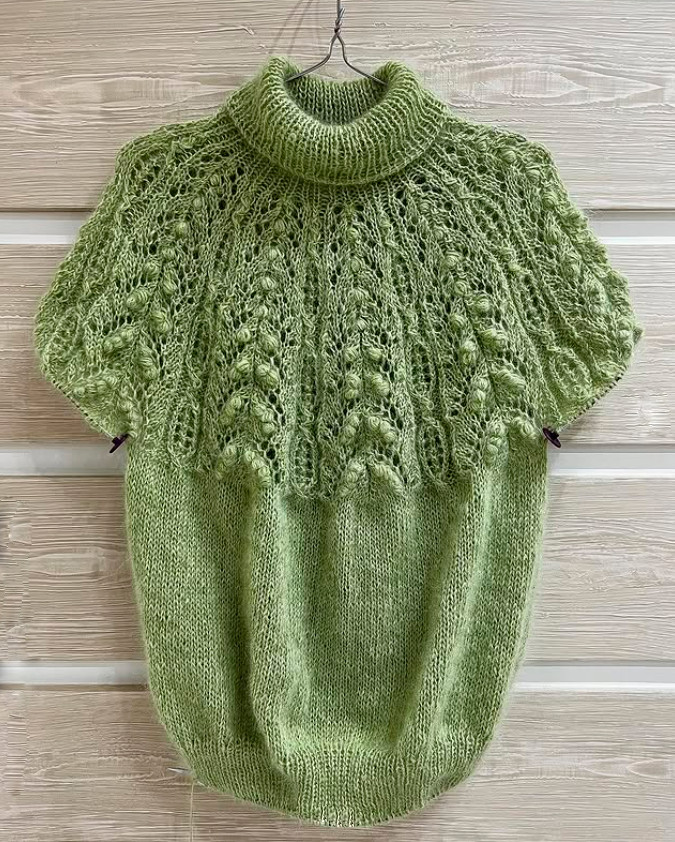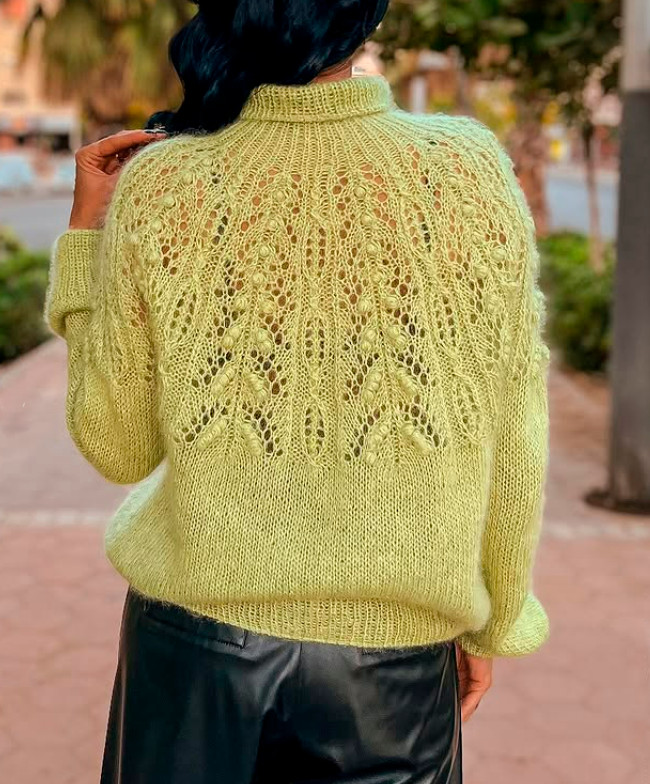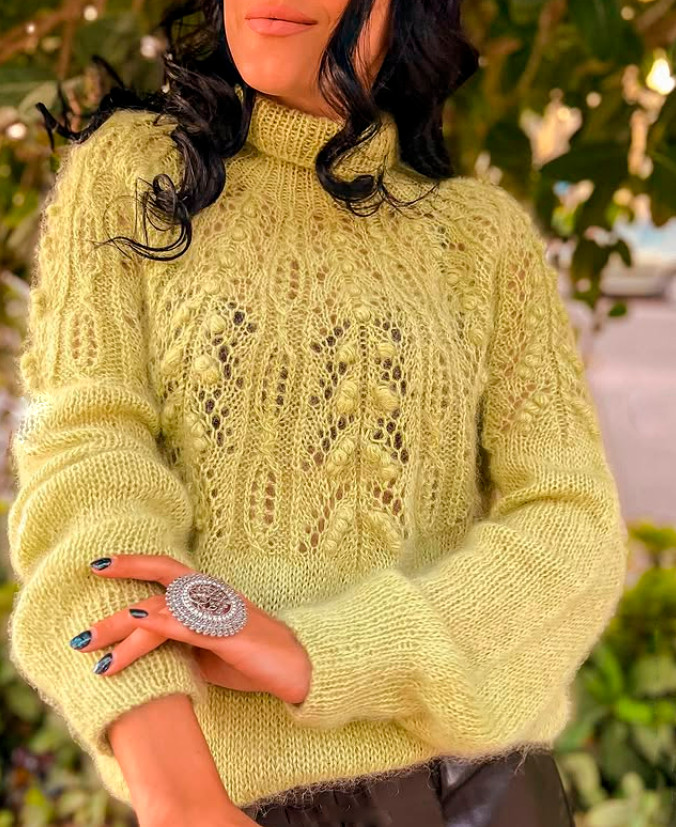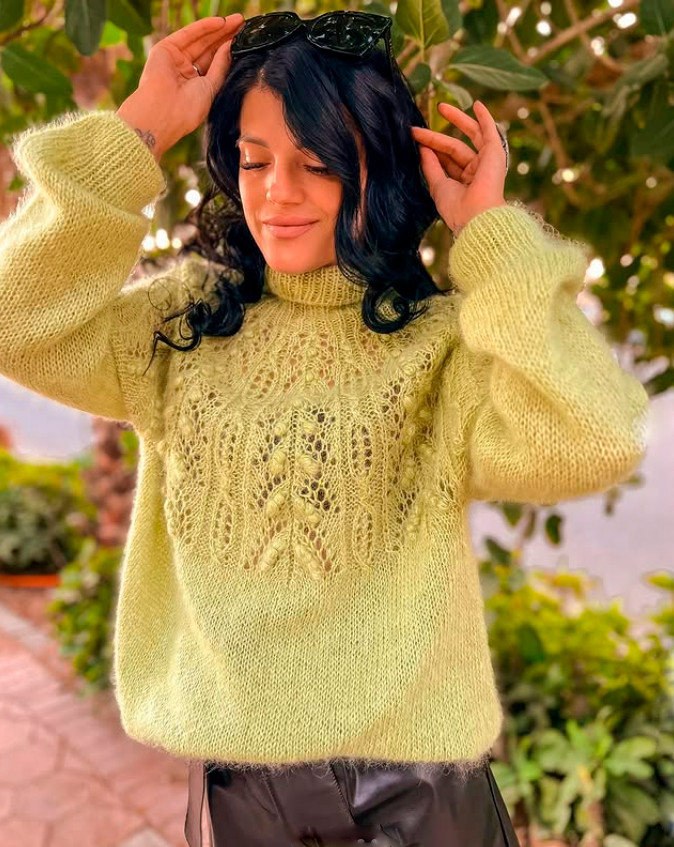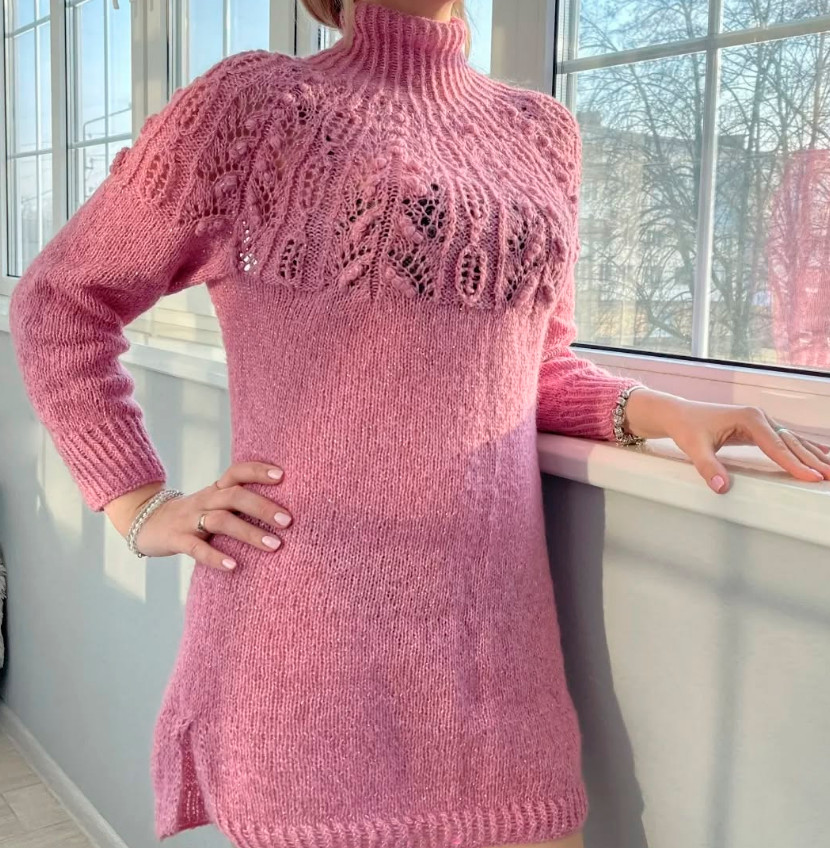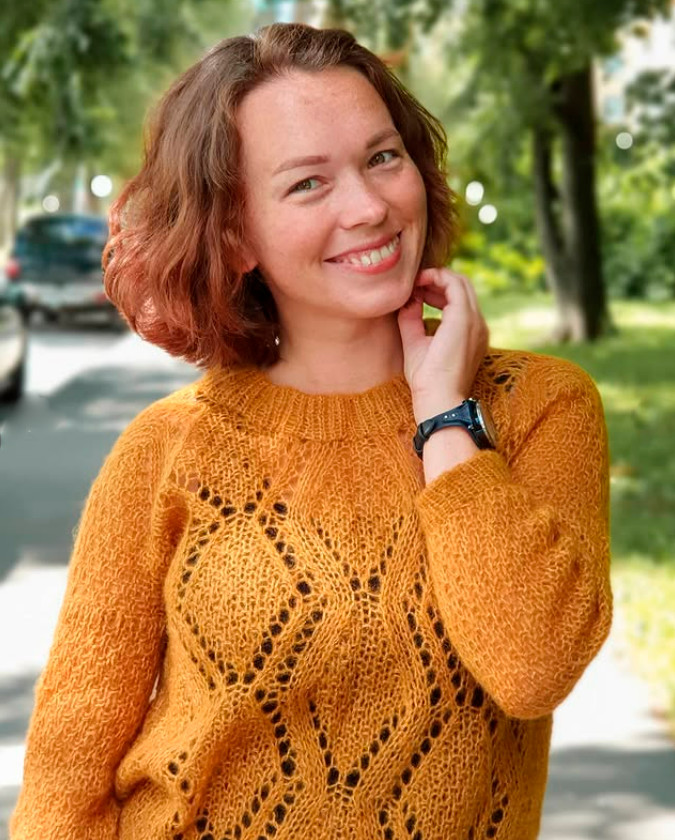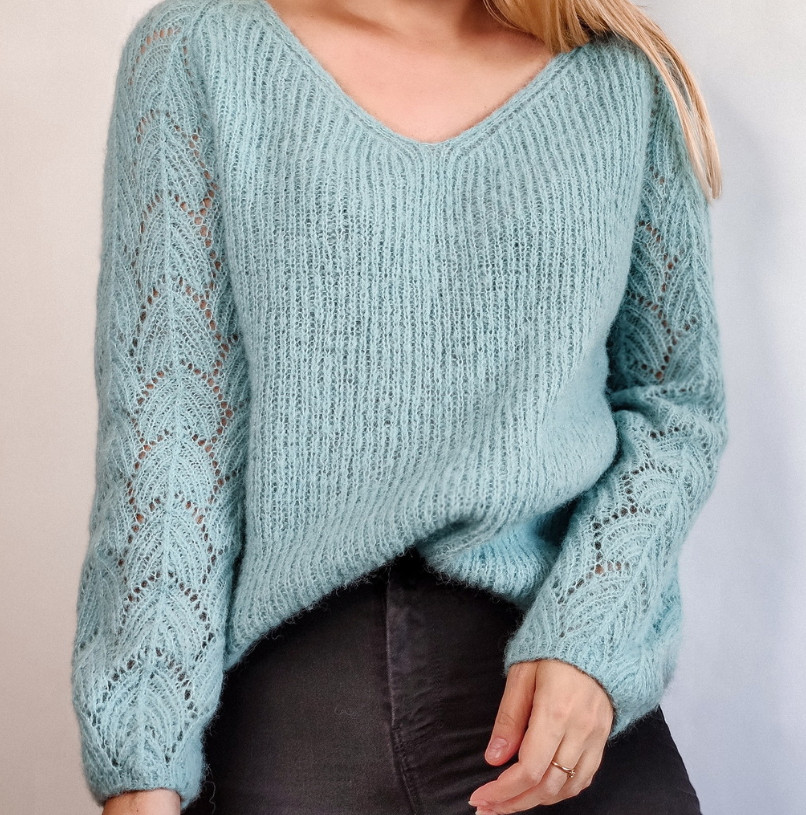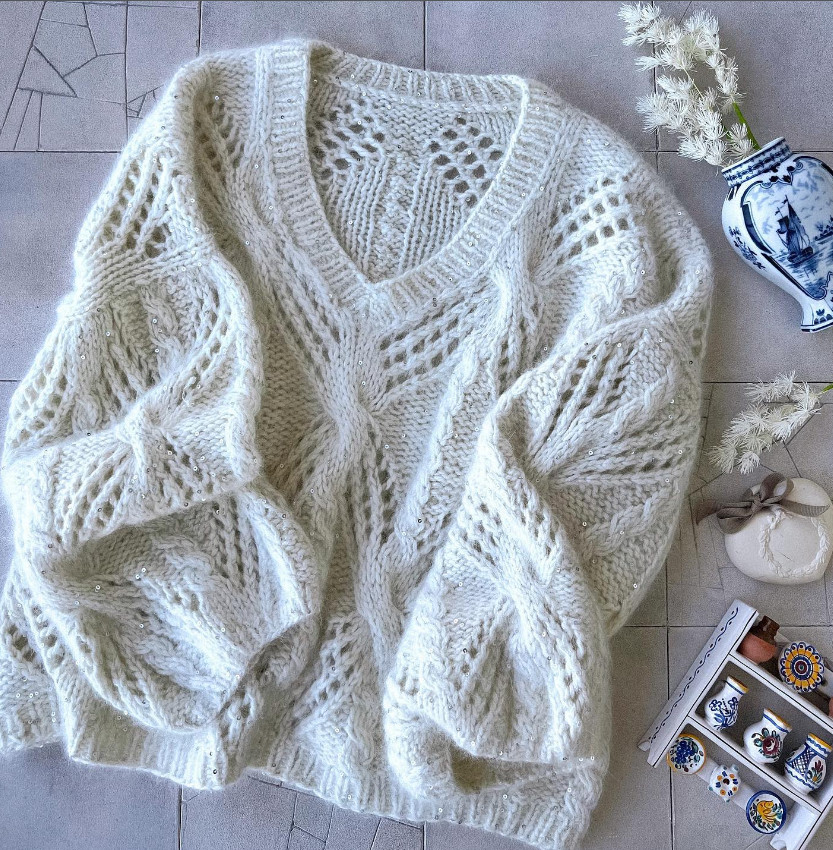




Sweater with a beautiful yoke.
Added: 08.11.2025 в 08:35 Views: 4457
Sweater with a beautiful yoke.Klubokhttp://klubok.work/1/3/9286/Klubokhttps://klubok.work/css/image/top-logo-en.png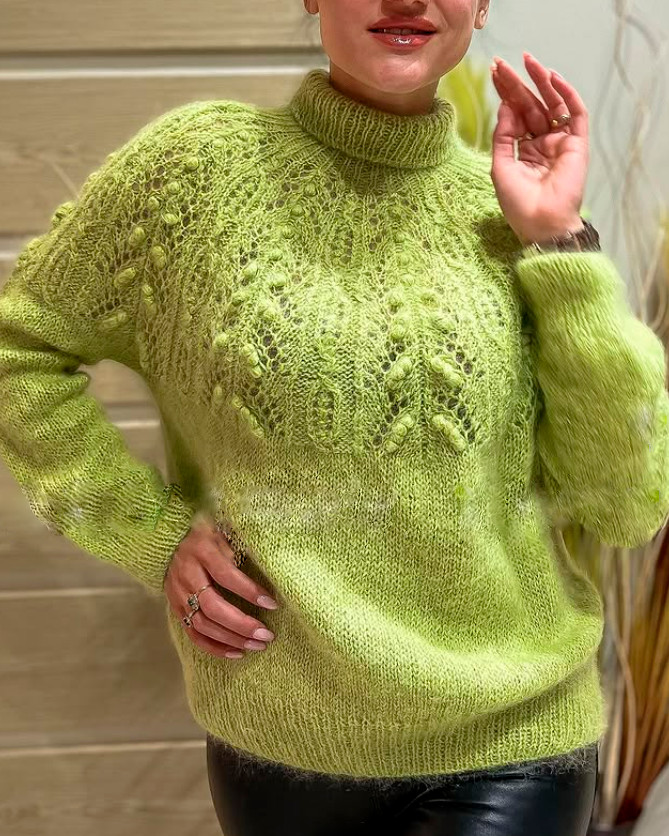
Gauge
My gauge was measured on a 10 cm x 10 cm swatch.
Across width – 18 stitches
In height – 20 rows
3. Materials and consumption In the sweater variant of this item I used yarn: 1) New Mill art. Velox 40% merino, 10% cashmere, 25% viscose, 25% polyamide – in 1 ply 1450 m / 100 g, knit in 2 plies with total length 725 m / 100 g + 2) Gruppo Filpucci TopKid 67% superkid mohair, 3% merino wool, 30% PA – 1000m / 100 g in 1 ply, knit in 2 plies with total length 500 m / 100 g. In the dress variant of this garment I used yarn – 1) Pecci Filati Airwool 87% merino wool, 13% PA with length 450 m / 100 g – in 1 ply + 2) Igea Astro 50% superkid mohair, 18% merino wool, 32% PA with length 1000 m / 100 g – in 2 plies the total length is 500 m / 100 g You can use any composition, any manufacturer – Turkey, Italy, Netherlands, etc., with overall yarn length as above.
Circular needles No. 5.0 (for knitting the neckline rib)
Circular needles No. 4.0 mm 60 cm (for knitting the ribbing at the bottom of the body)
Circular needles No. 5.0 mm 40 cm (for the initial stage of sleeve knitting)
Circular needles No. 5.0 mm 80/100 cm (for knitting the sleeve using the Magic Loop method)
Circular needles No. 4.0 mm 80/100 cm for knitting the sleeve cuff with the Magic Loop method or 3-4 double-pointed needles 4.0 mm
Markers 13-14 pieces
Additional waste yarn or cord with stoppers (to separate sleeve stitches)
Additional waste yarn (for the open cast-on row of the yoke)
Darning needle for sewing knitted garments
Scissors
Yarn consumption table for the sweater variant in kid mohair 500 m / 100 g
-
Merino with total length 725 m/100 g – consumption in grams and in meters.
Size 42-44 Kid Mohair 170 g / 850 m
Merino 120 g / 870 m
Size 46-48 Kid Mohair 200 g / 1000 m
Merino 150 g / 1087 m
Size 50-52 Kid Mohair 230 g / 1150 m
Merino 180 g / 1305 m
Size 54-56 Kid Mohair 260 g / 1300 m
Merino 210 g / 1525 m
Size 42-44 Kid Mohair 250 g / 1025 m
Merino 250 g / 1125 m
Size 46-48 Kid Mohair 300 g / 1500 m
Merino 300 g / 1450 m
Size 50-52 Kid Mohair 350 g / 1750 m
Merino 350 g / 1575 m
Size 54-56 Kid Mohair 400 g / 2000 m
Merino 400 g / 1800 m
For knitting the dress variant I used merino + superkid mohair
Italy in the color Fuchsia
For knitting the sweater variant I used merino + superkid mohair
Italy in the color Apple.
Construction: circular yoke from bottom to top, completely seamless,
knit in one piece.
Shaping: Asian short rows, worked in turning rounds.
The garment is knitted on circular needles No. 5.0 mm and 4.0 mm.
Binding off the neckline ribbing / ribbing at the body hem / cuffs – bind off with a needle.
The sleeves are straight, knitted on circular needles 5.0 mm 40 cm and 80/100 cm using the Magic Loop method.
All sizes are knitted absolutely the same; the difference is only in the number
of wedges between each size.
Difficulty level: Beginner
Sizes: 42/44/46/48/50/52/54/56
The master class provides two garment options – a sweater and a dress.
You adjust the length of the dress based on your height and desired garment length.
of the garment.
Below is the chart of the pattern repeat with symbols. Also, a row-by-row and stitch-by-stitch description of the wedge and video accompaniment to the entire pattern repeat.
Since the pattern repeat and the yoke construction are worked from bottom to top, we begin knitting from the bottom-to-top pattern repeat with decreases.
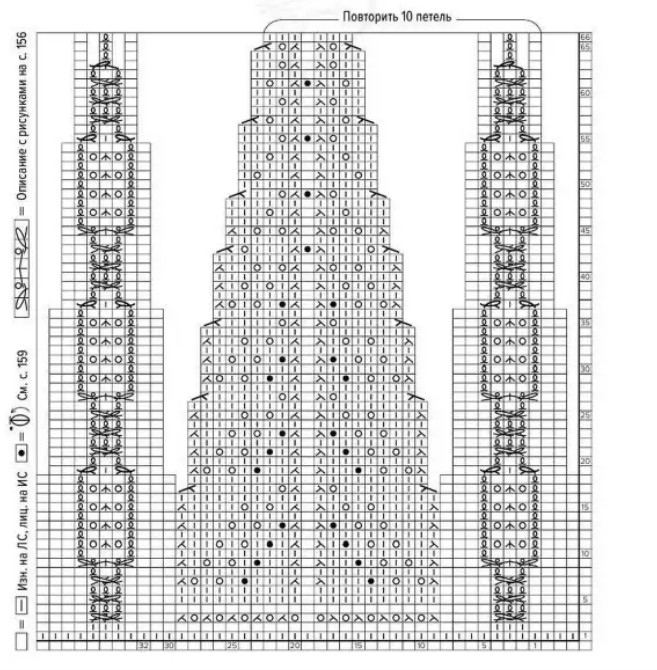
 knit
knit
 decrease left (ssk)
 SKP
SKP
 yarn over
 bobble
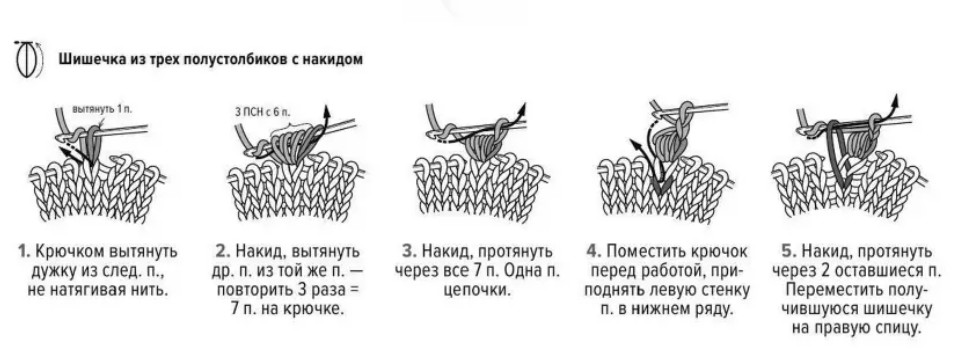
Bobble made from three half-double crochets with a yarn over
-
With a crochet hook, pull up a loop from the next stitch without tightening the yarn.
-
Yarn over; pull up another loop from the same stitch — repeat 3 times = 7 loops on the hook.
-
Yarn over, draw through all 7 stitches. One chain stitch.
-
Place the hook in front of the work, lift the left wall of the stitch in the bottom row.
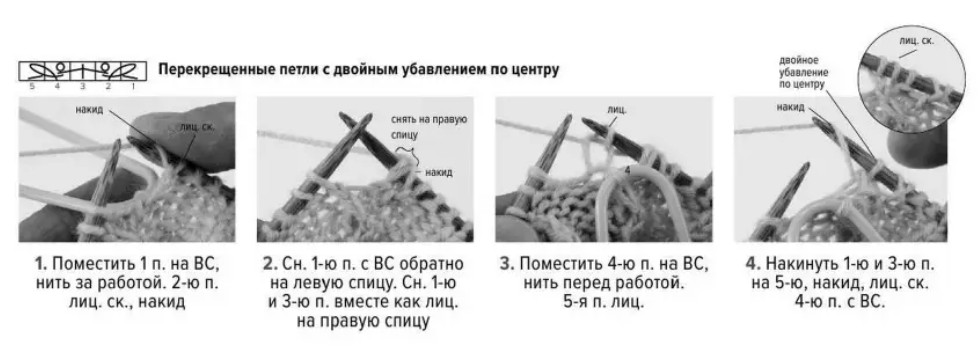
Crossed stitches with a center double decrease
-
Place 1 stitch on the auxiliary needle, yarn behind the work. Slip the 2nd stitch knitwise, a yarn over.
-
Slip the 1st stitch from the auxiliary needle back onto the left needle. Slip the 1st and 3rd stitches together as knit stitches onto the right needle.
-
Place the 4th stitch on the auxiliary needle, yarn in front of the work. 5th stitch knit.
-
Slip the 1st and 3rd stitches onto the 5th stitch, yarn over, knit the 4th stitch from the auxiliary needle.
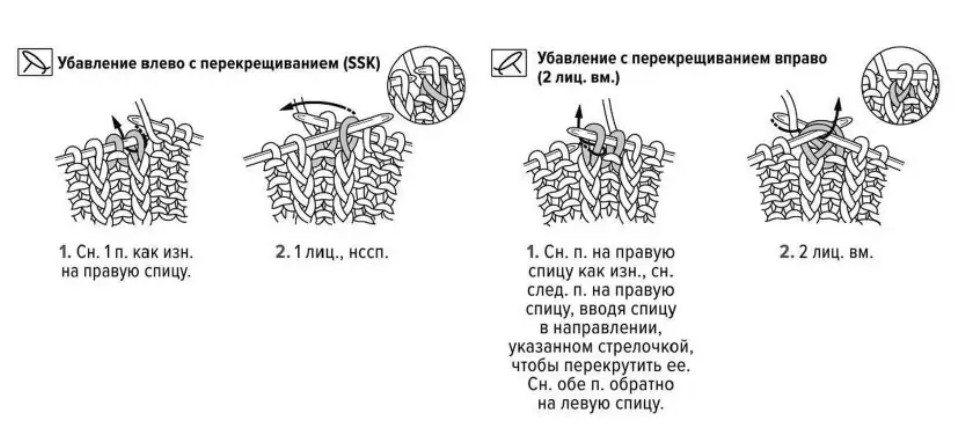
Left decrease with crossing (SSK)
-
Slip the 1st stitch as if to purl onto the right needle.
-
1 knit, slipped slip? (nsps).
Right-leaning decrease with crossing (two knits together)
-
Slip the stitch on the right needle as if to purl, slip the next stitch onto the right needle, inserting the needle in the direction indicated by the arrow to twist it. Slip both stitches back onto the left needle.
-
2 knit stitches together.
We will need circular needles No. 5.0 mm, 60/80 cm, an extra waste yarn, and 12–13 markers.
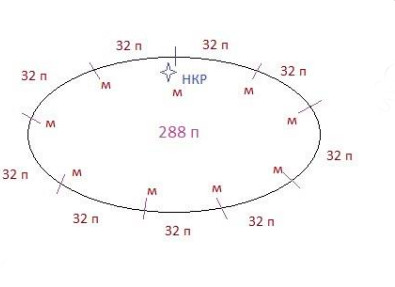
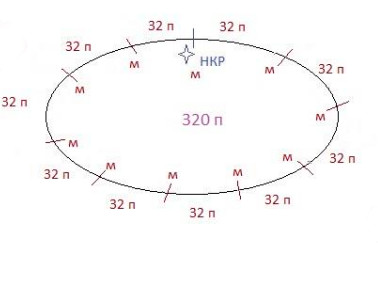
Below are the diagrams for the circular yoke and wedge distribution for each size.
Size 42-44
Size 46-48
Size 48- 52
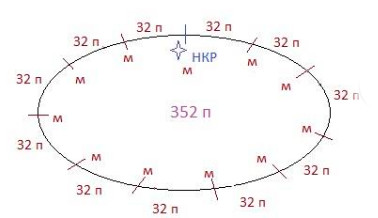
Size 54-56
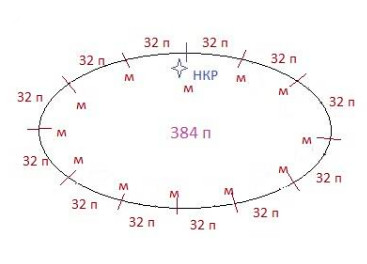
We need to cast on stitches openly using the extra waste yarn, since we first knit the first part of the garment—the yoke and neckline; after finishing this stage, we proceed to top-down knitting.
On circular needles No. 5.0 mm, 60/80 cm, using the extra waste yarn, cast on in the usual way:
Size 42-44 – 288 sts + 1 st
Size 46-48 – 320 sts + 1 st
Size 50-52 – 352 sts + 1 st
Size 54-56 – 384 sts + 1 st
After we have cast on the required number of stitches, join the cast-on row in the round and place a contrast marker to indicate “Start of Round.” Then distribute the stitches into the wedges for your size as shown in the diagrams above. Each wedge initially consists of 32 stitches and each wedge is separated by markers.
The first round of circular knitting begins from the 1st row of the pattern repeat. But the 1st row of the pattern repeat starts from the 6th row of the pattern repeat, i.e., the pattern repeat consists of 61 rounds and begins with the 6th round.
Sequential description of the pattern repeat for all sizes.
All sizes are knitted identically according to the pattern repeat. No increases are made in the pattern repeat or in the wedges.
Our wedge initially consists of 32 stitches. The wedge is knitted bottom to top with periodic decreases, ending with 8 stitches. It is knitted in the round, each specified wedge repeats from marker to marker. Repeat the given number of wedges for each size. I specify one wedge which we repeat from marker to marker.
Round 1: 4 purl, 3 knit stitches crossed, 4 purl, 10 knit, 1 purl, 10 knit.
Round 2: 4 purl, cross 3 stitches with a left-leaning twist (slip one stitch to the auxiliary needle in front of the work, slip the next stitch purlwise, knit the next stitch crossed with a knit stitch and swap with the purl stitch, knit the third stitch from the auxiliary needle with a crossed knit stitch). 4 purl, 2 stitches knit together with a left-leaning twist, yarn over, 1 knit, yarn over, 1 knit, "nupp", 3 knit, 2 stitches knit together with a left-leaning twist, 1 purl, 2 stitches knit together with a right-leaning twist, 3 knit, "nupp", 1 knit, yarn over, 1 knit, yarn over, 2 stitches knit together with a right-leaning twist
Round 3: 4 knits, 1 crossed knit stitch, 1 purl, 1 crossed knit stitch, 4 purls, 10 knits, 1 purl, 10 knits
Round 4: 3 purls, cross 5 stitches with a double decrease in the center (move one stitch onto the auxiliary needle behind the work, knit the second stitch with a crossed knit, yarn over. Return the first stitch from the auxiliary needle onto the left needle. Slip the first and third stitches together as a knit onto the right needle. Move the fourth stitch onto the auxiliary needle – yarn in front of the work. Knit the fifth stitch. Slip the first and third stitches onto the fifth. yarn over, knit the crossed fourth stitch from the auxiliary needle), 3 purls, 2 stitches knit together with a left-leaning twist, 1 knit, yarn over, 1 knit, yarn over, 1 knit, "nupp", 2 knit stitches together with a left-leaning twist, 1 purl, 2 stitches knit together with a right-leaning twist, 2 knit stitches, "nupp", 1 knit, yarn over, 1 knit, yarn over, 2 stitches knit together with a right-leaning twist
Round 5: 3 purls, 1 crossed knit stitch, 3 purls, 1 crossed knit stitch, 3 purls, 10 knits, 1 purl, 10 knits.
Round 6: 3 purls, 1 crossed knit stitch, yarn over, 3 stitches
Round 6 (continued): 3 purls, 1 crossed knit stitch, yarn over, 3 stitches worked together with the central purl (move the central purl to the auxiliary needle, knit two stitches together and pass them through the central purl on the auxiliary needle), yarn over, 1 crossed knit stitch, 3 purls, 2 stitches knit together with a left-leaning twist, 2 knits, yarn over, 1 knit, 2 stitches knit together with a right-leaning twist
Round 7: 3 purls, 1 crossed knit stitch, 3 purls, 1 crossed knit stitch, 3 purls, 10 knits, 1 purl, 10 knits.
8th round: 3 purl stitches, 1 twisted knit stitch, yarn over, 3 stitches knitted together with the central purl (the central purl stitch is transferred to the auxiliary needle, knit two stitches together as a knit stitch and pass them through the purl stitch on the auxiliary needle)., yarn over, 1 twisted knit stitch, 3 purl stitches, 2 stitches knitted together with a left-leaning decrease., 3 knit stitches, yarn over, 1 knit stitch, yarn over, 1 knit stitch, «nupp», 2 stitches knitted together with a left-leaning decrease, 1 purl, 2 stitches knitted together with a right-leaning decrease, «nupp», 1 knit stitch, yarn over, 1 knit stitch, yarn over, 3 knit stitches, 2 stitches knitted together with a right-leaning decrease
9th round: 3 purl stitches, 1 twisted knit stitch, 3 purl stitches, 1 twisted knit stitch, 3 purl stitches, 10 knit stitches, 1 purl, 10 knit stitches
10th round: 3 purl stitches, 1 twisted knit stitch, yarn over, 3 stitches knitted together with the central purl (transfer the central purl stitch to the auxiliary needle, knit two stitches together as a knit stitch and pass them through the purl stitch on the auxiliary needle)., yarn over, 1 twisted knit stitch, 3 purl stitches, 2 stitches knitted together with a left-leaning decrease, 4 knit stitches, yarn over, 1 knit stitch, yarn over, 1 knit stitch, 2 stitches knitted together with a left-leaning decrease, 1 purl, 2 stitches knitted together with a right-leaning decrease, 1 knit stitch, yarn over, 1 knit stitch, yarn over, 4 knit stitches, 2 stitches knitted together with a right-leaning decrease
11th round: 3 purls, 1 twisted knit stitch, 3 purls, 1 twisted knit stitch, 3 purls, 10 knit stitches, 1 purl, 10 knit stitches
12th round: 3 purls, 1 twisted knit stitch, yarn over, 3 stitches knitted together with the central purl (transfer the central purl stitch to the auxiliary needle, knit two stitches together as a knit stitch and pass them through the purl stitch on the auxiliary needle)., yarn over, 1 twisted knit stitch, 3 purls, 2 stitches knitted together with a left-leaning decrease, 6 knit stitches, yarn over, 2 stitches knitted together with a left-leaning decrease, 1 purl, 2 stitches knitted together with a right-leaning decrease, yarn over, 6 knit stitches, 2 stitches knitted together with a right-leaning decrease
13th round: 3 purls, 1 twisted knit stitch, 3 purls, 1 twisted knit stitch, 3 purls, 9 knit stitches, 1 purl, 9 knit stitches
14th round: 2 purls, decrease to the left with crossing (slip 1 purl stitch without knitting onto the right needle, slip 1 twisted knit stitch onto the auxiliary needle, return the purl stitch from the right needle to the left and knit them together in purl, 1 knit stitch crossed with the auxiliary needle)., 1 knit stitch, decrease to the right with crossing (slip 1 purl stitch onto the right needle without wrapping the yarn in front of the work, slip 1 twisted knit stitch onto the auxiliary needle, return the purl stitch from the right needle to the left, knit the knit stitch crossed with the stitch from the auxiliary needle, 2 purls knitted together in purl)., 2 purls, 2 stitches knitted together with a left-leaning decrease, yarn over, 1 knit stitch, yarn over, 1 knit stitch, «nupp», 2 knit stitches, 2 stitches knitted together with a left-leaning decrease, 1 purl, 2 stitches knitted together with a right-leaning decrease, 2 knit stitches, «nupp», 1 knit stitch, yarn over, 1 knit stitch, yarn over, 2 stitches knitted together with a right-leaning decrease
15th round: 3 purls, 1 twisted knit stitch, 1 purl, 1 twisted knit stitch, 3 purls, 9 knit stitches, 1 purl, 9 knit stitches
16th round: 3 purls, cross 3 stitches with a left-leaning twist (move one stitch to the auxiliary needle before the work, slip the next stitch purlwise, knit the first stitch crossed and swap with the purl stitch, knit the third stitch from the auxiliary needle as a crossed knit), 3 purls, 2 stitches knitted together with a left-leaning decrease, 1 knit stitch, yarn over, 1 knit stitch, yarn over, 1 knit stitch, «nupp», 1 knit stitch, 2 stitches knitted together with a left-leaning decrease, 1 purl, 2 stitches knitted together with a right-leaning decrease, 1 knit stitch, «nupp», 1 knit stitch, yarn over, 1 knit stitch, yarn over, 1 knit stitch, 2 stitches knitted together with a right-leaning decrease
17th round: 3 purls, 3 crossed knit stitches, 3 purls, 9 knit stitches, 1 purl, 9 knit stitches
18th round: 3 purls, cross 3 stitches with a right-leaning twist (slip 2 stitches onto an auxiliary needle – yarn in front of the work, knit the third stitch crossed with a crossed knit, return the two stitches from the auxiliary needle to the left needle, slip a knit stitch without knitting, and knit the purl stitch as purl, swap their places and knit the knit stitch crossed with the knit from the auxiliary needle)., 3 purls, 2 stitches knitted together with a left-leaning decrease, 2 knit stitches, yarn over, 1 knit stitch, yarn over, 1 knit stitch, «nupp», 2 stitches knitted together with a left-leaning decrease, 1 purl, 2 stitches knitted together with a right-leaning decrease, «nupp», 1 knit stitch, yarn over, 1 knit stitch, yarn over, 2 stitches knitted together with a right-leaning decrease
19th round: 3 purls, 3 crossed knit stitches, 3 purls, 9 knit stitches, 1 purl, 9 knit stitches
20th round: 3 purls, cross 3 stitches with a left-leaning decrease (move one stitch to the auxiliary needle before the work, slip the next stitch purlwise, knit the next stitch as a crossed knit and swap with the purl stitch, knit the third stitch from the auxiliary needle as a crossed knit), 3 purls, 2 stitches knitted together with a left-leaning decrease, 3 knit stitches, yarn over, 1 knit stitch, yarn over, 1 knit stitch, 2 stitches knitted together with a left-leaning decrease, 1 purl, 2 stitches knitted together with a right-leaning decrease, 1 knit stitch, yarn over, 1 knit stitch, yarn over, 3 knit stitches, 2 stitches knitted together with a right-leaning decrease
21st round: 3 purls, 1 crossed knit stitch, 1 purl, 1 crossed knit stitch, 3 purls, 9 knit stitches, 1 purl, 9 knit stitches
22nd round: 2 purls, cross 5 stitches with double decrease in the center (move one stitch to the auxiliary needle – thread behind the work, knit the second stitch with a crossed knit, slip the first stitch from the auxiliary needle back onto the left needle. Slip the first and third stitches together as a knit stitch onto the right needle. Move the fourth stitch to the auxiliary needle – thread behind the work. Knit the fifth stitch with a knit stitch. Slip the first and third stitches onto the fifth, yarn over, cross-knit the fourth stitch from the auxiliary needle), 2 purls, 2 stitches knitted together with a left-leaning decrease, 5 knit stitches, yarn over, 2 stitches knitted together with a left-leaning decrease, 1 purl, 2 stitches knitted together with a right-leaning decrease, yarn over, 5 knit stitches, 2 stitches knitted together with a right-leaning decrease
23rd round: 2 purl stitches, 1 crossed knit stitch, 3 purls, 1 crossed knit stitch, 2 purls, 8 knit stitches, 1 purl, 8 knit stitches.
24th round: 2 purls, 1 twisted knit stitch, yarn over, 3 stitches knitted together with the central purl (transfer the central purl stitch to the auxiliary needle, knit two stitches together as a knit stitch and pass them through the purl stitch on the auxiliary needle)., yarn over, 1 crossed knit stitch, 2 purls, 2 stitches knitted together with a left-leaning decrease, yarn over, 1 knit stitch, yarn over, 1 knit stitch, «nupp», 1 knit stitch, 2 stitches knitted together with a left-leaning decrease, 1 purl, 2 stitches knitted together with a right-leaning decrease, 1 knit stitch, «nupp», 1 knit stitch, yarn over, 1 knit stitch, yarn over, 2 stitches knitted together with a right-leaning decrease
25th round: 2 purls, 1 twisted knit stitch, 3 purls, 1 twisted knit stitch, 2 purls, 8 knit stitches, 1 purl, 8 knit stitches
Round 26: 2 purl sts, 1 twisted knit st, yarn over, 3 sts worked together with the central purl (move the central purl stitch to the auxiliary needle, knit two sts together with a knit stitch and pass them through the purl stitch on the auxiliary needle), yarn over, 1 twisted knit st, 2 purl sts, 2 sts knit together with a left-leaning decrease, 1 knit st, yarn over, 1 knit st, yarn over, 1 knit st, «nupp», 2 sts knit together with a left-leaning decrease, 1 purl st, 2 sts knit together with a right-leaning decrease, «nupp», 1 knit st, yarn over, 1 knit st, yarn over, 1 knit st, 2 sts knit together with a right-leaning decrease
Round 27: 2 purl sts, 1 twisted knit st, 3 purl sts, 1 twisted knit st, 2 purl sts, 8 knit sts, 1 purl st, 8 knit sts
Round 28: 2 purl sts, 1 twisted knit st, yarn over, 3 sts worked together with central purl (move central purl stitch to the auxiliary needle, knit two sts together with a knit stitch and pass them through the purl stitch on the auxiliary needle)., yarn over, 1 twisted knit st, 2 purl sts, 2 sts knit together with a left-leaning knit, 2 knit sts, yarn over, 1 knit st, yarn over, 1 knit st, 2 sts knit together with a left-leaning knit, 1 purl st, 2 sts knit together with a right-leaning knit, 1 knit st, yarn over, 1 knit st, yarn over, 2 knit sts knit together with a right-leaning knit
Round 29: 2 purl sts, 1 twisted knit st, 3 purl sts, 1 twisted knit st, 2 purl sts, 8 knit sts, 1 purl st, 8 knit sts
Round 30: 2 purl sts, 1 twisted knit st, yarn over, 3 sts worked together with central purl (move central purl to the auxiliary needle, knit two sts together with a knit stitch and pass them through the purl stitch on the auxiliary needle)., yarn over, 1 twisted knit st, 2 purl sts, 2 sts knit together with a left-leaning knit, 4 knit sts, yarn over, 2 sts knit together with a left-leaning knit, 1 purl st, 2 sts knit together with a right-leaning knit, yarn over, 4 knit sts, 2 sts knit together with a right-leaning knit
Round 31: 2 purl sts, 1 twisted knit st, 3 purl sts, 1 twisted knit st, 2 purl sts, 7 knit sts, 1 purl st, 7 knit sts
Round 32: 1 purl st, left-leaning decrease with crossing (slip 1 purl stitch to the right needle without knitting, slip 1 twisted knit stitch to the auxiliary needle, return the purl stitch from the right needle to the left and knit them together with a purl stitch from the auxiliary needle)., 1 knit st, right-leaning decrease with crossing (slip 1 purl stitch to the right needle without knitting the yarn in front of work, slip 1 twisted knit stitch to the auxiliary needle, return the purl stitch from the right needle to the left, knit the stitch crossed with the stitch from the auxiliary needle, 2 purl sts knitted together with a purl stitch)., 1 purl st, 2 sts knit together with a left-leaning knit, yarn over, 1 knit st, yarn over, 1 knit st, «nupp», 2 sts knit together with a left-leaning knit, 1 purl st, 2 sts knit together with a right-leaning knit, «nupp», 1 knit st, yarn over, 1 knit st, yarn over, 2 sts knit together with a right-leaning knit
Round 33: 2 purl sts, 1 twisted knit stitch, 1 purl st, 1 twisted knit stitch, 2 purl sts, 7 knit sts, 1 purl st, 7 knit sts
Round 34: 2 purl sts, 2 purl sts, cross 3 stitches to the left (move one stitch to the auxiliary needle before work, knit the next stitch as purl, knit the 1st stitch crossed with a knit and swap with the purl, knit the 3rd stitch from the auxiliary needle with a crossed knit)., 2 purl sts, 2 sts knit together with a left-leaning knit, 1 knit st, yarn over, 1 knit st, yarn over, 1 knit st, 2 sts knit together with a left-leaning knit, 1 purl st, 2 sts knit together with a right-leaning knit, 1 knit st, yarn over, 1 knit st, yarn over, 1 knit st, 2 sts knit together with a right-leaning knit
Round 35: 2 purl sts, 3 crossed knit stitches, 2 purl sts, 7 knit sts, 1 purl st, 7 knit sts
Round 36: 2 purl sts, cross 3 stitches with a right-leaning twist (slip 2 stitches to an auxiliary needle – yarn in front of work, knit the third stitch crossed, return the two stitches from the auxiliary needle to the left, slip the knitted stitch without knitting and the purl stitch purled, swap them and knit the knitted stitch crossed with the knit from the auxiliary needle)., 2 purl sts, 2 sts knit together with a left-leaning knit, 2 knit sts, yarn over, 1 knit st, yarn over, 2 sts knit together with a left-leaning knit, 1 purl st, 2 sts knit together with a right-leaning knit, yarn over, 1 knit st, yarn over, 2 sts knit together with a right-leaning knit
Round 37: 2 purl sts, 3 crossed knit stitches, 2 purl sts, 7 knit sts, 1 purl st, 7 knit sts
Round 38: 2 purl sts, cross 3 stitches to the left (move one stitch to the auxiliary needle before work, slip the next stitch purlwise, knit the first stitch crossed with the knit, swap with the purl, knit the third stitch from the auxiliary needle with a crossed knit), 2 purl sts, 2 sts knit together with a left-leaning knit, yarn over, 3 knit sts, 2 sts knit together with a left-leaning knit, «nupp», 2 sts knit together with a right-leaning knit, 3 knit sts, yarn over, 2 sts knit together with a right-leaning knit
Round 39: 2 purl sts, 1 twisted knit st, 1 purl st, 1 twisted knit st, 2 purl sts, 6 knit sts, 1 purl st, 6 knit sts
Round 40: 1 purl st, cross 5 stitches with a double decrease in the center (move one stitch to an auxiliary needle – yarn behind work, knit the second stitch with a crossed knit stitch, slip the first stitch from the auxiliary needle back onto the left needle. Slip the first and third stitches together as a knit stitch onto the right needle. Move the fourth stitch to the auxiliary needle – yarn in front of work. Knit the fifth stitch. Draw the first and third stitches onto the fifth stitch, yarn over, the fourth stitch from the auxiliary needle with a crossed knit stitch)., 1 purl st, 2 sts knit together with a left-leaning decrease, 1 knit st, yarn over, 1 knit st, yarn over, 2 sts knit together with a left-leaning decrease, 1 purl st, yarn over, 1 knit st, yarn over, 2 sts knit together with a right-leaning decrease
Round 41: 1 purl st, 1 twisted knit stitch, 3 purl sts, 1 twisted knit stitch, 1 purl st, 6 knit sts, 1 purl st, 6 knit sts
Round 42: 1 purl st, 1 twisted knit stitch, yarn over, 3 sts worked together with central purl (move central purl to auxiliary needle, knit two sts together with a knit stitch and pass them through the purl stitch on the auxiliary needle)., yarn over, 1 twisted knit st, 1 purl st, 3 knit sts, yarn over, 1 knit st, 2 sts knit together with a left-leaning knit, 1 purl st, 2 sts knit together with a right-leaning knit, 1 knit st, yarn over, 3 knit sts
Round 43: 1 purl st, 1 twisted knit stitch, 3 purl sts, 1 twisted knit stitch, 1 purl st, 6 knit sts, 1 purl st, 6 knit sts
Round 44: 1 purl st, 1 twisted knit stitch, yarn over, 3 sts worked together with central purl (move central purl to auxiliary needle, knit two sts together with a knit stitch and pass them through the purl stitch on the auxiliary needle)., yarn over, 1 twisted knit st, 1 purl st, 2 sts knit together with a left-leaning knit, 2 knit sts, yarn over, 2 sts knit together with left-leaning knit, «nupp», 2 sts knit together with a right-leaning knit, yarn over, 2 knit sts, 2 sts knit together with right-leaning knit
Round 45: 1 purl st, 1 twisted knit stitch, 3 purl sts, 1 twisted knit stitch, 1 purl st, 5 knit sts, 1 purl st, 5 knit sts
Round 46: 1 purl, 1 twisted knit stitch, yarn over, 3 stitches knit together with the central purl (move the central purl stitch to an auxiliary needle, knit the two knit stitches together and pass them through the purl stitch on the auxiliary needle), yarn over, 1 twisted knit stitch, 1 purl, 1 knit, yarn over, 2 knit stitches, knit 2 together with a left-leaning decrease, 1 purl, 2 stitches knit together with a right-leaning decrease, 2 knit stitches, yarn over, 1 knit stitch
Round 47: 1 purl, 1 twisted knit stitch, 3 purl, 1 twisted knit stitch, 1 purl, 5 knit stitches, 1 purl, 5 knit stitches.
Round 48: 1 purl, 1 twisted knit stitch, yarn over, 3 stitches knit together with the central purl (move the central purl stitch onto an auxiliary needle, knit the two knit stitches together and pass them through the purl stitch on the auxiliary needle), yarn over, 1 twisted knit stitch, 1 purl, 2 knit stitches, yarn over, 1 knit stitch, 2 stitches knit together with a left-leaning decrease, 1 purl, 2 stitches knit together with a right-leaning decrease, 1 knit stitch, yarn over, 2 knit stitches
Round 49: 1 purl, 1 twisted knit stitch, 3 purl, 1 twisted knit stitch, 1 purl, 5 knit stitches, 1 purl, 5 knit stitches.
Round 50: decrease to the left with a cross (slip 1 purl stitch to the right needle without knitting, slip 1 twisted knit stitch to the auxiliary needle, return the purl stitch from the right needle to the left and knit them together as a purl, 1 knit stitch crossed with the stitch on the auxiliary needle)., 1 knit stitch, decrease to the right with a cross (slip 1 purl stitch to the right needle without knitting, slip 1 twisted knit stitch to the auxiliary needle, return the purl stitch from the right needle to the left, knit the knit stitch crossed with the stitch on the auxiliary needle, 2 purl stitches knitted together as a purl)., 3 knit stitches, yarn over, 2 stitches knit together with a left-leaning decrease, «nupp», 2 stitches knit together with a right-leaning decrease, yarn over, 3 knit stitches
Round 51: 1 purl, 1 twisted knit stitch, 1 purl, 1 twisted knit stitch, 1 purl, 5 knit stitches, 1 purl, 5 knit stitches.
Round 52: 1 purl, cross 3 stitches with a left-leaning twist (slip one stitch to an auxiliary needle before the work, purl the next stitch, knit the first stitch crossed with a knit stitch and swap with the purl stitch, knit the third stitch from the auxiliary needle with a crossed knit), 1 purl, 2 stitches knit together with a left-leaning decrease, yarn over, 1 knit, 2 stitches knit together with a left-leaning decrease, 1 purl, 2 stitches knit together with a right-leaning decrease, 1 knit, yarn over, 2 stitches knit together with a right-leaning decrease
Round 53: 1 purl, 3 crossed knit stitches, 1 purl, 4 knit stitches, 1 purl, 4 knit stitches.
Round 54: 1 purl, cross 3 stitches with a right-leaning twist (slip 2 stitches to an auxiliary needle in front of the work, knit the third stitch with a crossed knit, return the two stitches from the auxiliary needle to the left, slip the knit stitch without knitting and purl the purl stitch, swap their positions and knit the purl stitch with a crossed knit)., 1 purl, 2 stitches knit together with a left-leaning decrease, yarn over, 2 stitches knit together with a left-leaning decrease, 1 purl, 2 stitches knit together with a right-leaning decrease, yarn over, 2 knit stitches
Round 55: 1 purl, 3 crossed knit stitches, 1 purl, 4 knit stitches, 1 purl, 4 knit stitches.
Round 56: 1 purl, cross 3 stitches with a left-leaning twist (move one stitch to an auxiliary needle in front of the work, slip the next stitch purlwise, knit the first stitch crossed with a knit, swap with the purl; knit the third stitch from the auxiliary needle with a crossed knit)., 1 purl, 1 knit stitch, yarn over, 1 knit stitch, 2 stitches knit together with a left-leaning decrease, «nupp», 2 stitches knit together with a right-leaning decrease, 1 knit stitch, yarn over, 1 knit stitch
Round 57: 1 purl, 3 crossed knit stitches, 1 purl, 4 knit stitches, 1 purl, 4 knit stitches.
Round 58: 1 purl, cross with a double decrease (slip 2 stitches to an auxiliary needle in front of the work, knit the third stitch with a crossed knit, knit the first two stitches together with a knit and slip them through the crossed knit), 1 purl, 2 knit stitches, yarn over, 2 stitches knit together with a left-leaning decrease, 1 purl, 2 stitches knit together with a right-leaning decrease, yarn over, 2 knit stitches
Round 59: 1 purl, 1 twisted knit stitch, 1 purl, 4 knit stitches, 1 purl, 4 knit stitches
Round 60: 1 purl, 1 twisted knit stitch, 1 purl, 2 stitches knit together with a left-leaning decrease, yarn over, 2 stitches knit together with a left-leaning decrease, 1 purl, 2 stitches knit together with a right-leaning decrease, yarn over, 2 stitches knit together with a right-leaning decrease
Round 61: 1 purl, 1 twisted knit stitch, 1 purl, 2 knit stitches, 3 together with the central stitch (slip the central purl stitch to an auxiliary needle, knit the two knit stitches together with a knit stitch, pass them through the central purl stitch), 2 knit stitches
The 61st round gives us 8 stitches in the wedge.
After you have knitted the entire pattern repeat (61st round), proceed to dividing the stitches into sleeves and body.
In the 61st round of the pattern repeat we make an additional decrease to reach 8 stitches in each wedge for all sizes.
After knitting the lace pattern of the yoke, we proceed to knitting the neckline in height with a 1x1 rib – 1 purl, 1 knit.
Take circular needles size 4.0 mm, 40 cm (or 80/100 cm if you are knitting using the Magic Loop method).
In the ribbing, do not make additional decreases. Begin the neckline with a 1x1 rib and start from the first purl stitch, while also transitioning to circular needles size 4.0 mm, 40 cm. Remove the markers that separate our wedges and leave only one marker labeled “NKR.”
Since the neckline is a golf-neck (with a fold-over), the height of the neckline ribbing is 40 rounds.
After knitting the neckline ribbing to a height of 40 rounds, we then knit 2 rounds of hollow ribbing before binding off the stitches with a needle.
Hollow ribbing:
Round 1: purl stitches are purled; knit stitches are slipped without knitting and the working yarn behind the work; repeat to end of row
Round 2: slip the purl stitch without knitting and the working yarn in front of the work, knit the knit stitch
After knitting 2 rounds of hollow ribbing, take a tapestry needle for sewing the stitches and measure the working yarn tail to be three times the circumference of the fabric on the needles.
After binding off the neckline ribbing 1x1 with a needle, hide the yarn tail and proceed to knitting this pattern from top to bottom.
Take circular needles size 5.0 mm, 60/80 cm and prepare the stitches of our yoke with the additional scrap yarn; carefully cut and remove the scrap yarn tail.
Next, we take four more markers to distribute the stitches for back/front/sleeves by knitting a distribution round before the Asian wedge.
After lifting the stitches of the yoke and removing the extra scrap yarn, we knit one distribution round and mark the sleeve stitches with markers.
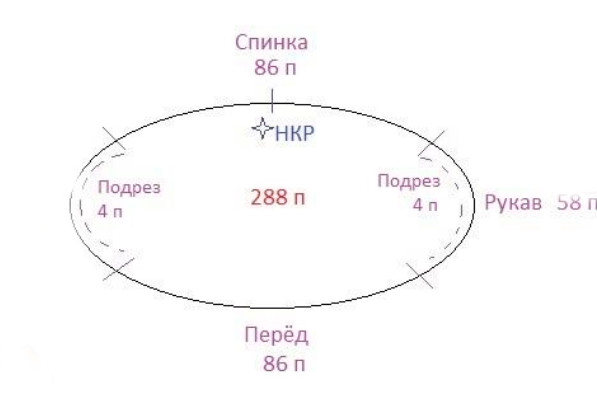
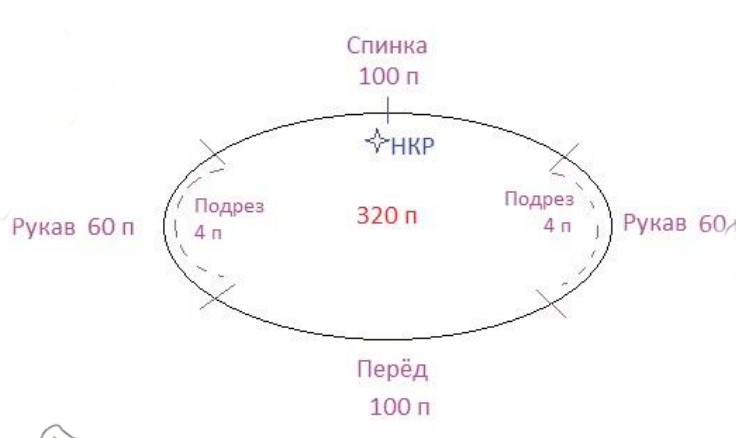
Below are the charts for distributing stitches to the sleeves/back/front for all sizes
Size 42-44. Growth 7 turning rounds. Asterisk- start of the circular round
Size 46-48. Growth 9 turning rounds. Asterisk- start of the circular round.
Size 50-52. Growth 11 turning rounds. Asterisk- start of the circular round
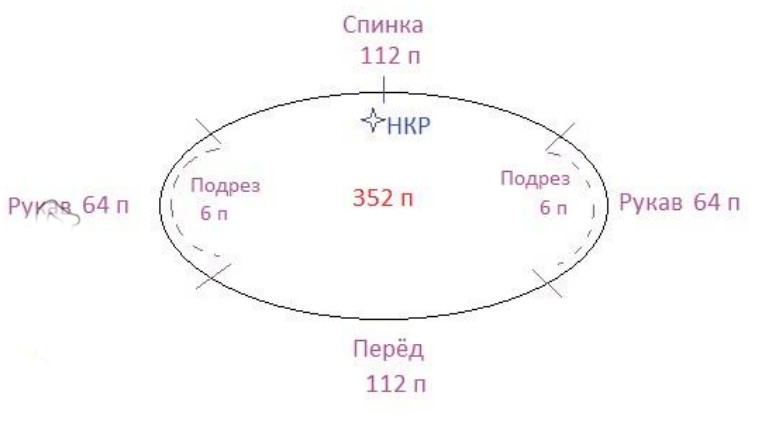
Size 54-56. Growth 13 turning rounds. Asterisk- start of the circular row
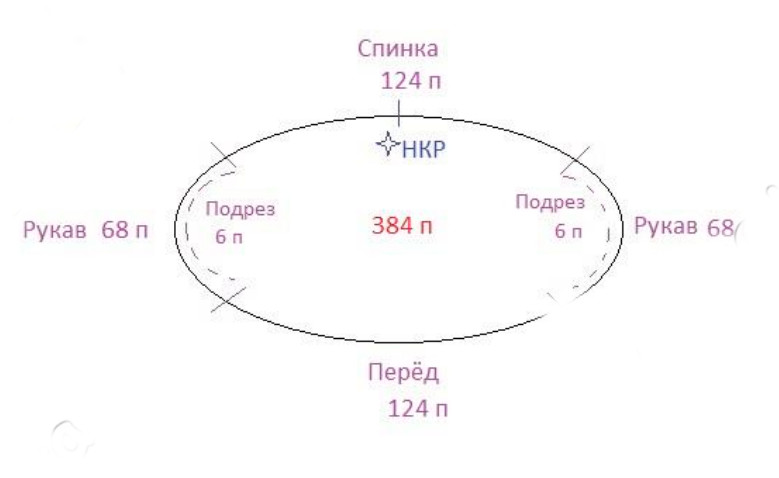
After we knitted the distribution row and distributed the sleeve/back/front stitches, we proceed to the Asian growth.
After we knitted the Asian growth using turning rounds, we will need an additional scrap yarn and a knitting needle for sewing knitted garments or a fishing line with stoppers to separate the sleeve stitches, pick up the underarm stitches and then knit the body of the garment to length. The symbols above in the chart indicate the number of underarm stitches for each size.
Stitch counts when separating the sleeve stitches for all sizes R.42-44 Back – 86 sts Front – 86 sts Sleeves – 58 sts/ 58 sts Underarm stitches – 8 sts (4 sts on each side) Body – 180 sts
R.46-48 Back – 100 sts Front – 100 sts Sleeves – 60 sts/ 60 sts Underarm stitches – 8 sts (4 sts on each side) Body – 208 sts
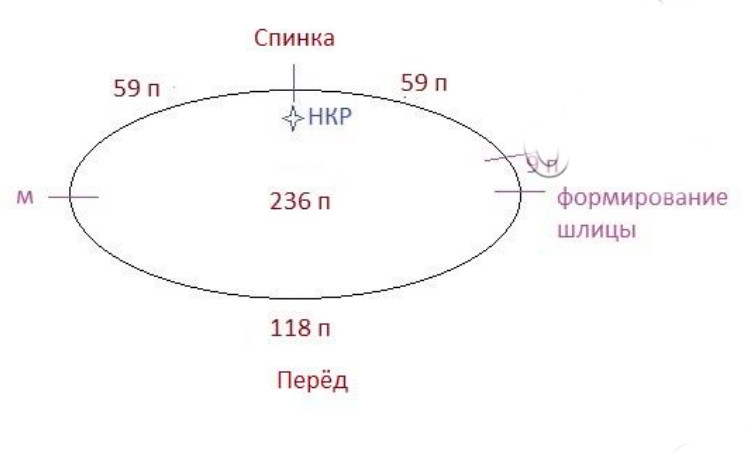
R.50-52 Back – 112 sts Front – 112 sts Sleeves – 64 sts/ 64 sts Underarm stitches – 12 sts (6 sts on each side) Torso – 236 sts
R.54-56 Back – 124 sts Front – 124 sts Sleeves – 68 sts/ 68 sts Underarm stitches – 12 sts (6 sts on each side) Torso – 260 sts
After we separated the sleeve stitches, picked up the underarm stitches, then we knit the length of the sweater or dress body.
SWEATER OPTION After we separated the sleeve stitches and picked up the required number of underarm stitches (for your size), we knit the sweater body in length 40-42 circular rounds in stockinette.
Next, we take circular needles 4.0 mm 60 cm and knit a 1x1 rib – 1 purl, 1 knit (and naturally start knitting the rib from a purl stitch).
The ribbing at the bottom is 20 circular rounds. After knitting the 1x1 rib – 1 purl, 1 knit – we knit 2 rounds of hollow ribbing.
Hollow ribbing:
1 circular round: purl stitch is purled, the knit stitch is slipped WITHOUT knitting and the working yarn BEHIND the work*repeat to the end of the round
2 circular round: purl stitch is slipped WITHOUT knitting and the working yarn IN FRONT of the work, knit stitch is worked as a knit stitch
Then, take a sewing needle for sewing knitted garments, measure the length of the working thread three times longer than the circumference of the fabric on the needles and close the stitches with the needle.
SLEEVE DRESS OPTION
Dresses length I knit up to forming the slit - 85 circular rounds in stockinette.
I form the slit on the left side; optionally you may form the slit on the right or left side.
Below are the diagrams for forming the slit. To form the slit – we divide the total number of stitches into two equal halves – back/front. The back stitches are divided again into 2 equal halves. The slit consists of 9 stitches on the front and 9 stitches on the back. These 9 stitches are knitted with 1x1 rib.
Slit formation
Size 42-44
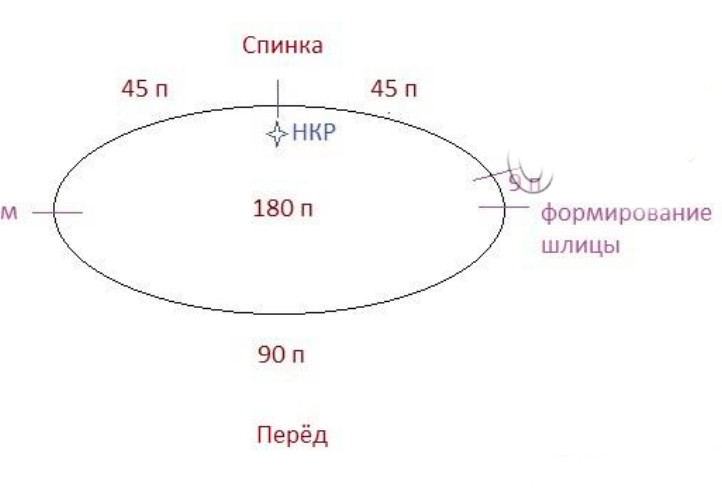
Size 46-48
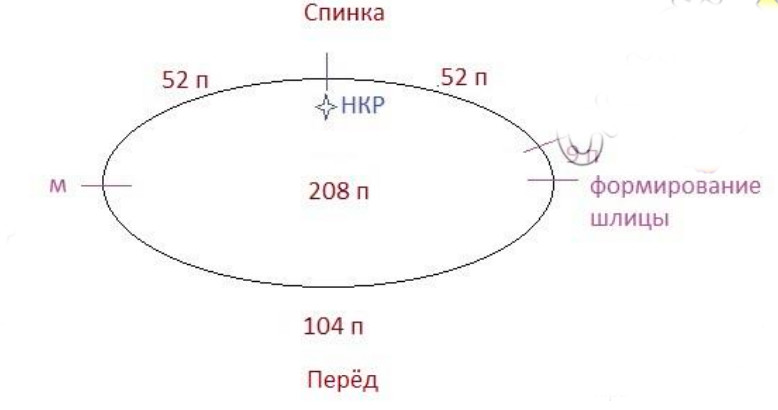
Size 50-52
Size 54-56
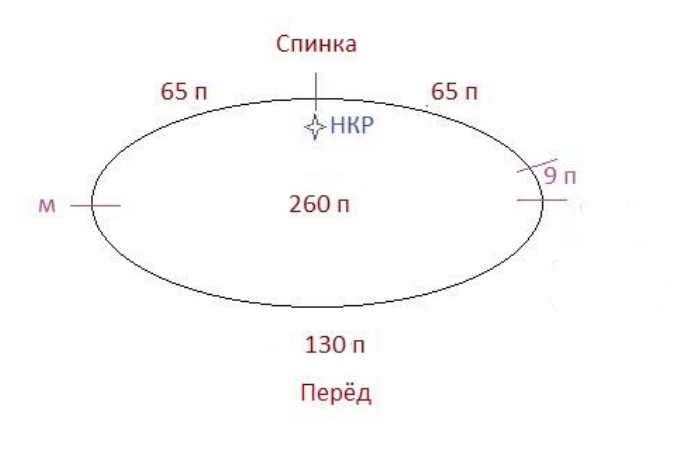
When forming the slit we switch to turning knitting.
And we knit 40 turning rounds in length. In knit rows we knit all stitches in knit and the slit stitches in 1x1 rib, in purl rows we knit all stitches in purl and the slit stitches in 1x1 rib. At your discretion you can knit any desired length of the dress with a slit – Mini/Midi/Maxi, but plan according to yarn consumption.
After forming the slit – the slit – and knitting 40 turning rounds (or more/less depending on your desired dress length) then we knit 1x1 rib on circular needles No. 5.0 mm, since the hem of the dress should be a straight cut. The 1x1 rib is continued from the stitches of the rib of our slit.
After we knitted the 1x1 rib along the bottom for 20 turning rounds, we then knit 2 rounds of hollow ribbing.
Having knitted 2 rounds of hollow ribbing, measure a working thread three times longer than the fabric on the needles and take a knitting needle for sewing knitted items. Close off the 1x1 rib stitches with the needle.
Hide the thread and proceed to the sleeves. For the sleeves you will need 2 pairs of circular needles No. 5.0 mm 40 cm and No. 5.0 mm 80/100 cm.
R.42-44
On circular needles No. 5.0 mm 40 cm, pick up with an extra provisional yarn 58 sts. Next we must pick up the underarm stitches and stitches along the edge of the Asiatic growth. The underarm stitches consist of 4 stitches + an additional 9 stitches along the edge of the Asiatic growth + 1 extra stitch from the 4-stitch underarm section so that there are no holes or gaps in the underarm area. Also we will need 3 markers. So, we pick up 58 sts + 14 sts = 72 sts. Knitting the 1st round of the sleeve, we reduce the picked-up 14 sts by half = 14:2= 7 sts. Therefore, the total number of stitches is 65 sts. Then, knitting 5 circular rounds in a row we decrease 2 stitches in each circular round – 1 stitch before the marker slanting left / 1 stitch after the marker slanting right.
Thus, we decrease an additional 10 stitches and the total sleeve stitch count is 55 stitches. With this number of stitches we knit the sleeve to length without further decreases – it is straight. I knit to 70 circular rounds. Since there are few stitches left on the needles, we take circular needles No. 5.0 mm 80/100 cm and knit the sleeve to length using the Magic Loop method (video lesson below). After we have knitted our sleeve to length, we then either use sock needles No. 4.0 mm 3-4 pieces, or circular needles No. 4.0 mm 80/100 cm if you also knit the cuff of the sleeve using the Magic Loop method and proceed to the ribbing. We knit the sleeve cuff in 1x1 rib – purl, knit, but the cuff on the sleeve is 18 circular rounds. After knitting the cuff in 1x1 rib, we knit 2 rounds of hollow ribbing and bind off the stitches with a needle. The sleeve cuff is straight, nothing is decreased in the ribbing. The second sleeve is knitted similarly.
R.46-48
On circular needles No. 5.0 mm 40 cm, we pick up 60 stitches with an extra waste yarn. Next we must pick up the underarm stitches and the stitches along the edge row of the Asian braid. The underarm stitches consist of 4 stitches + an additional 15 stitches along the edge row of the Asian braid + 1 extra stitch from the 4-stitch underarm to prevent holes and runs in the armpit area. We also need 3 markers. So, we pick up 60 p + 16 p = 76 stitches. Knitting the 1st circular row of the sleeve, we reduce the picked-up 16 stitches by half = 16:2 = 8 stitches. Therefore the total number of stitches is 68 stitches. Next, knitting 5 circular rows in a row, we decrease 2 stitches in each circular row – 1 stitch before the marker that tilts to the left / 1 stitch after the marker that tilts to the right. Thus, we additionally decrease 10 stitches and the total number of sleeve stitches is 58 stitches. At this number of stitches we knit the sleeve to length without decreases – it is straight for us. In length I knit 70 circular rows. Since there are only a few stitches left on the needles, we take circular needles No. 5.0 mm 80/100 cm and knit the sleeve to length using the Magic Loop method (video lesson below). After we knit our sleeve to length, we take in work either sock needles No. 4.0 mm 3-4 sizes, or circular needles No. 4.0 mm 80/100 cm if you also knit the cuff of the sleeve with the Magic Loop method and move on to the ribbing. We knit the cuff with a 1×1 rib – purl one, knit one, but the cuff on the sleeve is 18 circular rows. After knitting the cuff with 1×1 rib, we knit 2 circular rows of stockinette and bind off the stitches with a needle. The sleeve cuff is straight; nothing is decreased in the ribbing.
R.50-52
On circular needles No. 5.0 mm 40 cm we pick up 64 stitches with an extra waste yarn. Next we must pick up the underarm stitches and the stitches along the edge row of the Asian braid. The underarm stitches consist of 6 stitches + an additional 11 stitches along the edge row of the Asian braid + 1 additional stitch from the 4-stitch underarm to prevent holes and tears in the armpit area. We also need 3 markers. So, we pick up 64 p + 18 p = 82 stitches. Knitting the 1st circular row of the sleeve, we decrease the picked-up 18 stitches in half = 18:2 = 9 stitches. Therefore the total number of stitches is 73 stitches. Next, knitting 5 circular rows in a row we decrease 2 stitches in each circular row – 1 stitch before the marker with a left-leaning decrease / 1 stitch after the marker with a right-leaning decrease. Thus, we additionally decrease 10 stitches and the total number of sleeve stitches becomes 63 stitches. At this number of stitches we knit the sleeve to length without decreases – it is straight. In length I knit 70 circular rows. Since there are only a few stitches left on the needles, we take circular needles No. 5.0 mm 80/100 cm and knit the sleeve to length using the Magic Loop method (video lesson below). After knitting the sleeve to length, we take in work either sock needles No. 4.0 mm 3-4 sizes, or circular needles No. 4.0 mm 80/100 cm if the cuff of the sleeve you also knit using the Magic Loop method and move on to the ribbing. We knit the cuff with a 1×1 rib – purl one, knit one, but the cuff on the sleeve is 18 circular rows. After knitting the cuff with 1×1 rib, we knit 2 circular rows of stockinette and bind off the stitches with a needle. The sleeve cuff is straight; nothing is decreased in the ribbing. Second sleeve is knitted similarly.
R.54-56
On circular needles No. 5.0 mm 40 cm we pick up 68 stitches with an extra waste yarn. Next we must pick up the underarm stitches and the stitches along the edge row of the Asian braid. The underarm stitches consist of 6 stitches + an additional 13 stitches along the edge row of the Asian braid + 1 additional stitch from the 4-stitch underarm to prevent holes and tears in the armpit area. We also need 3 markers. So, we pick up 68 p + 20 p = 88 stitches. Knitting the 1st circular row of the sleeve, we decrease the picked-up 20 stitches by half = 20:2 = 10 stitches. So the total number of stitches is 78 stitches. Next, knitting 5 circular rows in a row we decrease 2 stitches in each circular row – 1 stitch before the marker with a left-leaning decrease / 1 stitch after the marker with a right-leaning decrease. Thus, we additionally decrease 10 stitches and the total number of sleeve stitches becomes 68 stitches. At this number of stitches we knit the sleeve to length without decreases – it is straight. In length I knit 70 circular rows. Since there are only a few stitches left on the needles, we take circular needles No. 5.0 mm 80/100 cm and knit the sleeve to length using the Magic Loop method. After knitting the sleeve to length, we take in work either sock needles No. 4.0 mm 3-4 sizes, or circular needles No. 4.0 mm 80/100 cm if the cuff of the sleeve you also knit using the Magic Loop method and move on to the ribbing. We knit the cuff with a 1×1 rib – purl one, knit one, but the cuff on the sleeve is 18 circular rows. After knitting the cuff with 1×1 rib, we knit 2 circular rows of stockinette and bind off the stitches with a needle. The sleeve cuff is straight; nothing is decreased in the ribbing. The second sleeve is knitted similarly.
Washing and Blocking
Before the first fitting and final assembly, be sure to wash and block the garment.
Care Instructions:
— Wash by hand only, in cool water (not above 30 °C).
— Use a mild wool detergent or baby shampoo.
— Do not rub, do not wring the garment.
— After washing, gently press out the water without wringing, by blotting with a towel.
— Lay the garment flat on a horizontal surface on a dry towel, shaping it.
— Do not dry on a radiator, while hanging, or in direct sunlight.
— After complete drying, if necessary you can lightly steam from the wrong side through a damp cloth.
After proper washing and blocking, the fabric becomes soft, the stitches even out,
the pattern of the Japanese yoke fully reveals itself, and the garment takes a neat shape and a perfect fit.