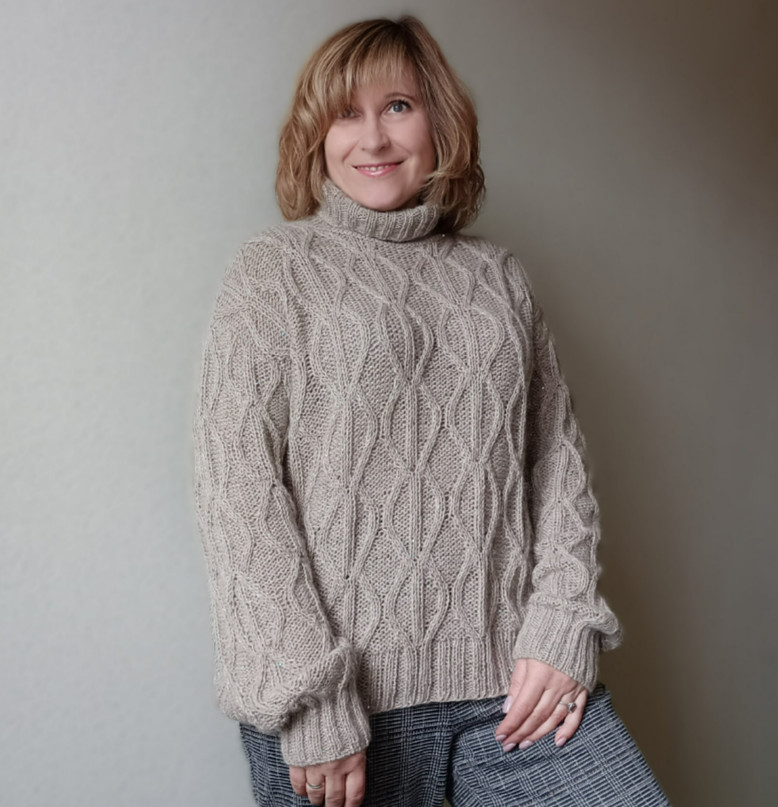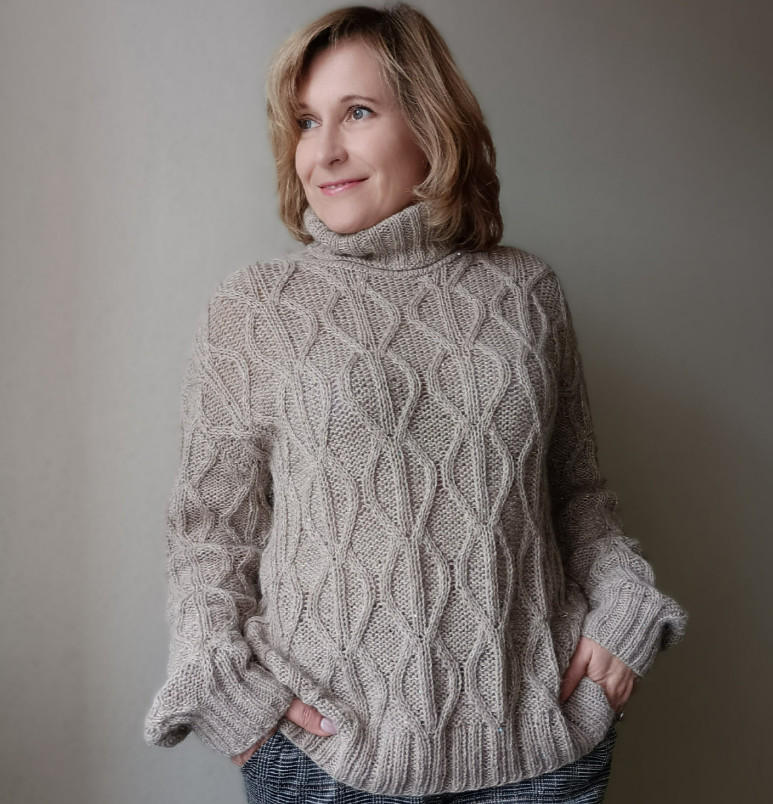




Basic knitted sweater
Added: 11.11.2025 в 12:15 Views: 577
Basic knitted sweaterKlubokhttp://klubok.work/1/3/9298/Klubokhttps://klubok.work/css/image/top-logo-en.png
Yarn
To the bobbin yarn Carezza Boulder (320m/100g, merino 60%, angora 15%, PA 25%) I add a strand of mohair with lurex and very tiny sequins, they are almost invisible, but nevertheless they sparkle from time to time. Gauge in stockinette: 17 stitches per 10 cm

Construction
The sweater is knitted for size 48. The knitting is done from the bottom up in the round to the armholes; after separating, decreases are made at the armhole, the neckline is worked on the front and back. On the sleeves, stitches are picked up along the armhole, knitted top-down, starting with knitting the sleeve cap. The neckline is a 2x2 rib with a mattress stitch in the pocket.
Body
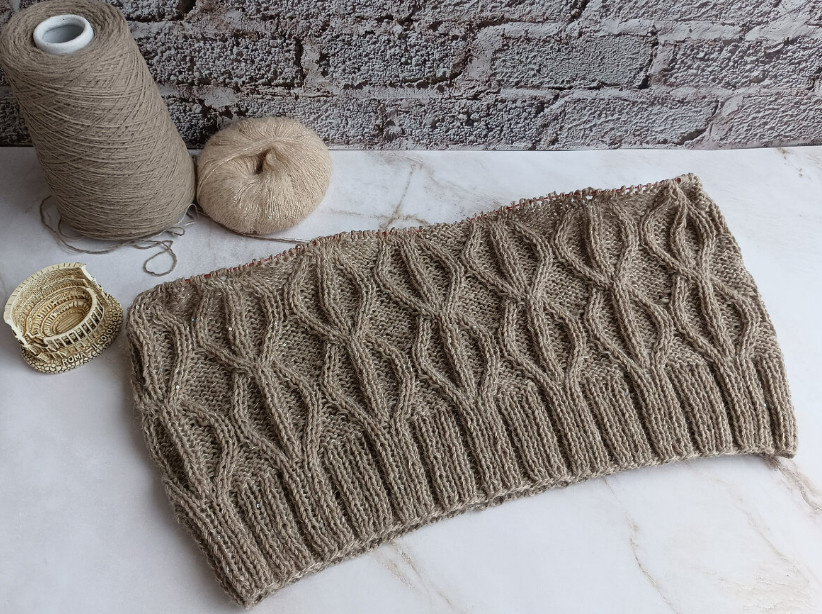
From the photograph that inspired this project, it is evident that the ribbing curls; apparently the interweaving in the pattern tightens the fabric. We must definitely take this into account, especially since the chart here suggests a 2x2 rib.
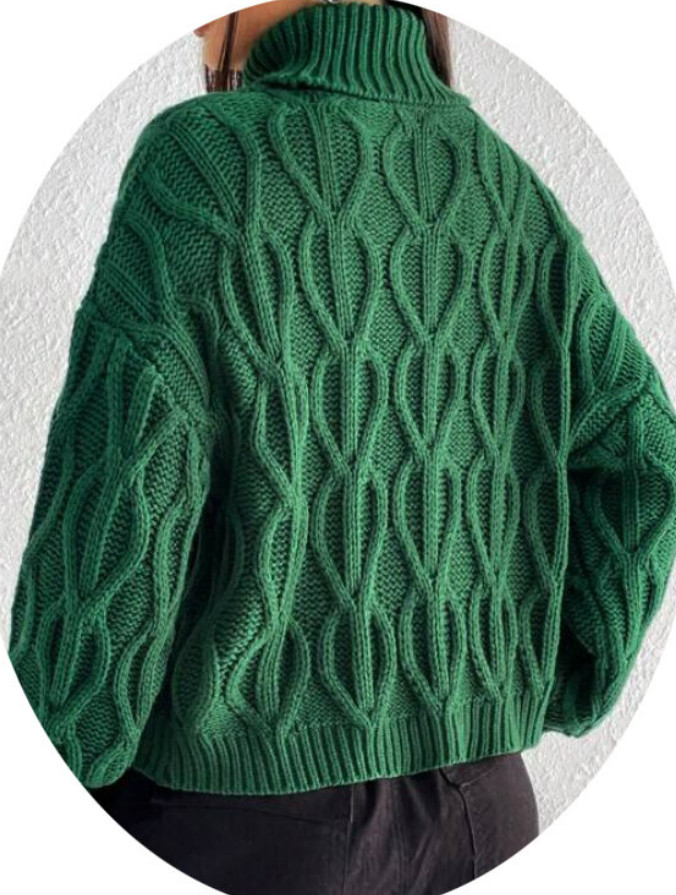
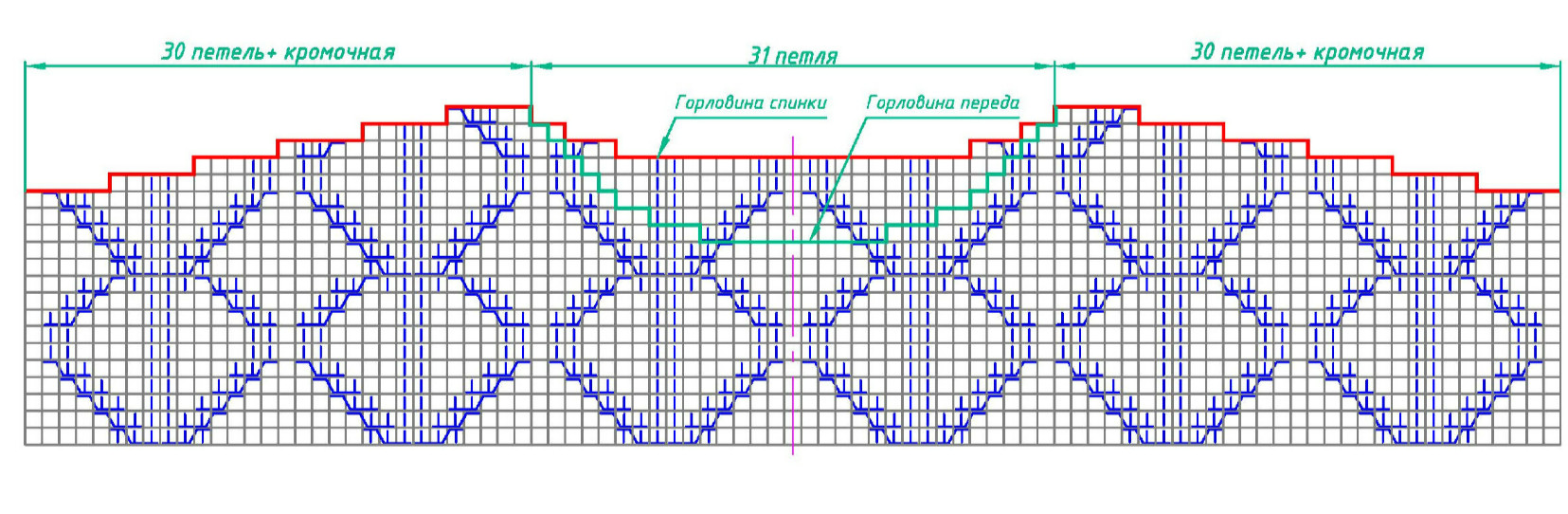
I cast on 196 stitches with 3.5 mm needles in the usual way. I knit an uneven rib to get a nice transition from the rib to the main pattern (in the chart below, the pattern repeat is repeated 14 times)
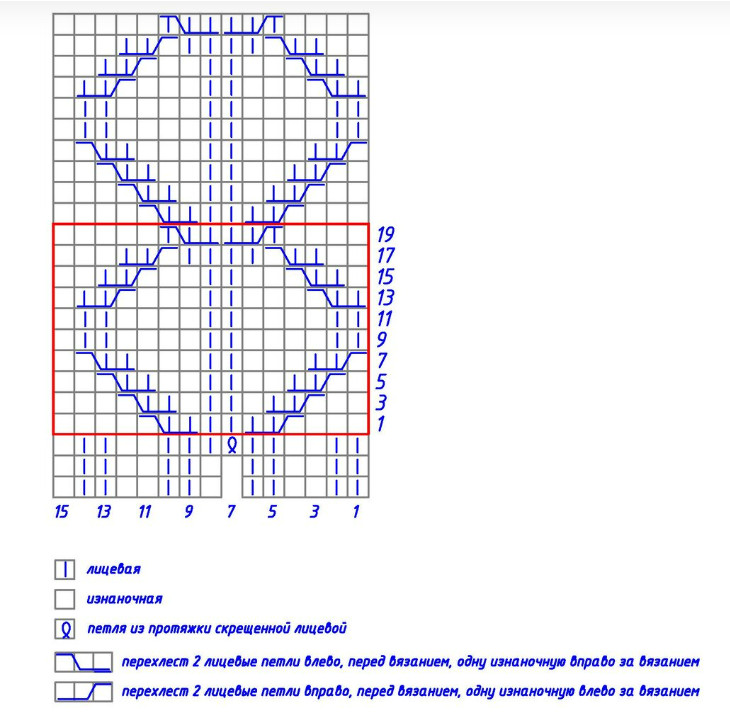
 knit
knit
purl
 twisted stitch from a slipped stitch crossed knitwise
The rib height is 7 cm; I switch to 4.5 mm needles, in the setup row I add 14 stitches according to the chart (there are 210 stitches on the needles). I knit 14 repeats.
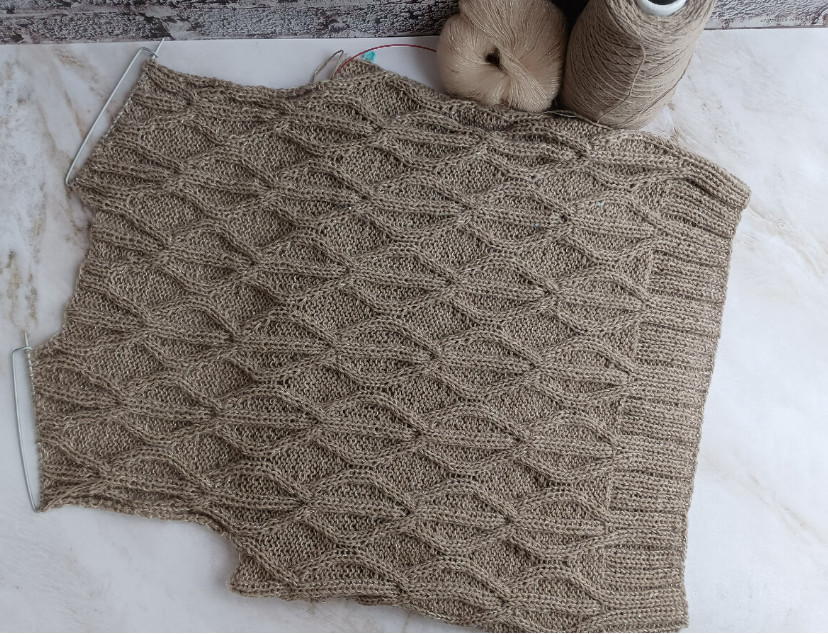
After knitting 3.5 repeats in height, I switch to turning knitting, reducing the stitch count for the armhole to 12 stitches on each side. On each sidepiece there are 93 stitches. Armhole height is 20 cm. For the neckline I allocate 31 stitches; for the shoulders there remain 31 stitches each.
I perform the shoulder slopes and join the pieces using the three-needle method from the wrong side.
Sleeves
To calculate the sleeve, I perform intermediate shaping of the body to accurately determine the knitting density of the fabric with the pattern.
It turned out to be 19 stitches per 10 cm.
I cast on 75 stitches at the armhole, knitting 5 pattern repeats (15 stitches each).
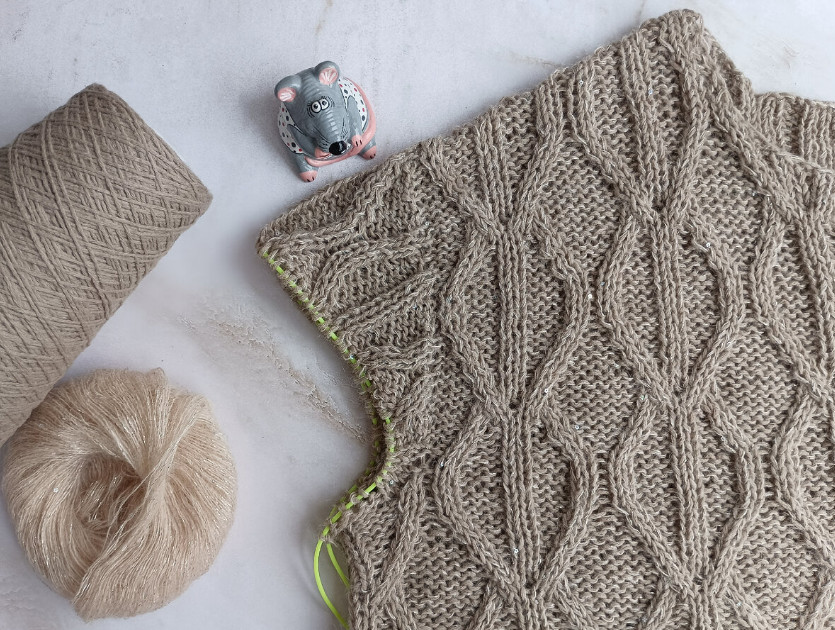
Gradually decrease 15 stitches along the entire length of the sleeve; 60 stitches remain in the knitting (4 repeats)
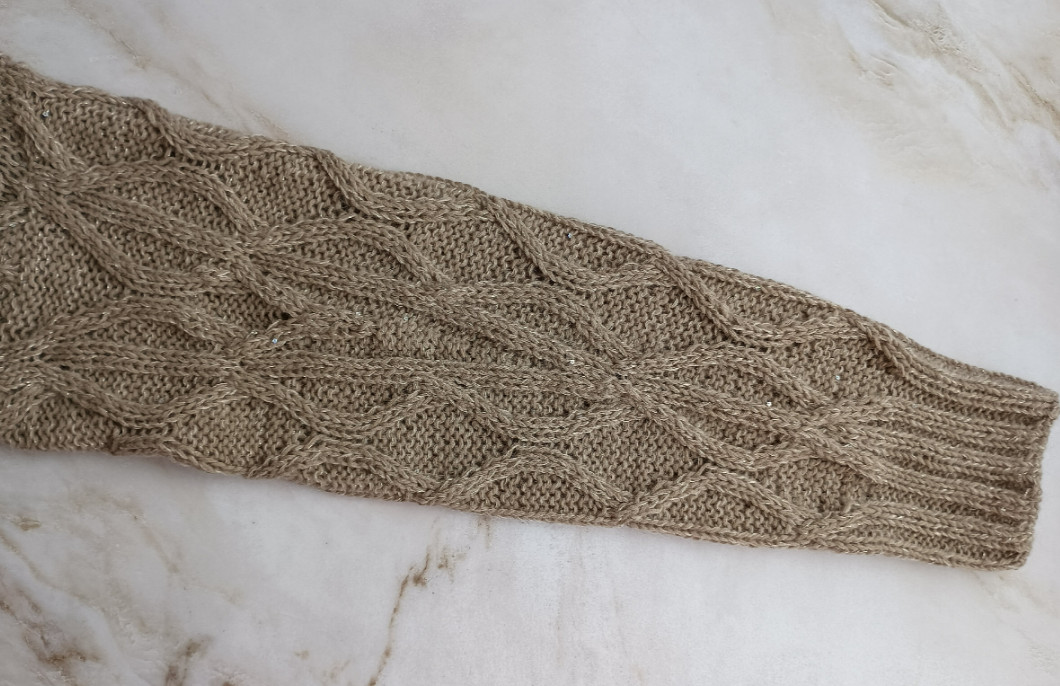
For the cuff I take 3.0 mm needles, decrease 12 stitches so that the pattern transitions smoothly into a 2x2 rib. I knit 20 rounds for the cuff; in the last row I switch to a 1x1 rib and bind off with a needle.
Neckline
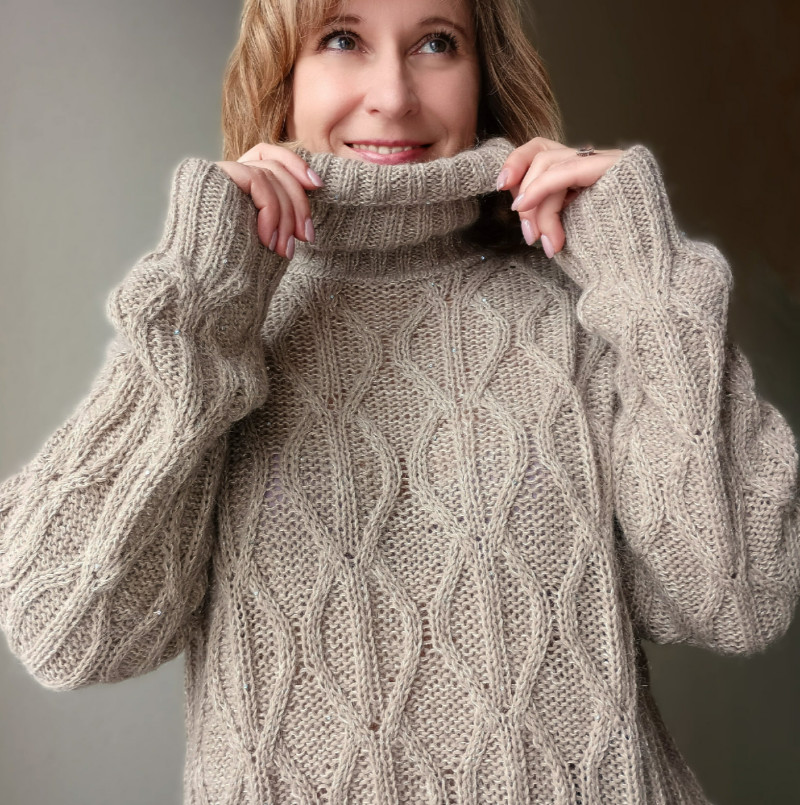
I perform a mattress stitch along the edge; for this I pick up 88 stitches on two pairs of 3.0 mm needles around the neckline. I knit 1 row of purl stitches, 3 rows of knit stitches with the right side facing, and on the wrong side 3 rows of stockinette. I switch to a 2x2 rib to knit a tall collar, and at the last moment decide that this will be a sweater!
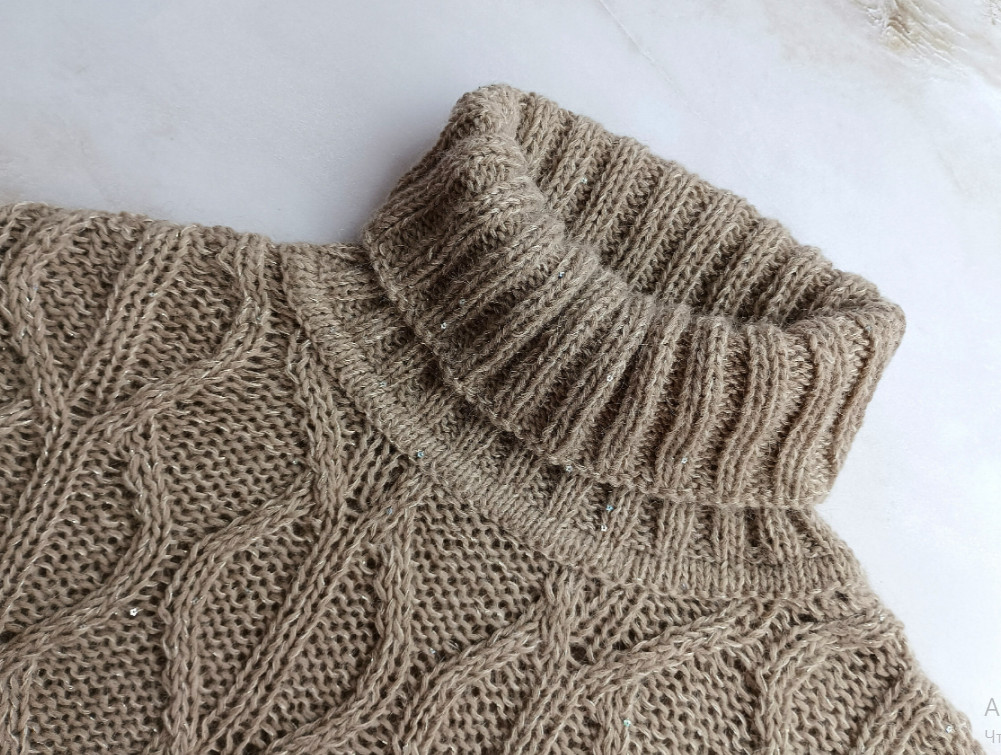
I bind off the neckline stitches in the usual way. The Italian bind-off, as used on the cuffs, looks very beautiful, but in my experience it is not suitable for a narrow neckline. When pulling over the head, the edge stretches and does not return to its original position.