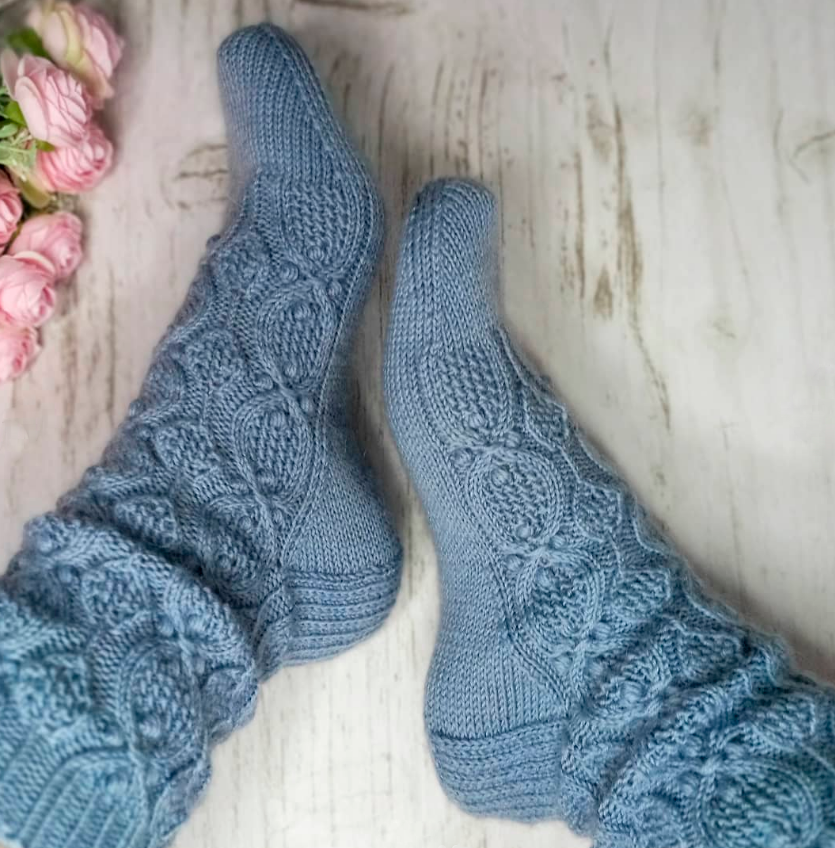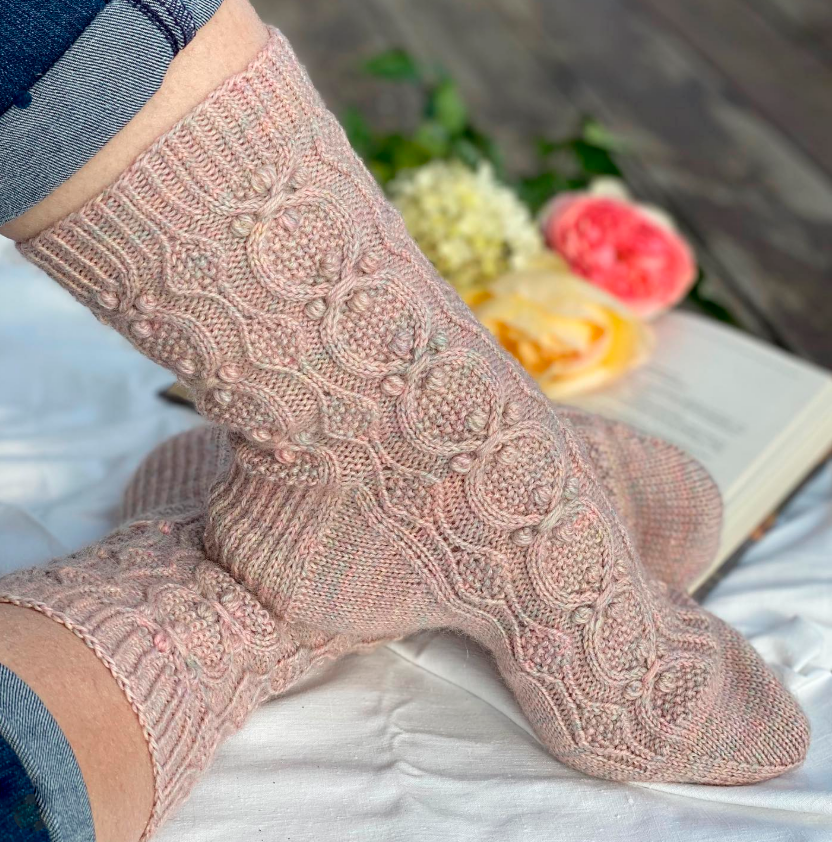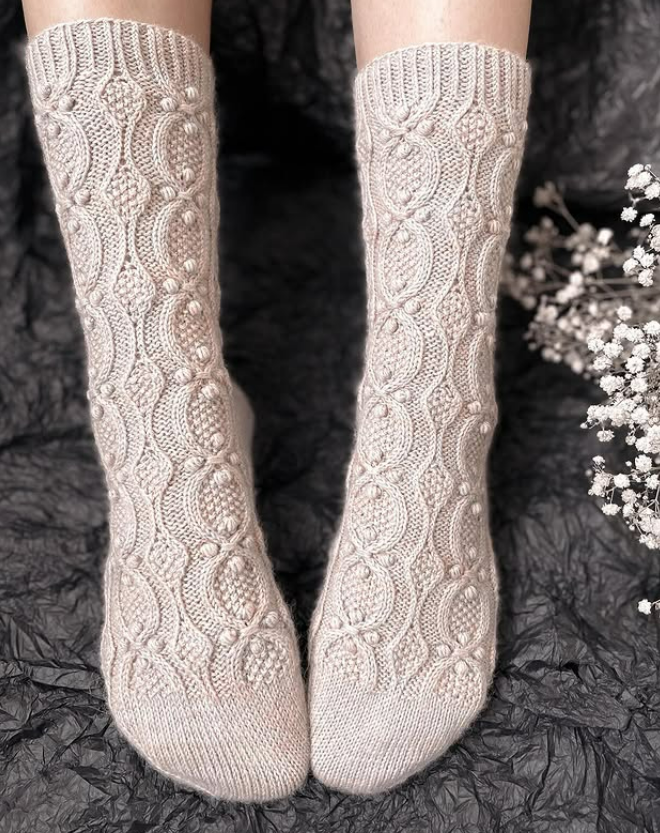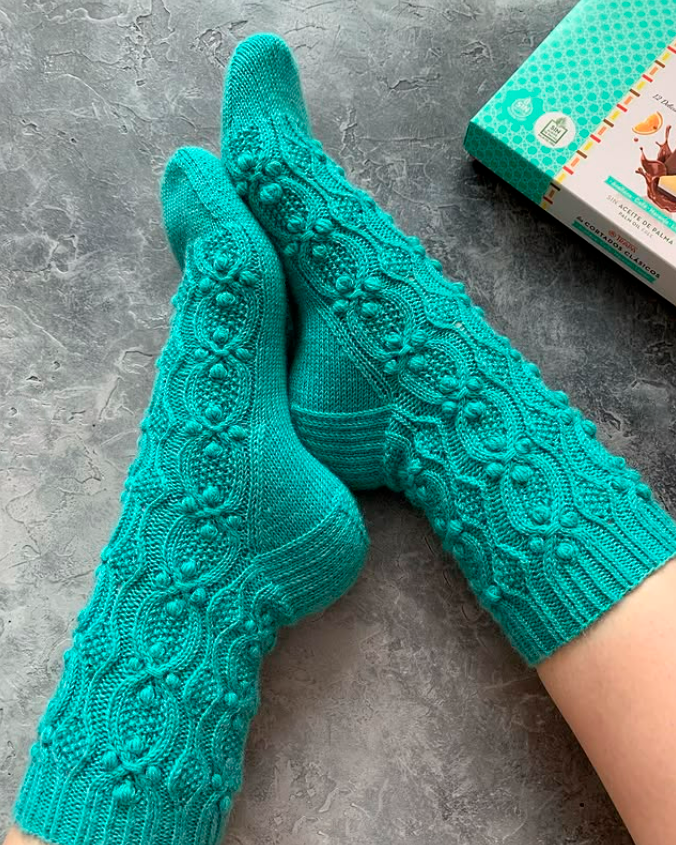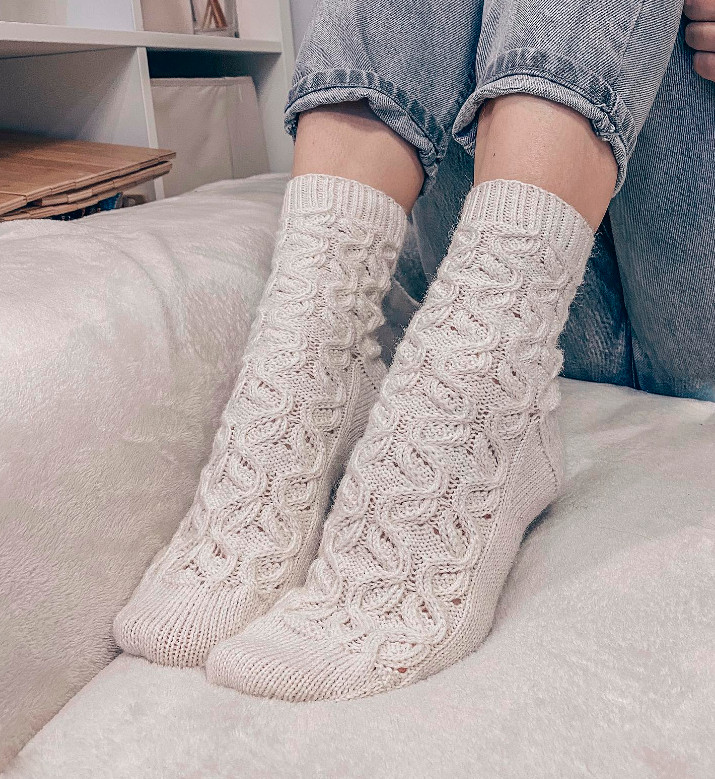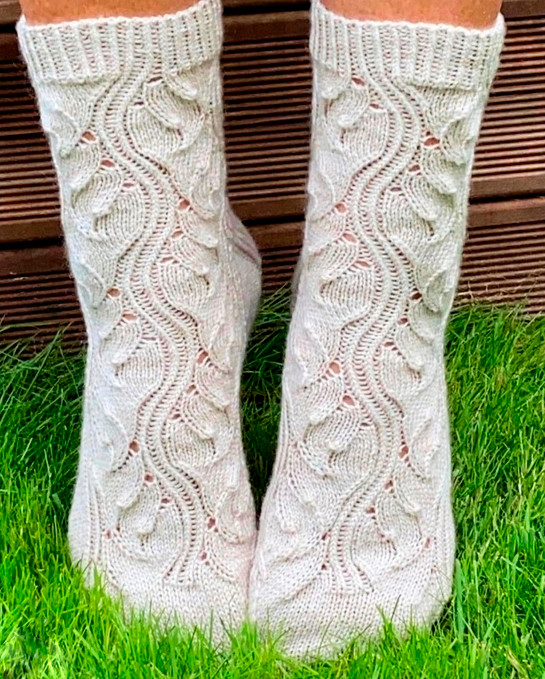




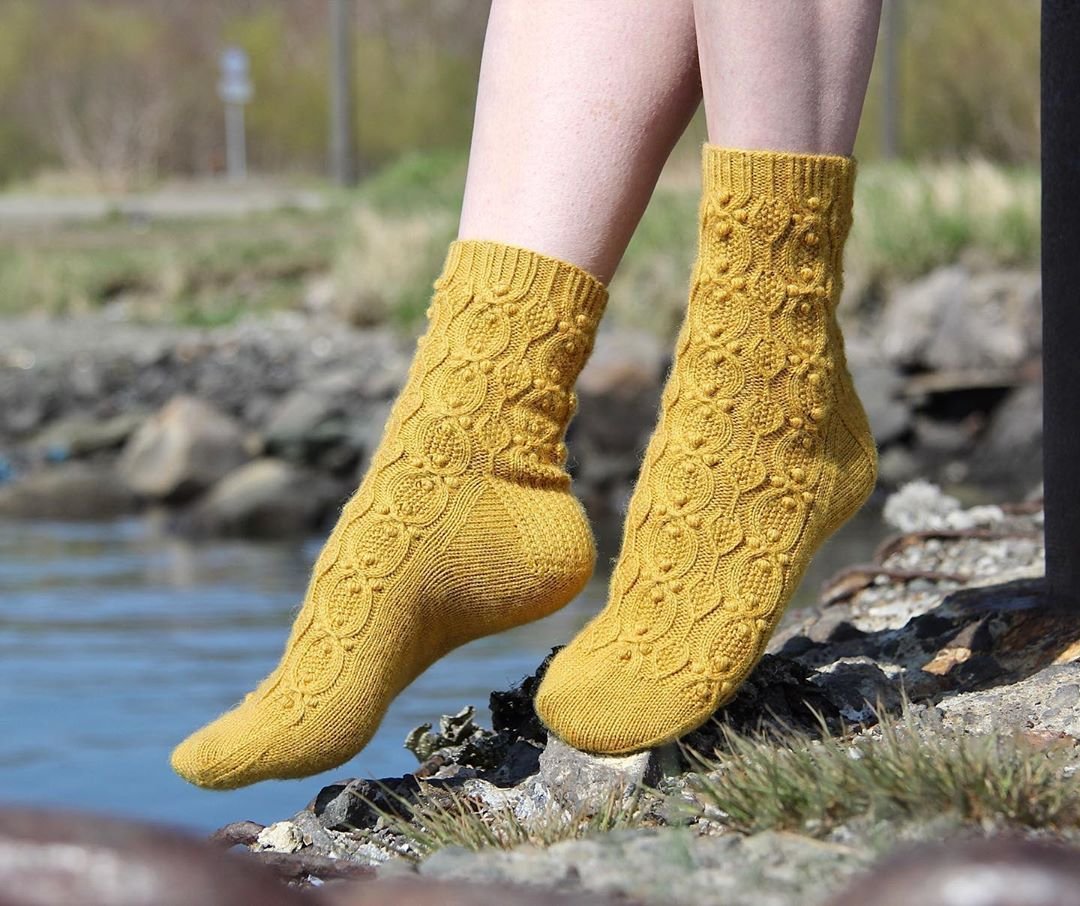



CONDITIONAL NOTATIONS FOR SCHEMES
 No stitch.
 Knit stitch.
 Purl stitch.
 Slip 1 stitch as if to knit, knit the next 2 stitches together as one knit stitch with a right slant, pull the slipped stitch over this stitch.
 Twisted knit stitch.
Knit the yarn over as a twisted knit stitch through the back loop.
Purl the yarn over as a twisted knit stitch through the front loop.
 Twisted purl stitch.
Knit the yarn over through the back loop as a twisted purl stitch.
Purl the yarn over through the front loop as a twisted purl stitch.
 Yarn over (fig.1)
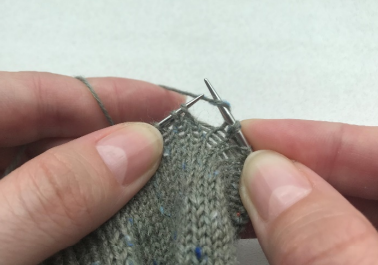
 Backward yarn over (fig.2)
 Two stitches together as one knit stitch with a left slant.
 Two stitches together as one knit stitch with a right slant.
 Knitting a twisted knit and purl together as one knit stitch
with a left slant.
 Purl and twisted knit together as one knit stitch with a right slant.
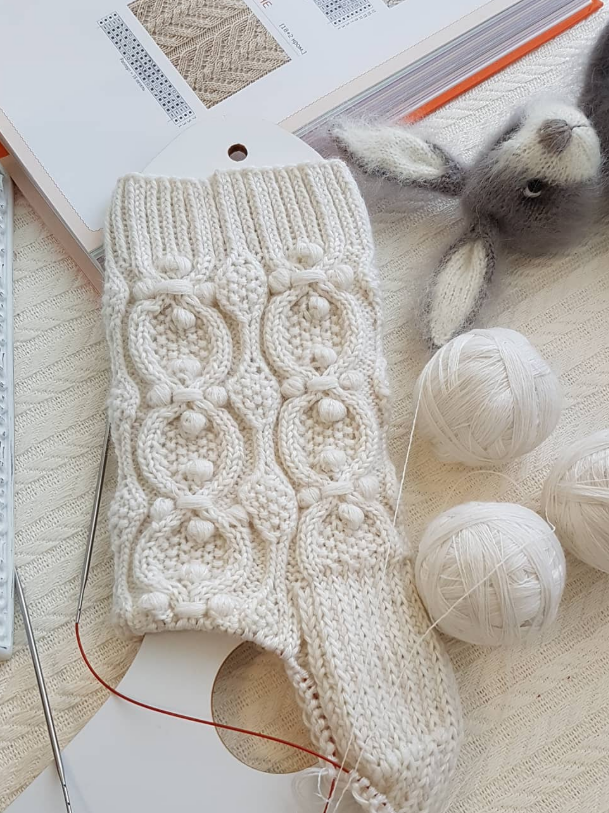
 Bobble with needles
Bobble with hook
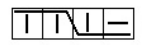
4 stitches crossed left:
2 stitches slip onto a helper needle in front of the work, 1 purl, 1 knit, knit the stitches from the helper needle.
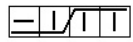 4 stitches crossed right:
2 stitches slip onto a helper needle behind the work, 2 knit stitches, knit 1 knit, 1 purl from the helper needle.
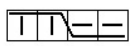 4 stitches crossed left:
2 stitches slip onto a helper needle in front of the work, 2 purl, knit the stitches from the helper needle.
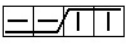 4 stitches crossed right:
2 stitches slip onto a helper needle behind the work, 2 knit stitches, knit 2 purls from the helper needle.
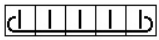 Knit 5 knit stitches on a helper needle, then
wrap these stitches with the working yarn counterclockwise 3 times.
Important: do not tighten the yarn too much!
After that, transfer the stitches from the helper needle to the right needle.
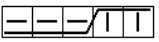 Cross 5 stitches right:
Slip 3 stitches onto a helper needle behind the work, knit 2 stitches, knit 3 purls from the helper needle.
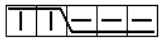 Cross 5 stitches left:
Slip 2 stitches onto a helper needle in front of the work, knit 3 purls, knit 2 knit stitches from the helper needle.
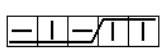 Cross 5 stitches right:
Slip 3 stitches onto a helper needle behind the work, knit 2 knit stitches, knit 1 purl, knit 1 knit, knit 1 purl.
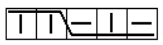 Cross 5 stitches left:
Slip 2 stitches onto a helper needle in front of the work, knit 1 purl, knit 1 knit, knit 1 purl, knit 2 knit stitches from the helper needle.
Fig.1
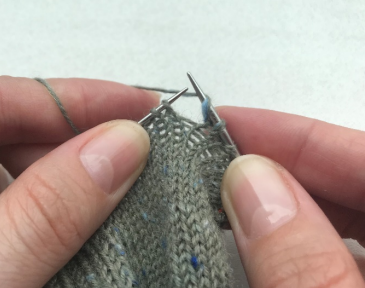
Fig.2
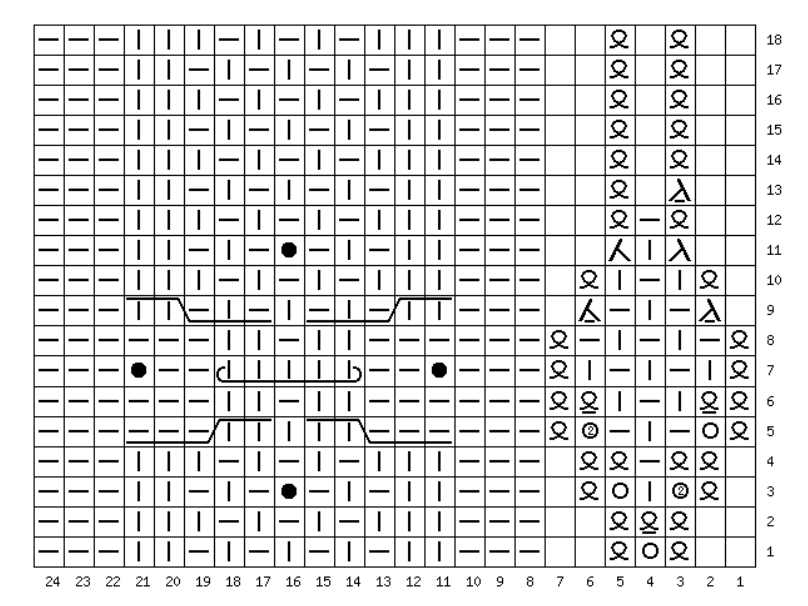
Please note: the number of stitches in schemes No.4, No.5, No.6 differs from the actual number of stitches!!!
Remember that an empty cell means no stitch.
Immediately after knitting the cuff, we start knitting from row 1 of the repeat.
Scheme No.4 (size S)
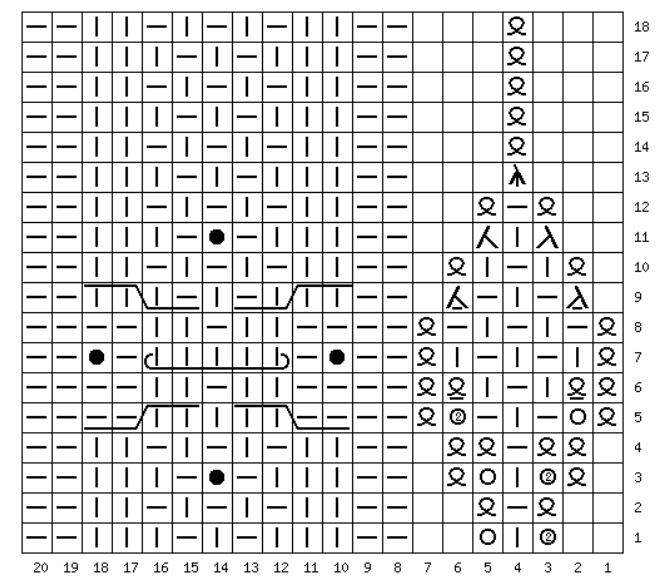
Scheme No.5 (size M)
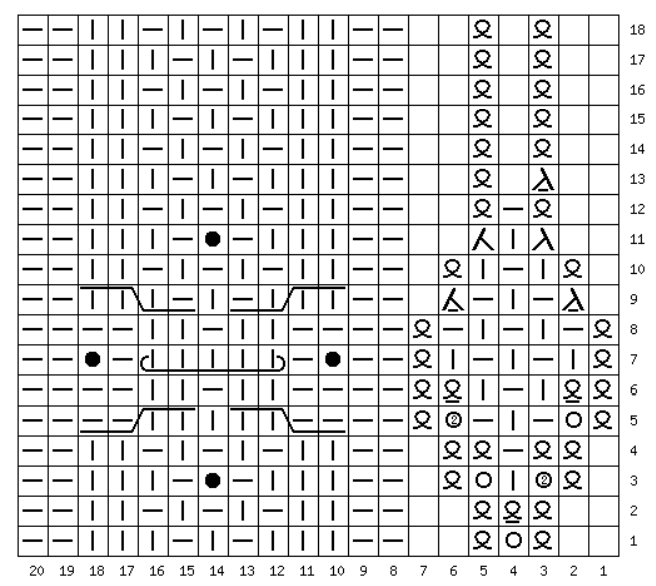
Scheme No.6 (size L)
HEEL WALL
We begin knitting the heel wall. We will knit it in turn rows.
Turn the needle with the heel stitches towards you with the purl side and start knitting the first setup row.
For size M, you need to make one increase from the twisted purl (preferably at the very beginning of the row), the number of stitches will become 35.
For size L, you need to increase by 2 stitches from the twisted purls (preferably at the beginning and at the end of the row), the number of stitches will become 36.
1st row (purl): slip 1 edge stitch (yarn behind the work), 31(33,34) purls, knit the edge stitch, turn the knitting;
2nd row (knit): slip 1 edge stitch (yarn in front of the work), for sizes S and M slip 1 stitch as if to knit, yarn behind the work, 1 knit, repeat from * to * to the end of the row, at the end slip 1 stitch as if to knit, yarn behind the work, knit the edge stitch, turn the knitting.
For size L: 1 edge stitch (yarn in front of the work), slip 1 stitch as if to knit, yarn behind the work, 1 knit, repeat from * to * to the end of the row, knit the edge stitch, turn the knitting;
3rd row (purl): slip 1 edge stitch (yarn behind the work), 31(33,34) purls, knit the edge stitch, turn the knitting.
Repeat the 2nd and 3rd rows 16(17,17) more times, a total of 34(36,36) rows of reinforced ribbing should be knitted.
It is convenient to count the rows by the braid of edge stitches on the purl side on the right wall, there should be 17(18,18). Do not count the stitch on the needle!
Note: you can increase the height of the heel wall if you have a high arch, just knit the 2nd and 3rd rows one or more times.
Also, you can knit the height of the heel wall 2 or more rows less if it seems too high.
HEEL CORNER
We proceed to knit the heel corner. We begin knitting with a knit row.
1st row (knit): slip 1 edge stitch (yarn in front of the work), 18(19,20) knits, knit 2 stitches together as one knit stitch, 1 knit, turn the knitting;
2nd row (purl): slip 1 edge stitch (yarn in front of the work), 6(6,7) purls, knit 2 stitches together as one purl stitch, 1 purl, turn the knitting;
3rd row (knit): slip 1 edge stitch (yarn behind the work), 7(7,8) knits, knit 2 stitches together as one knit stitch, 1 knit, turn the knitting;
4th row (purl): slip 1 edge stitch (yarn in front of the work), 8(8,9) purls, knit 2 stitches together as one purl stitch, 1 purl, turn the knitting;
5th row (knit): slip 1 edge stitch (yarn behind the work), 9(9,10) knits, knit 2 stitches together as one knit stitch, 1 knit, turn the knitting;
6th row (purl): slip 1 edge stitch (yarn in front of the work), 10(10,11) purls, knit 2 stitches together as one purl stitch, 1 purl, turn the knitting;
7th row (knit): slip 1 edge stitch (yarn behind the work), 11(11,12) knits, knit 2 stitches together as one knit stitch, 1 knit, turn the knitting;
8th row (purl): slip 1 edge stitch (yarn in front of the work), 12(12,13) purls, knit 2 stitches together as one purl stitch, 1 purl, turn the knitting;
9th row (knit): slip 1 edge stitch (yarn behind the work), 13(13,14) knits, knit 2 stitches together as one knit stitch, 1 knit, turn the knitting;
10th row (purl): slip 1 edge stitch (yarn in front of the work), 14(14,15) purls, knit 2 stitches together as one purl stitch, 1 purl, turn the knitting;
11th row (knit): slip 1 edge stitch (yarn behind the work), 15(15,16) knits, knit 2 stitches together as one knit stitch, 1 knit, turn the knitting;
12th row (purl): slip 1 edge stitch (yarn in front of the work), 16(16,17) purls, knit 2 stitches together as one purl stitch, 1 purl, turn the knitting;
13th row (knit): slip 1 edge stitch (yarn behind the work), 17(17,18) knits, in size S knit 2 stitches together as one knit stitch, turn the knitting;
in sizes M and L knit 2 stitches together as one knit stitch, 1 knit, turn the knitting;
14th row (purl): slip 1 edge stitch (yarn in front of the work), 17(18,19) purls, in size S knit 2 stitches together as one purl stitch, turn the knitting;
in sizes M and L knit 2 stitches together as one purl stitch, 1 purl, turn the knitting.
The heel corner is knitted! Check: on the needle you should have 19(21,22) stitches.
LIFTING STITCHES FROM THE HEEL WALL
Knit 10(11,11) knits, pull out the right needle, optionally place a marker, as this will be the start of the row!
Knit 9(10,11) knits, lift 17(18,18) stitches from the heel wall.
Find the strand in the braid of edge stitches and lift the stitch from it (see video).
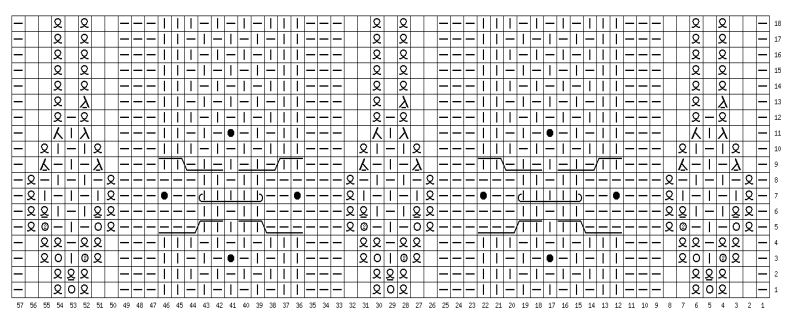
Next, for size S, make an increase from the strand between the front part of the sock and the heel with a twisted purl (see video), knit according to scheme No.1.1, then make another increase from the strand with a twisted purl.
ATTENTION: these 2 lifted purls are already included in scheme No.1.1!!!
For sizes M and L, do not make increases; after lifting the stitches from the heel wall, knit immediately according to scheme No.1.2(1.3).
Lift 17(18,18) stitches from the heel wall, knit 10(11,11) knits.
Check: on the needles you should have 92(98,100) stitches.
Please note: the number of stitches in schemes No.1.1, No.1.2, No.1.3 differs from the actual number of stitches!!!
Remember that an empty cell means no stitch.
Scheme No.1.1 (for size S)
Actual number of stitches — 37
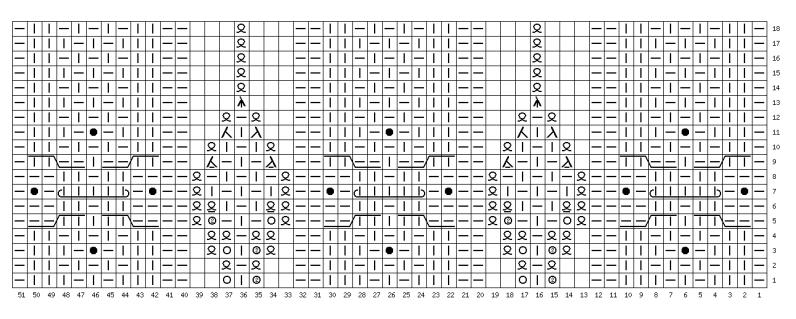
Scheme No.1.2 (for size M)
Actual number of stitches — 41
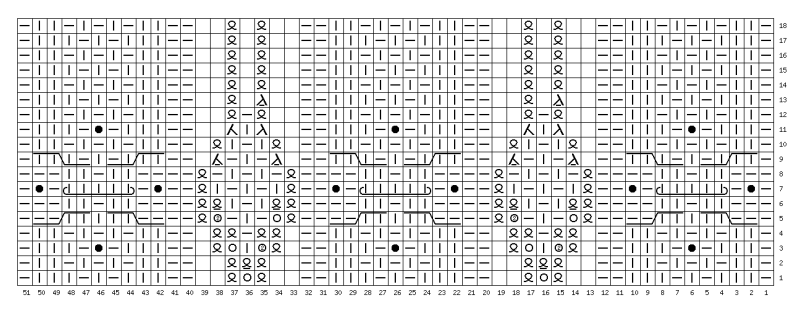
Scheme No.1.3 (for size L)
Actual number of stitches — 42
DECREASES FOR THE INSTEP
We will make decreases for the instep in every second row.
First, we knit the first row without decreases: the lower part of the sock with knit stitches (the lifted stitches are also knitted with knit stitches), and the upper part of the sock according to the scheme for your size.
In the second row, on the first needle of the lower part of the sock, knit all stitches with knit stitches except for the last three.
Knit 2 stitches together as one knit stitch with a right slant, 1 knit,
knit according to scheme No.1.1(1.2;1.3),
1 knit, 2 stitches together as one knit stitch with a left slant, knit to the end of the row.
Continue to make decreases until there are 70(72,72) stitches left on the needles.
Note: be careful when counting stitches!
A diamond with the "rice" pattern in the scheme counts as 1(2,2) stitches!
Total length of the foot from the heel to the formation of the toe:
| Size | Length of the foot before starting to knit the toe (cm) |
|---|---|
| 36–37–S | 17–18.5 cm |
| 37–38–M | 18.5–19.5 cm |
| 40–41–L | 20–21 cm |
Note: you should finish knitting the foot before starting the toe at the 14th–18th row of the repeat!
If this length is not enough, you can knit the 18th row of the repeat several times!!!
TOE
To move on to knitting the toe, we need to shift the start of the row.
Knit 16(16,17) knits (optionally place a marker), pull out the right needle,
on the right cable count 33(33,34) stitches from left to right, make a bend on the cable and pull the needles closer.
The stitches are divided into the upper and lower parts of the foot.
Note that the number of stitches on both needles is different!
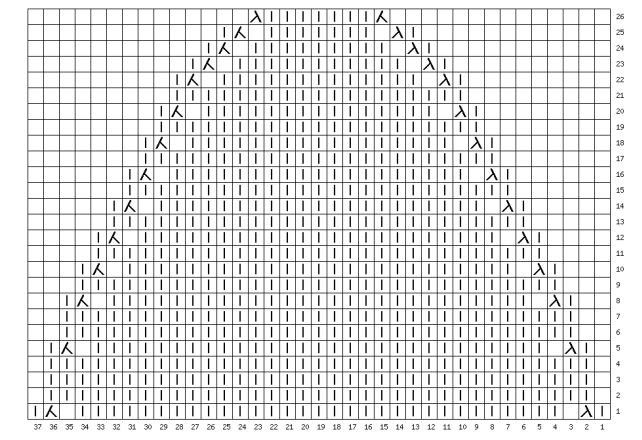
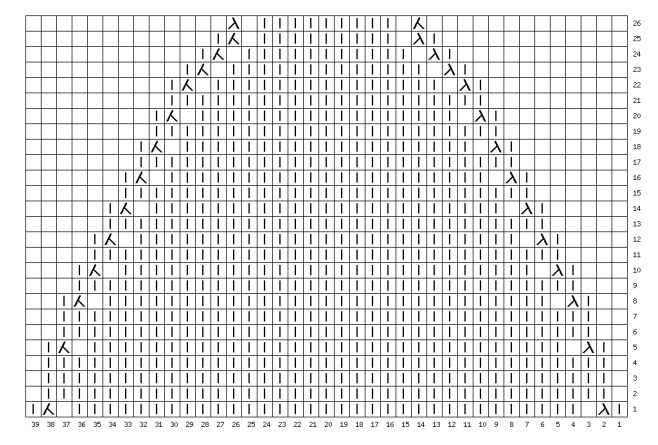
The left needle (upper part of the sock) — 37(39,38) stitches,
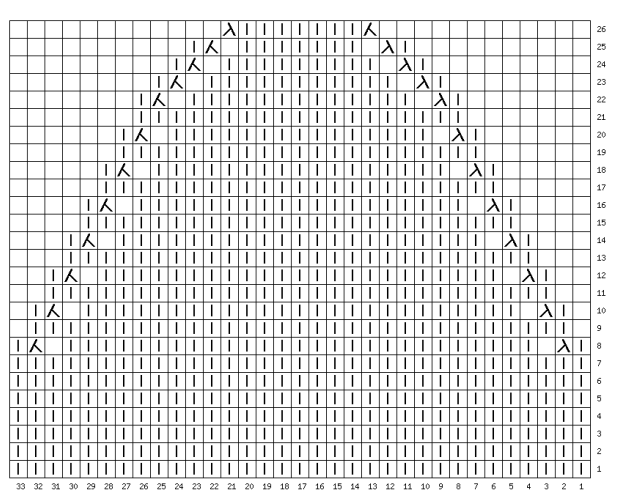
the right needle (lower part of the sock) — 33(33,34) stitches.
Knit the first row with knit stitches without decreases.
Then make decreases according to the schemes provided below.
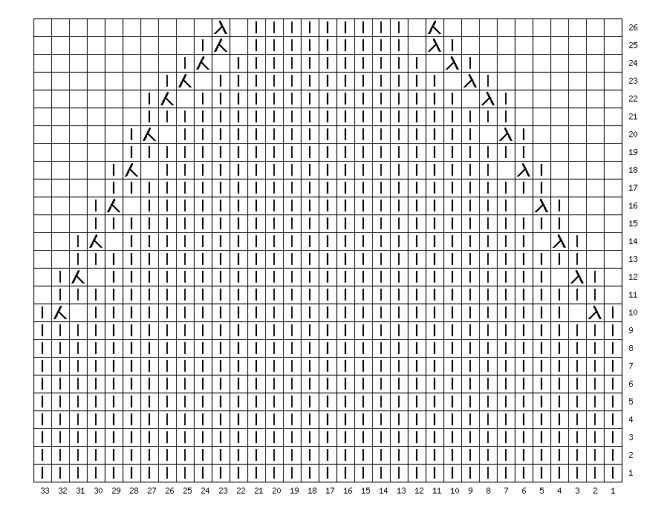
Scheme No.2.1 (for size S)
Left needle (upper part of the sock)
Right needle (lower part of the sock)
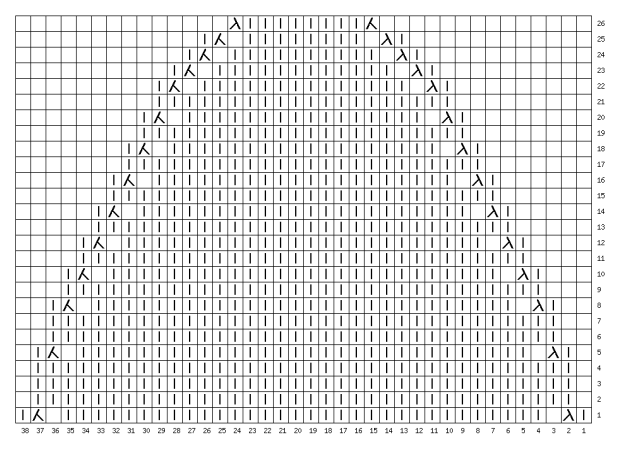
Scheme No.2.2 (for size M)
Right needle (upper part of the sock)
Left needle (lower part of the sock)
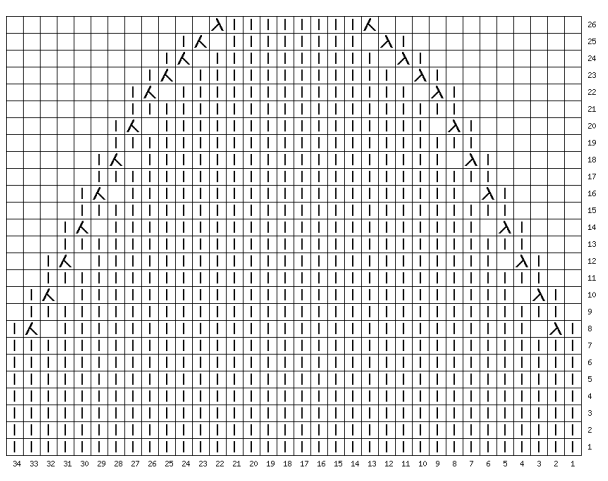
Scheme No.2.3 (for size L)
Right needle (upper part of the sock)
Left needle (lower part of the sock)
COMPLETION
Now we sew the remaining stitches with a knitting seam (see video).
I advise leaving a yarn length of 15–20 cm for work; otherwise, there may not be enough yarn for sewing the sock.
Hide the yarn tails.
Wash our socks with a special wool detergent,
dry on a horizontal surface, away from sunlight and heating.