


Beach bag with knitted shells and starfish Author - Galina Kryuchko
Added: 15.09.2018 в 10:14 Views: 29702
Beach bag with knitted shells and starfish Author - Galina KryuchkoKlubokhttp://klubok.work/2/62/7453/Klubokhttps://klubok.work/css/image/top-logo-en.pngBeach bag with knitted shells and starfish Author - Galina Kryuchko
Author - Galina Kryuchko

Exotic seashells are so tender, exquisite, and surprisingly diverse! Soaked in sunshine, caressed by waves, holding the secrets of unknown depths. It is no wonder that they are traditionally taken as souvenirs from sea trips. Probably, each of us has a cherished box at home with these materialized memories... And how nice it is to open it one cold winter evening, to stroke the smooth mother-of-pearl sides of the shells with the tips of your fingers, to hold one of them to your ear, and to hear the distant, barely audible song of the sea... But now it is summer (yes, I insist)! The time for interesting travels, new acquaintances, bright impressions, the time of joy. And what can delight a woman more than a new bag? Especially a beach bag! Therefore, considering all of the above and setting aside the lyricism, I suggest you decorate a beach bag today with handmade (or rather, crocheted) shells and starfish. What do we need for this? First of all, we need the bag itself. You can crochet it from cotton or linen, sew it from dense textured fabric, or buy a ready-made one, or take your old favorite beach bag from the farthest shelf of your wardrobe and give it a new life. The choice is yours! I will decorate a minimalist bag measuring 36 by 28 cm, crocheted from mercerized cotton in cream color, with an oval bottom and continuous handles.

Secondly, we need suitable yarn for our shells and starfish. I suggest taking the wonderful cotton yarn Charm from Vita Cotton (50g /106m) color No. 4153 cream (by the way, my bag is also crocheted from this yarn), and for decoration, a thin cotton thread Anna 16 from Seam (100g / 530m) color No. 284 beige. Thirdly, we will need crochet hooks — No. 2.5 for the first yarn and No. 1 for the second. And of course, a lot of small things — spool threads, needles, scissors, and definitely — a good mood! So, we begin! (I apologize in advance for the different background colors in the collages and other surprising things that happened to my photos — I shot them in natural light, which, with our wonderful summer weather, changes every five minutes.) Let's crochet a spiral shell.

m
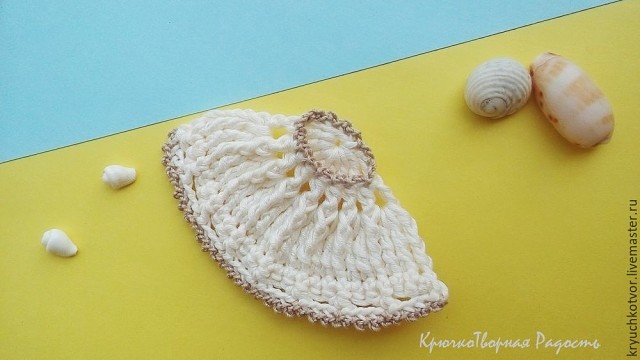
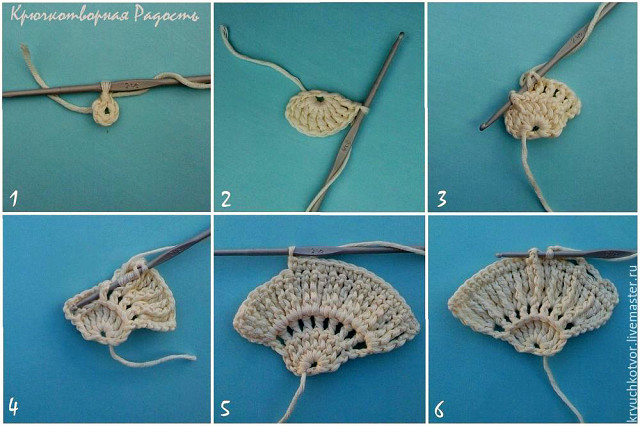
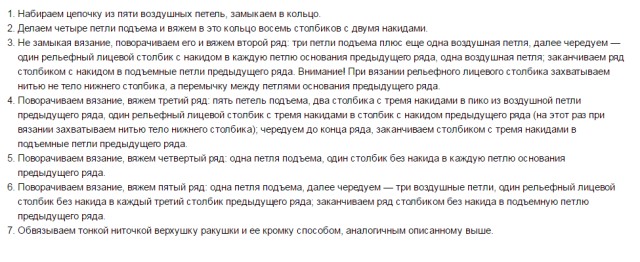
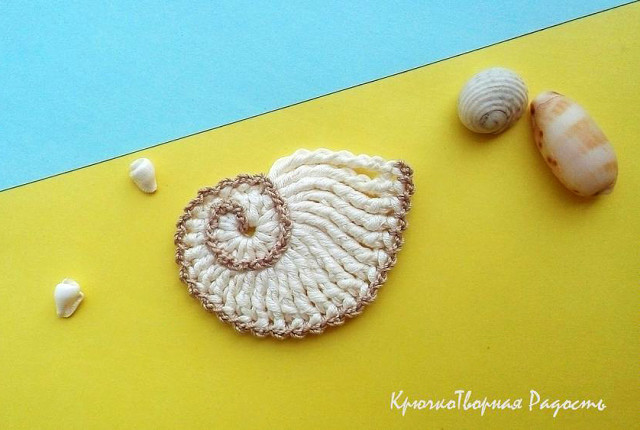
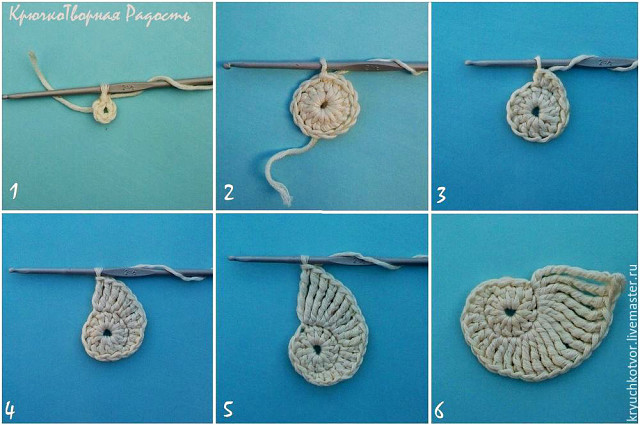
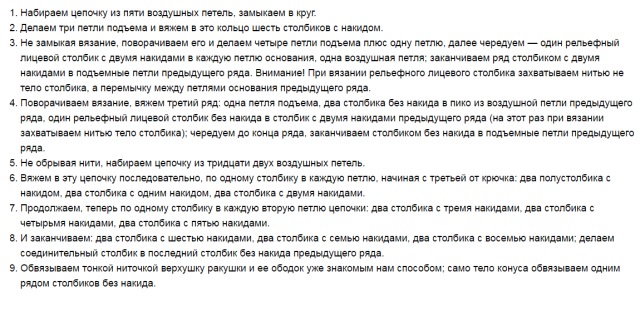
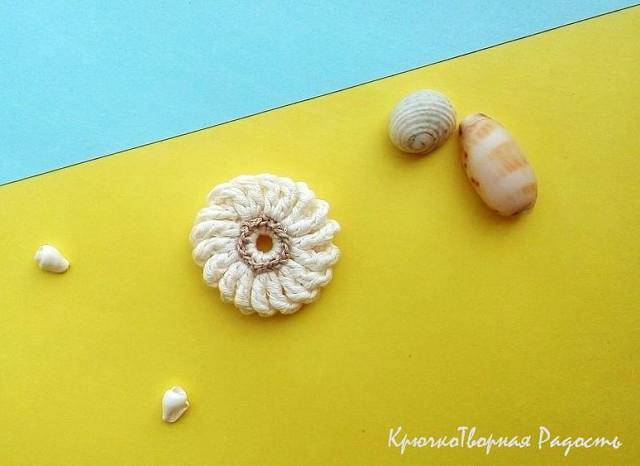
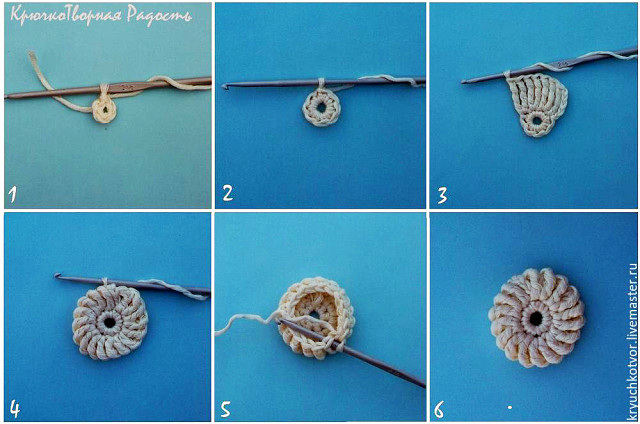
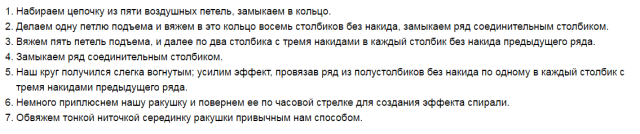
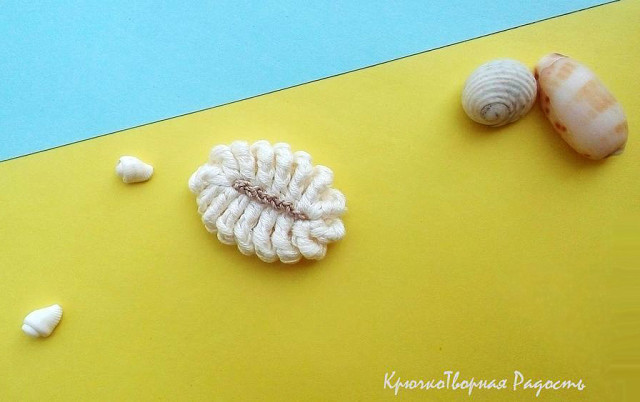
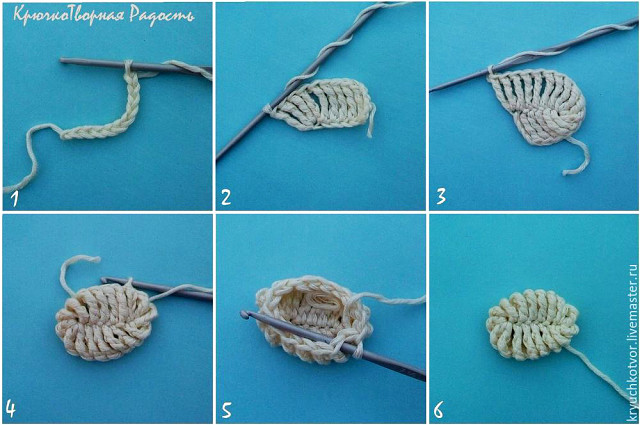
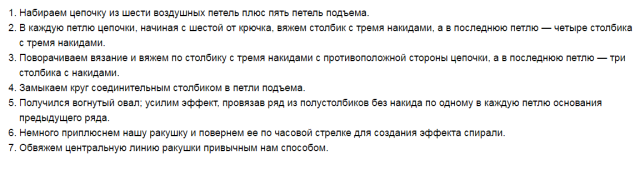
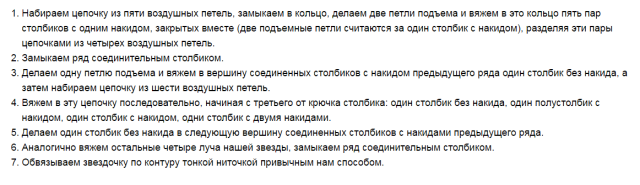
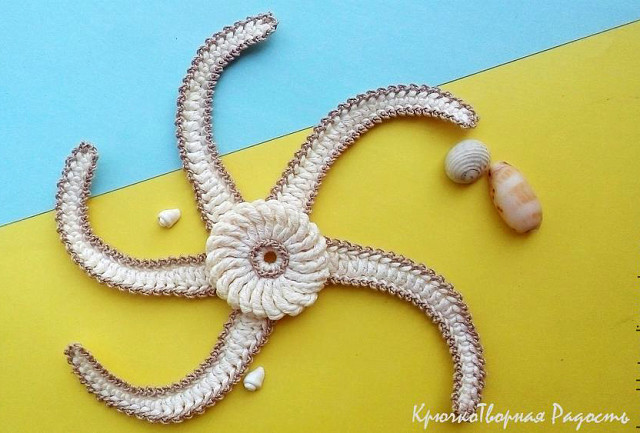
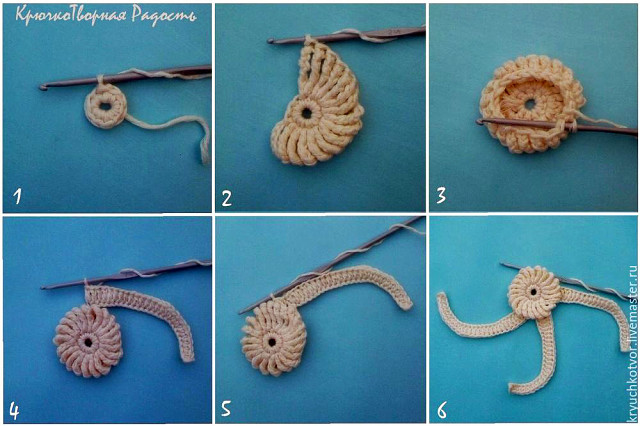
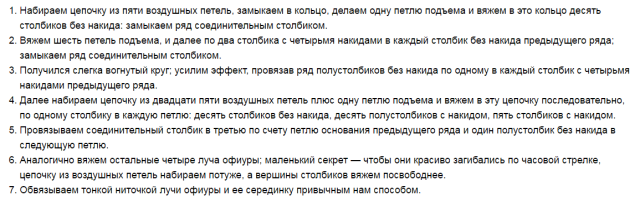


Let's crochet a bivalve shell


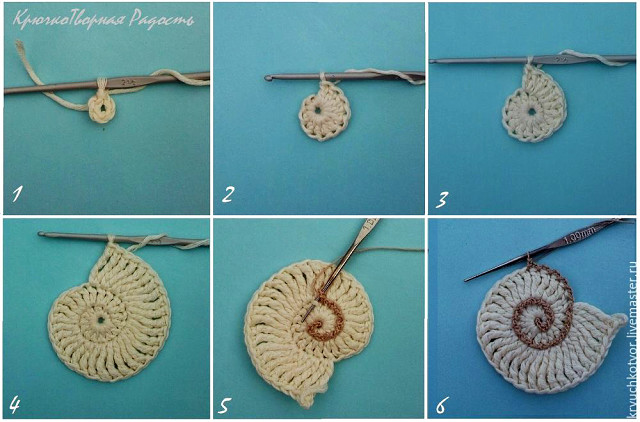
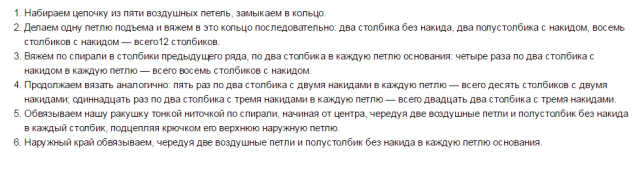
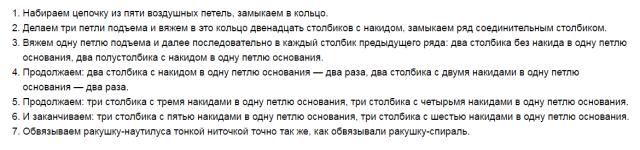
Let's crochet a nautilus shell


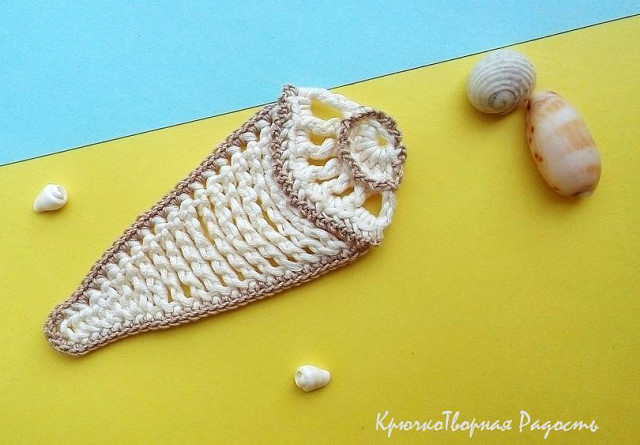
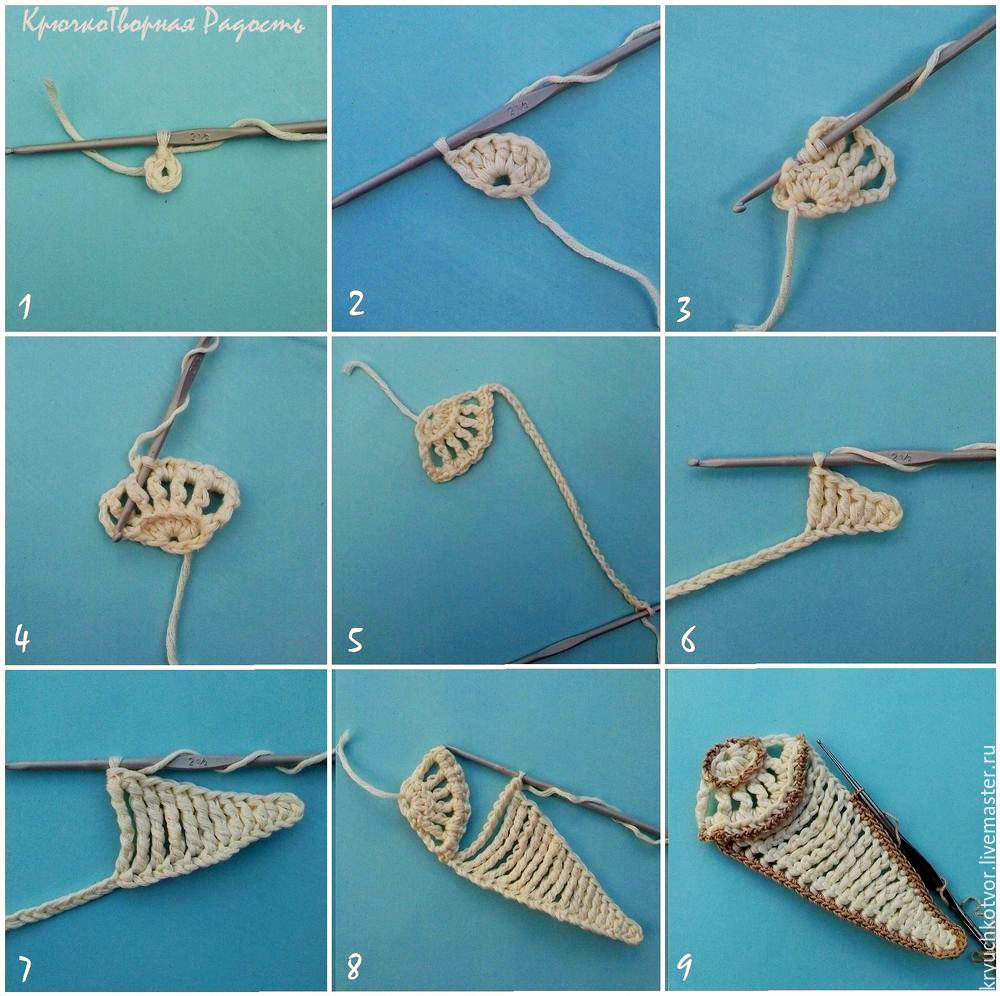
Let's crochet a cone shell


Let's crochet a round shell


Let's crochet an oval shell


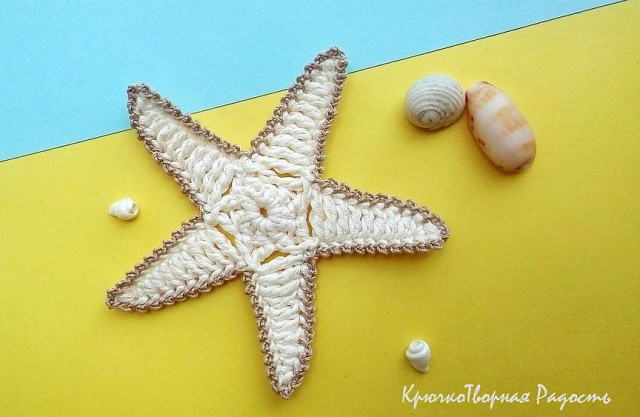
Let's crochet a large starfish


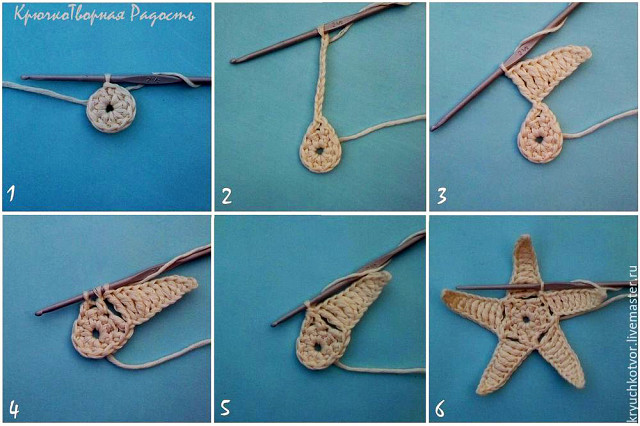
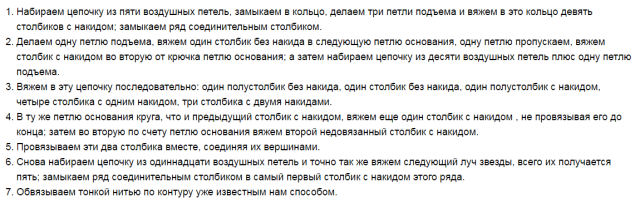
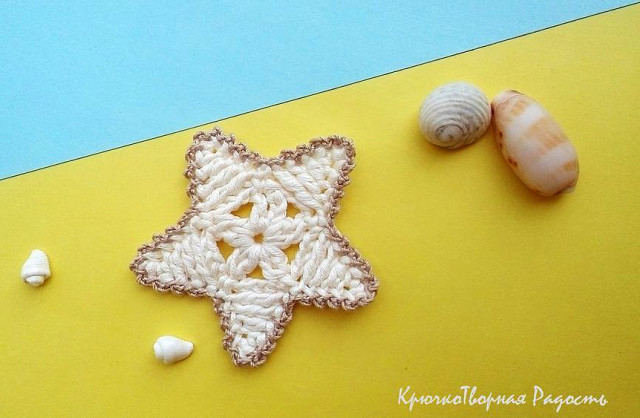
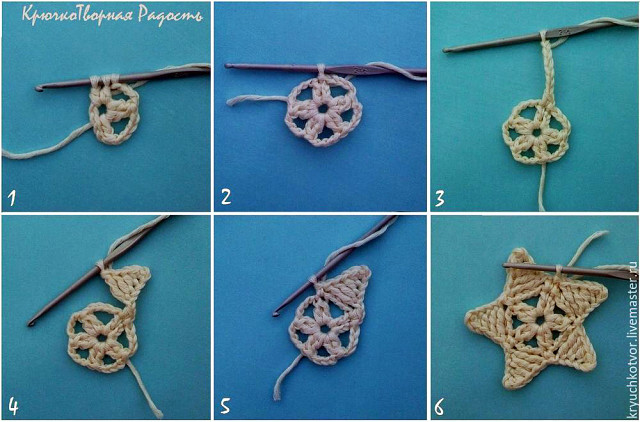
Let's crochet a small starfish


Let's crochet an ophiuroid


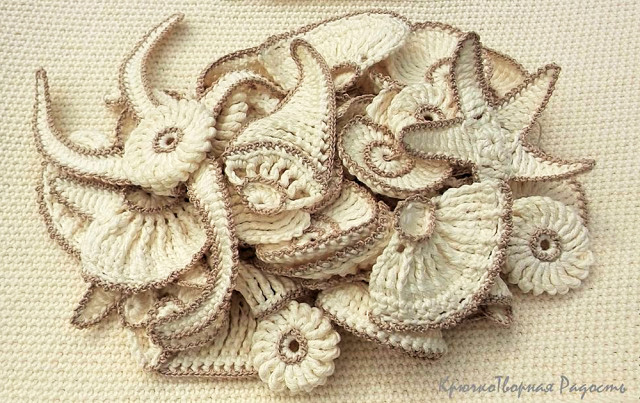
And just like that, quickly, beautifully, and with pleasure, we prepare the necessary amount of marine elements. I crocheted five spirals, six bivalves and cones, seven nautiluses, one round shell and two oval shells, one small starfish and two large ones, and one beautiful ophiuroid. Here is such a pile!

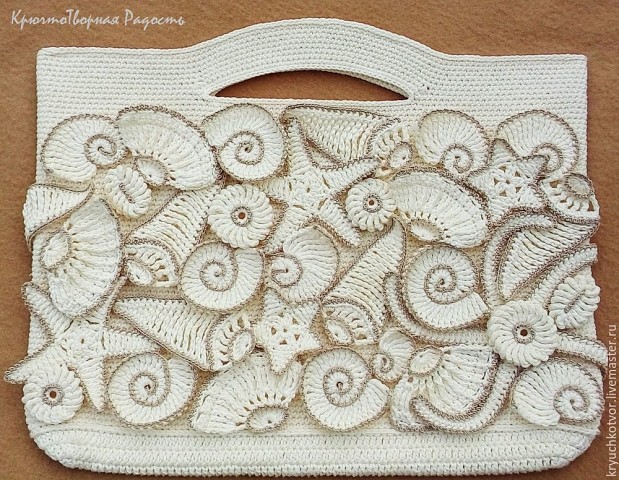
Now let's think about the placement of this treasure on our beach bag. There are many options! You can arrange the shells along the lower edge, fill one of the corners with them, or simply sew a few single elements in different places. The choice is again yours! I wanted to create the effect of a shell scatter on a distant exotic beach... So I spent several enjoyable hours assembling this puzzle on the surface of my bag (which, as is often the case, underwent significant changes during the sewing process).

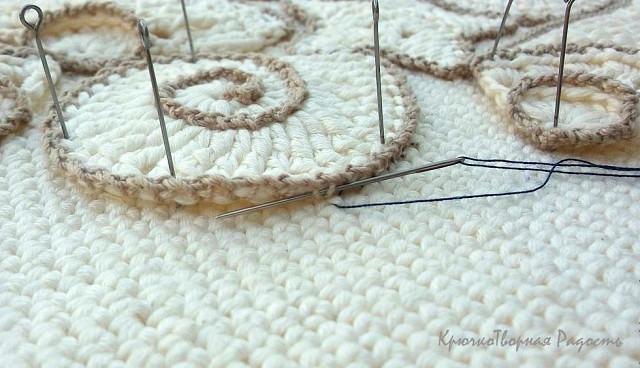
So, we have determined the placement option, and we can move on to the next stage — preparing the elements for sewing. We will not steam and block them to avoid disturbing the relief of the surface and the charming irregularity inherent to natural objects. If you still want to smooth the elements a bit, you can place them between layers of terry cloth for a couple of hours under a small weight (for example, under a stack of several large-format books). We will sew our shells and starfish with hidden stitches, catching the back loops of the crochet stitches with the needle. The free edges of the elements, if any, are not sewn. Try not to make too many stitches and not to pull them too tight — the shells should retain their volume. If you, like me, are sewing elements onto knitted fabric, thread the yarn under the outer loops of the stitches, so our back will remain clean and neat. Attention! The photos were taken with contrasting thread for clarity. In reality, we sew the elements with spool thread of the same color!

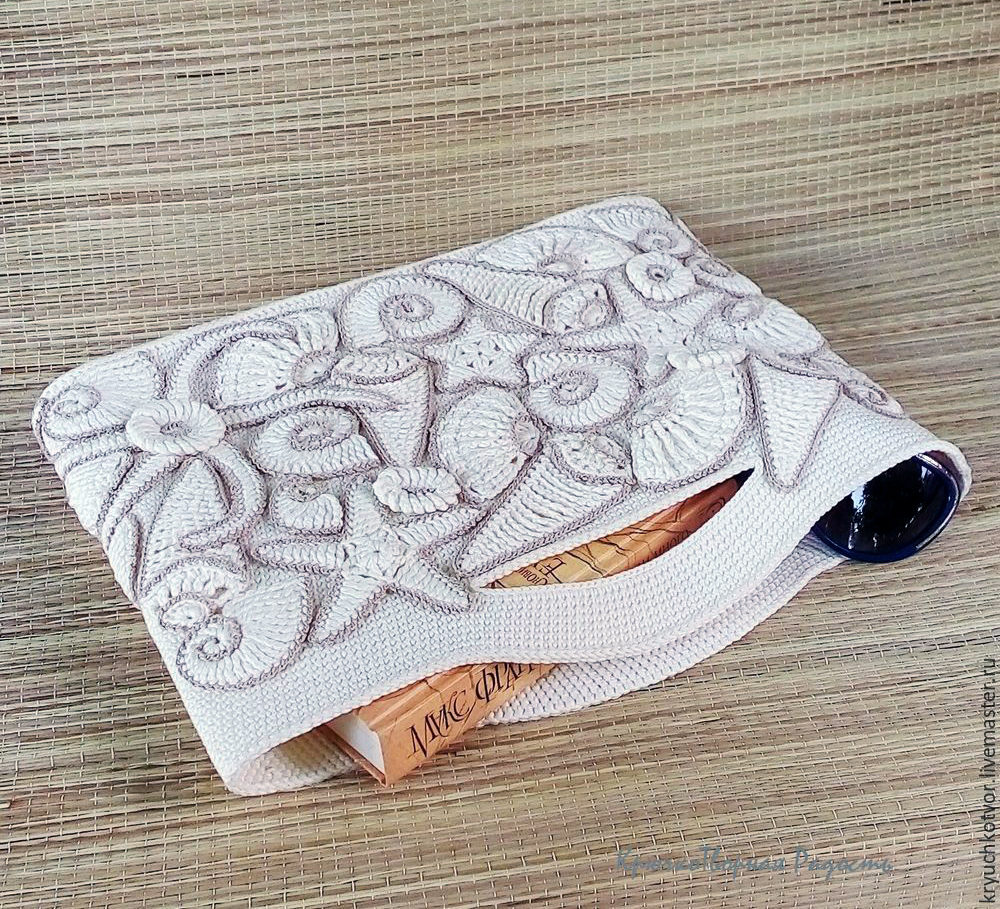
Well, the knitted sea souvenirs are sewn on, and the bag is almost ready! Gently steam it from the inside, let it dry — and off to summer, attracting admiring glances from passers-by, listening to the admiration of acquaintances, and just enjoying life!

Category: Handbags
Also in this category:
Copyright © 2007 - 2023 Kardinal-Group
admin@klubok.work
admin@klubok.work