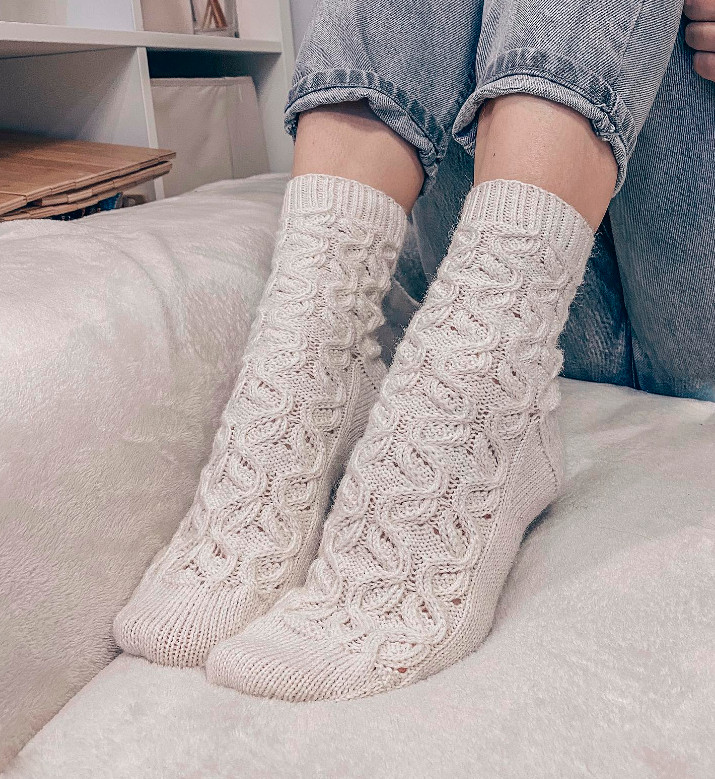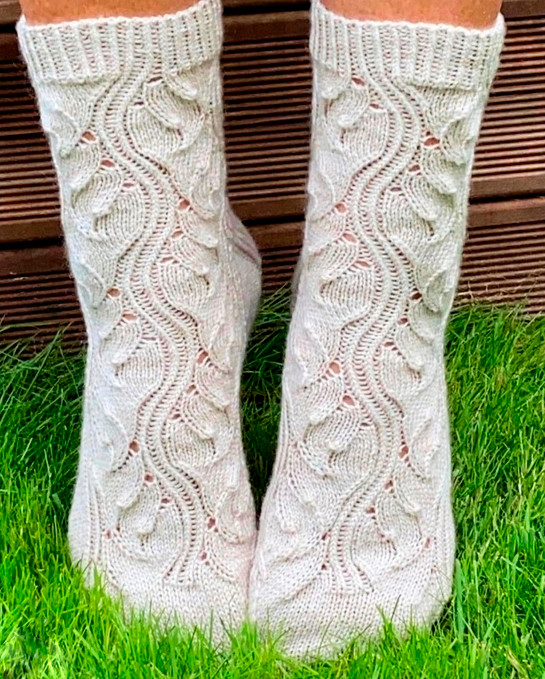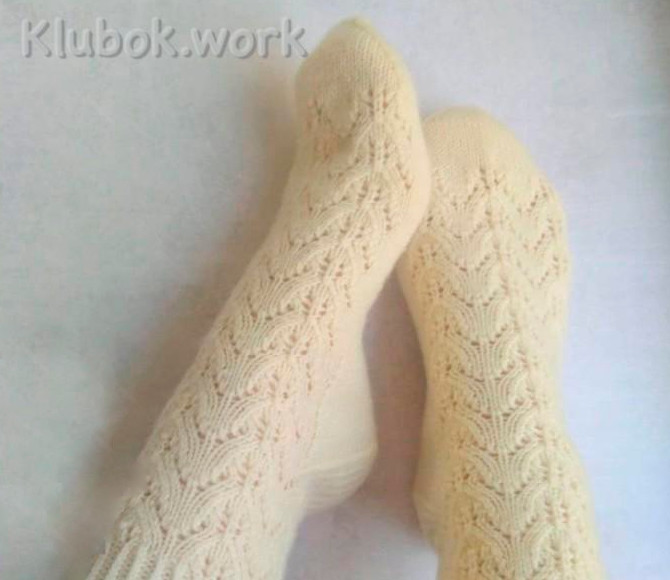




Footies
Added: 11.09.2014 в 11:35 Views: 49391
FootiesKlubokhttp://klubok.work/1/53/5249/Klubokhttps://klubok.work/css/image/top-logo-en.png

To make ankle socks size 37, you will need 80g of wool yarn, 5 double-pointed needles or circular needles with a diameter of 2.5-3.5 mm. For the strength of the product, it is better to attach a thin synthetic thread to the main thread.
Description:
Ribbing 1x1 (alternating 1 knit and 1 purl stitch)
Knitting density 27 stitches x 41 rows = 10 x 10 cm
The calculation of stitches necessary to start working is done as follows: from the length of the foot (24 cm) subtract the heel (in our case 2 cm) and multiply the result (22 cm) by the number of stitches in 1 cm, i.e. by 2.7. Round the resulting number (59.4) down to the nearest whole number. In our example, 59 stitches are needed to knit the ankle socks.
Knit the sides of the toe. Cast on 59 stitches. Mentally divide the stitches into 3 parts: the first part has 29, the second part has 1, and the third part has 29 stitches. The stitches of the first and third parts form the sides, while the stitches of the second part (due to the yarn overs) form the toe of the ankle socks.
The sides of the ankle socks can be knitted either in stockinette stitch or in ribbing (1x1, 2x2, 3x2, or 3 knit x 1 purl)
For the first 4 rows, knit in ribbing 1x1 so that the edges of the socks do not curl up)
Then knit as follows:
1st row (wrong side): tight ribbing 1x1.
2nd row (right side): 29 knit stitches from the first part, 1 yarn over, 1 knit stitch from the second part, 1 yarn over, 29 knit stitches from the third part.
3rd row (wrong side) and all odd rows: purl stitches
4th row (right side): 29 knit stitches from the first part, 1 yarn over, 1 knit, 1 yarn over, 1 knit, 1 yarn over, 1 knit, 1 yarn over, 29 knit stitches from the third part
6th row (right side): 29 knit stitches from the first part, 1 yarn over, 3 knits, 1 yarn over, 1 knit, 1 yarn over, 3 knits, 1 yarn over, 29 knit stitches from the third part.
Thus, make yarn overs only in the right rows (in the 1st right row 2, in all others - 4 yarn overs). For convenience, transfer the stitches of the first, second, and third parts to separate needles. The number of stitches in the second part will increase due to the yarn overs. When it reaches 59, stop increasing stitches. You will have 117 stitches on the needles (29 on the first, 59 on the second, and 29 on the third).
Next, knit several rows without yarn overs. The number of these rows depends on the circumference of the foot. In our case, you need to knit 6 rows without yarn overs. The height of the side will reach 8.8 cm, and the length will be approximately equal to the length of the toe. Finish knitting the sides and toe with a right row.
Knitting the sole. Mentally divide the stitches on one needle (29) into 3 and round the resulting number (9.8) up to the nearest odd whole number (11). These 11 stitches are the central stitches of the second needle (from the 25th to the 35th stitch). Continue knitting on the 11 central stitches, gradually decreasing all other stitches, joining them to the 11 central stitches.
Start decreasing stitches with a wrong row: knit 29 stitches from the third needle, 24 stitches from the second needle, 10 central stitches from the second needle, knit the last central stitch together with the next stitch from the second needle as a purl and, without knitting the remaining stitches on the second and first needles, turn the work to the right side.
The right row is performed as follows: slip the first stitch without knitting, as a selvedge, knit 9 central stitches, knit the last central stitch together with the next knit stitch through the back loops (i.e. leaning to the left) and turn the work to the wrong side. Always slip the first stitch without knitting, both in the right and wrong rows.
Thus, knit only the 11 central stitches of the second needle until all other stitches on the first, second, and third needles disappear.
Knitting the heel.
Cast on an equal number of stitches along the edges of the sides of the ankle socks and distribute them onto 2 needles. You will again have stitches on 3 needles (the first needle - selvedge stitches of the right side, the second needle - 11 central stitches, the third needle - selvedge stitches of the left side).
Knit only on the 11 central stitches of the second needle, gradually adding the selvedge stitches from the sides. Decrease these selvedge stitches similarly to knitting the sole. For the last 5 rows of the heel, knit in ribbing 1x1 to prevent curling. When only the 11 central stitches remain, bind them off in the rhythm of ribbing.