



Ruffles knitting
Added: 25.02.2019 в 17:18 Views: 22910
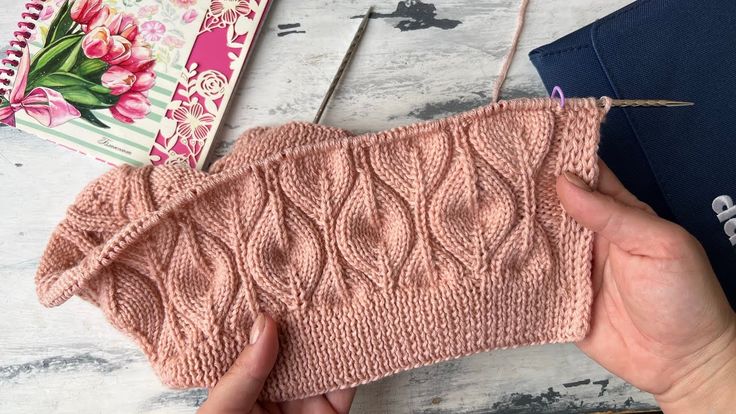
Ruffles knittingKlubokhttp://klubok.work/1/89/7714/Klubokhttps://klubok.work/css/image/top-logo-en.pngRuffles with knitting Ruffles are often used to decorate the edges of knitted products, they give the model fluffiness and a special romantic style. Ruffles can be used to decorate the cuffs of sleeves, gloves, collars of cardigans and jackets, and long ruffles are often knitted at the hem of a dress or skirt, allowing the expanding fabric to fall into beautiful folds. The number of stitches when knitting ruffles increases several times from the beginning to the edge, usually two or three times, which affects the fluffiness of the waves and folds. When knitting items and their details, you can finish knitting with ruffles or, conversely, start knitting the item with ruffles. In this case, you need to calculate the number of stitches for the cast on, taking into account their increase for knitting ruffles. For example, a simple ruffle with double the number of stitches. To knit it, you should cast on twice as many stitches, and their number should be a multiple of two. After knitting the ruffle in stockinette stitch to the desired height, in the right side row, knit all stitches two together, thus reducing the number of stitches by half. Then continue knitting the fabric in the chosen pattern. When knitting a ruffle with triple the number of stitches, the fluffiness of the waves noticeably increases. For this ruffle, cast on three times more stitches than required to start knitting the item, and the number of stitches should be a multiple of three. After knitting the ruffle in stockinette stitch to the chosen height, in the right side row, knit all stitches three together, thus the number of stitches will be reduced by half, and the fabric will gather into fluffy waves. Then continue with the main pattern. There is another option for knitting a ruffle with triple the number of stitches, where the waves form convex and concave folds due to alternating sections of stockinette and reverse stockinette. Also, cast on three times more stitches than necessary and knit, for example, 15 knit stitches followed by 15 purl stitches, and in subsequent rows, knit the stitches according to the pattern. At any height, knit all stitches three together, with three knit stitches knitted together, and 3 purl stitches knitted as purl. Ruffles with folds – protrusions are formed by decreasing stitches in each right side row over a certain distance. The number of stitches to start knitting this ruffle is 14+11, after all decreases it will be reduced to 4+3. You can change the initial number of stitches, thereby increasing or decreasing the height and fluffiness of these ruffles. Knit the ruffle in stockinette stitch, in the right side rows – all stitches knit as knit, in the wrong side rows – purl. Starting from the 3rd right side row, begin to make decreases, for this knit 11 stitches, then *slip 2 stitches onto the right needle without knitting, knit the next stitch as knit and pull it through the two previously unknitted stitches, knit the next 11 stitches as knit*, repeat from * to the end of the row. In the 5th row: 10 knit, *slip 2 stitches without knitting onto the right needle, 1 knit, pull it through the 2 unknitted stitches, 9 knit*, repeat from * to *, finish with 10 knit. 7th row: 9 knit, *slip 2 stitches without knitting, 1 knit, pull it through the unknitted stitches, 7 knit*, repeat from * to *, finish the row with 9 knit. 9th row: 8 knit, *slip 2 stitches without knitting, 1 knit, pull it through 2 unknitted stitches, 5 knit*, repeat from * to *, finish with 8 knit. 11th row: 7 knit, *slip 2 stitches without knitting, 1 knit, pull it through both unknitted stitches, 3 knit*, repeat from * to *, finish with 7 knit. Then continue with the main pattern. A beautiful ruffle is formed when knitting the popular pattern “bell”, where the folds of the fabric lie in neat waves, narrower at the top, resembling bells in shape. To knit a “bell” ruffle, cast on a number of stitches that is a multiple of 10 + 2 edge stitches, at the end of knitting the ruffle the number of stitches will be reduced to 3 +2. In the 1st row, knit: 1 edge, 1 purl, *8 knit, 2 purl, repeat from * to the end of the row. In the 2nd row (wrong side): knit all stitches according to the pattern, 1 edge, 1 knit, *8 purl, 2 knit, repeat from * to the end of the row. Repeat the first and second rows until the 8th row, in the 9th (right side) row begin to make decreases. For this, knit: 1 edge, 1 purl, *2 stitches together knit with a left slant (slip the first stitch without knitting, knit the second and pull it through the unknitted), 6 knit, 2 together knit, 2 purl, repeat from * to the end of the row. Continue to knit the wrong side rows according to the pattern. 11th row: 1 edge, 1 purl, *2 together knit with a left slant, 4 knit, 2 together knit, 2 purl, repeat from * to the end of the row. 13th row: 1 edge, 1 purl, *2 together knit with a left slant, 2 knit, 2 together knit, 2 purl, repeat from * to the end of the row. 15th row: 1 edge, 1 purl, *2 together knit with a left slant, 2 together knit, 2 purl, repeat from * to the end of the row. Then continue with the chosen pattern. The reverse side of the bell pattern is also very interesting, forming concave folds with protruding lines of knit stitches.


Category: Patterns