



Logorhythmics – a speech therapy technique for developing a child's speech. But the effect of practicing this technique is not limited to just sound articulation and phonetic hearing formation.
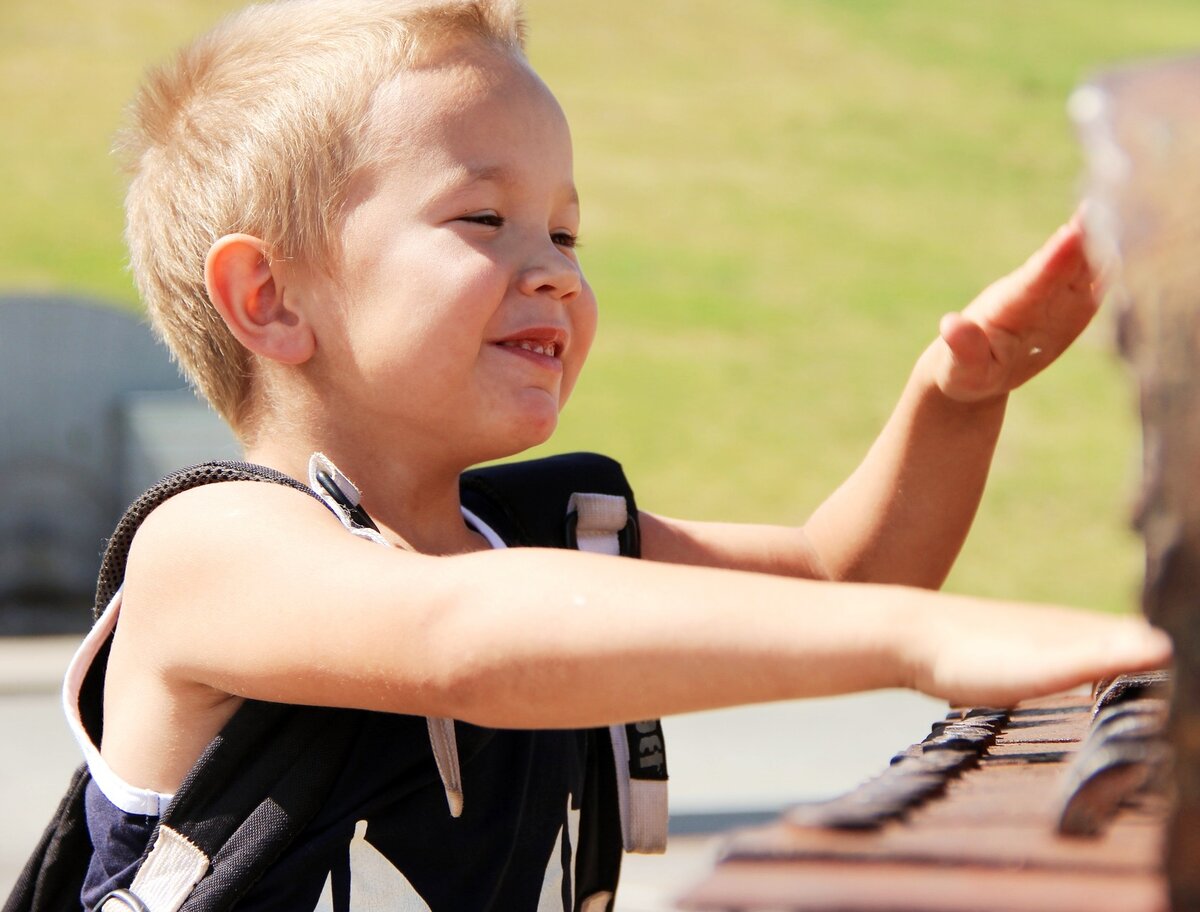
As I have written many times before, speech is a multi-level process, and many pieces must come together for it to start. And it's not just about proper breathing and mouth movement. It is, first and foremost, about the functioning of the nervous system and the coordination of the sensory organs.
Logorhythmics is an accessible and useful tool for establishing the receptivity of the sensory organs. It helps to bridge the gap from perception to speech.
- Even at a very early age, elements of logorhythmics can be used during massage for the baby, when the adult moves the baby's hands/feet while simultaneously reciting a rhythmic verse, usually nursery rhymes.
- Around 1.5 years old, logorhythmic exercises can be introduced. When the child performs corresponding movements to rhythmic songs or simple, rhymed verses.
The combination of movements, sounds, and singing has a very positive effect on a child's development. And again, several sensory stimulators are activated at once.
What is the benefit of logorhythmics?
- Helps to develop hearing.
- Allows one to hear the phonetic structure of words.
- Trains auditory memory.
- Develops gross motor skills.
- Teaches to understand the melody of speech and intonation.
- Expands vocabulary.
- Improves the child’s understanding of speech.
- Separate exercises can be performed to music, for example, to a collection of logorhythmic songs by the Zheleznov family.
- These should also be done throughout the day during all monotonous activities. While swinging on swings, going up and down steps, walking, etc. The idea is to name a syllable or a short word for each action. It is very important that the adult clearly pronounces the syllables, keeping in rhythm with the movements.
For example, while swinging on the swings:
Up, down,
Up, down
Higher than all
Let's go
Down.
On the stairs:
Step-step,
one-two,
On the steps
In the yard
jumps our
Child-hood.
Of course, the wonderful game "We were riding, riding, into the forest for nuts, over bumps, into the pit, thud" is perfect for speech development. The children especially wait for <<thud>> when they pretend to fall. When the child remembers the sequence and waits for the <<thud>>, a pause should be made to encourage the child to try to say <<Thud>> or somehow ask to continue playing.
Another well-known game:
–Geese, geese,
– Ga-ga-ga (showing with hands the beaks of the geese).
– Do you want to eat?
– Yes-yes-yes (nodding head).
– Bread with butter?
– No-no-no (shaking head).
– What do you want?
– Candy (rubbing belly in a circle).
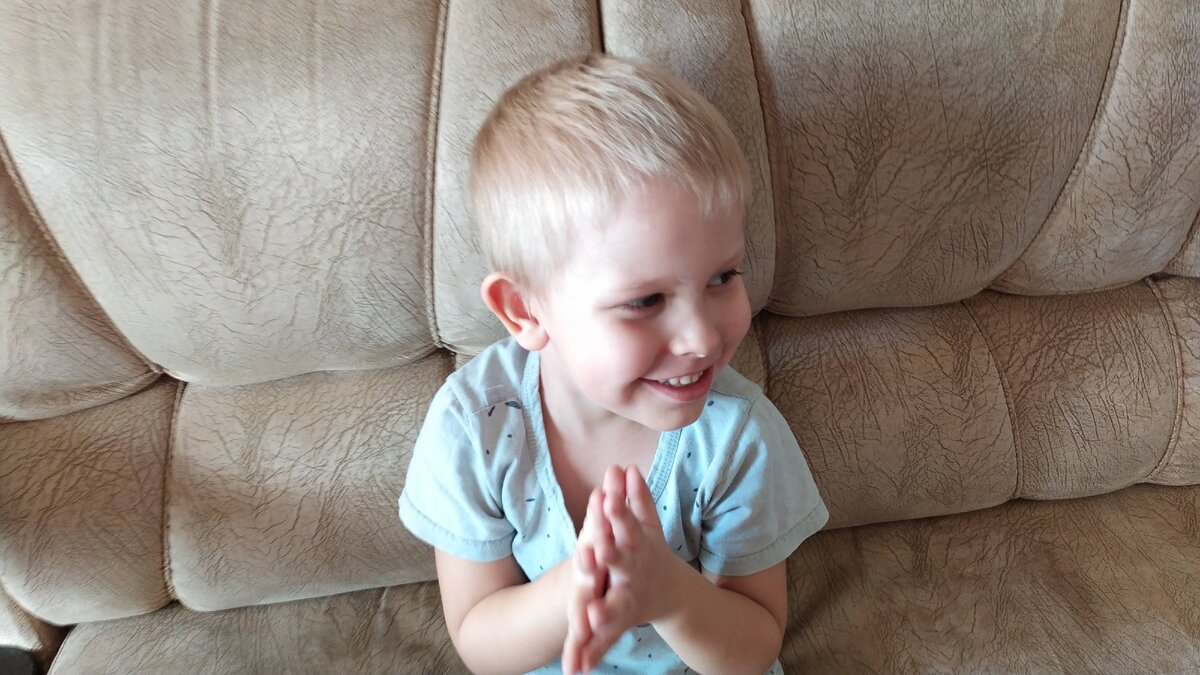
Rhythm can be tapped out with sticks or spoons, or clapped with hands.
I love using verses from the book <>. Below are a few variations of verses. ,