



What is a sprout in knitting.
Added: 17.12.2019 в 02:26 Views: 18265
What is a sprout in knitting.Klubokhttp://klubok.work/1/203/8289/Klubokhttps://klubok.work/css/image/top-logo-en.png
What is a growth in knitting.
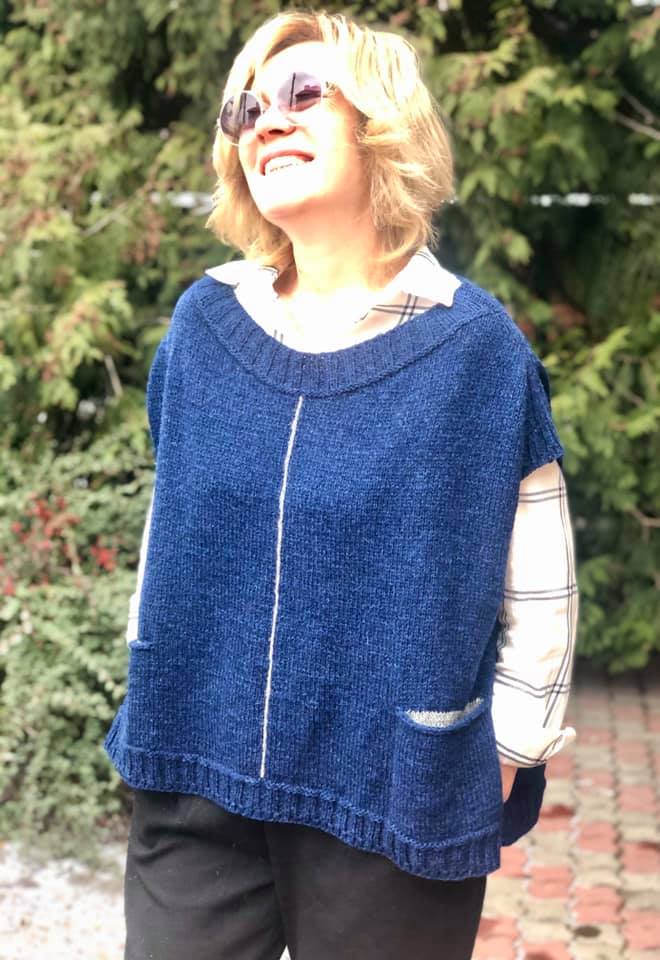
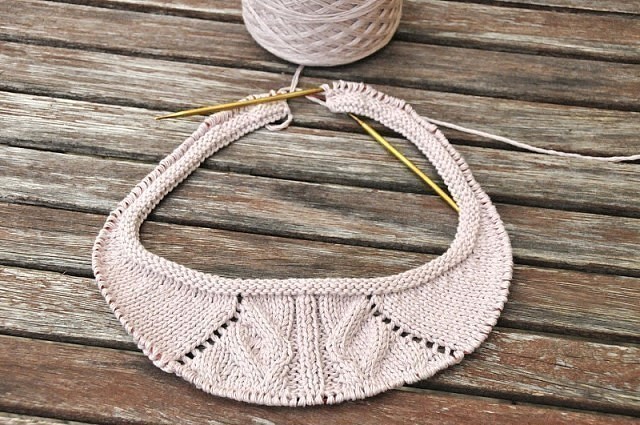
If you look at almost any sweater, you will see that the neckline line in front is lower than in the back (even in items that are high-necked), which is not surprising, considering the peculiarities of our bodies. This difference in height between the back and the front in knitting is called a growth.
When knitting a top-down raglan, beginner knitters somehow think that the cone they knitted, due to its elasticity and seamless fabric, will fit perfectly on the figure. Well, it won't fit, even with the exact matching of the item to the measurements. This can be easily checked experimentally by knitting a raglan without a growth and during fitting realizing that it "pulls at the back" and "chokes in the front." And even a poorly calculated growth is better than its absence.
We will give recommendations for calculating the growth - what should be the lengthening of the back relative to the front.
Growth calculation:
Height:
For children under three years old, who still speak poorly and cannot
complain about the lack of growth; for very thin models who do not wear those things they demonstrate - 0-1.5 cm.
Teenagers - 3 cm.
Size from 42 to 50 - 5 cm.
Size 50 and above - 7 cm.
For stooped individuals, the growth can be longer by several centimeters. The method for determining the height of the growth from sewing, taking into account individual characteristics. First, you need to measure the length of the back from the base of the neck, and then measure the length of the back from the seventh cervical vertebra. The difference between these values will be the growth. Although this is not quite the value we need in knitting, it can serve as a guideline for how much the figure deviates from standard values.
The height of the growth can be determined by the formula:
Height of growth = neck circumference divided by 6 minus 1 cm
Formula from Martynenko's book "Knitting Techniques"
Height of growth = 0.14 * half-neck circumference
Example. Let the neck circumference be 36 cm, knitting density 24 rows = 10 cm.
Height of growth = (36/6-1)*24/10 = 12 rows.
Width of growth = width of the back + stitches of the two sleeves and raglan
lines + 2 stitches.
For example, let's take a growth width of 72 stitches.
You need to knit on the back 12 rows more than on the sleeves and front.
But after this, the pattern on the front will not match the pattern on the back (unless, of course, the rapport of the pattern accidentally turned out to be a multiple of the height of the growth, in our example 12 rows)? That's right, it won't. Probably, you have to come to terms with this; after all, no one looks at the back and the front at the same time, or adjust the height of the growth to the chosen pattern, or vice versa, choose another pattern suitable for the height of the growth.
It should be noted that in model descriptions in magazines, the growth is most often not
mentioned, apparently to simplify the lives of the authors and complicate the lives of knitters. The value of the growth does not depend on how deep of a neckline you plan to make in front. The growth should be knitted even with a large ease of fit because the growth is mainly determined by the forward tilt of the neck, which does not depend on the aforementioned factors.
Now about how to knit the growth:
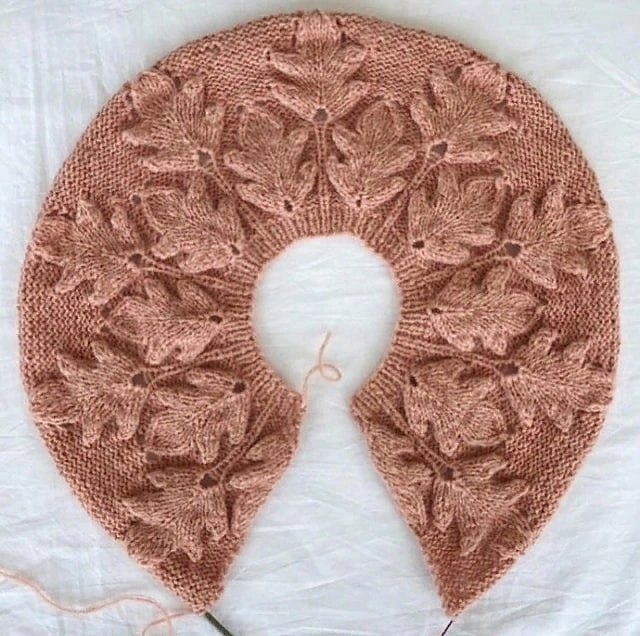
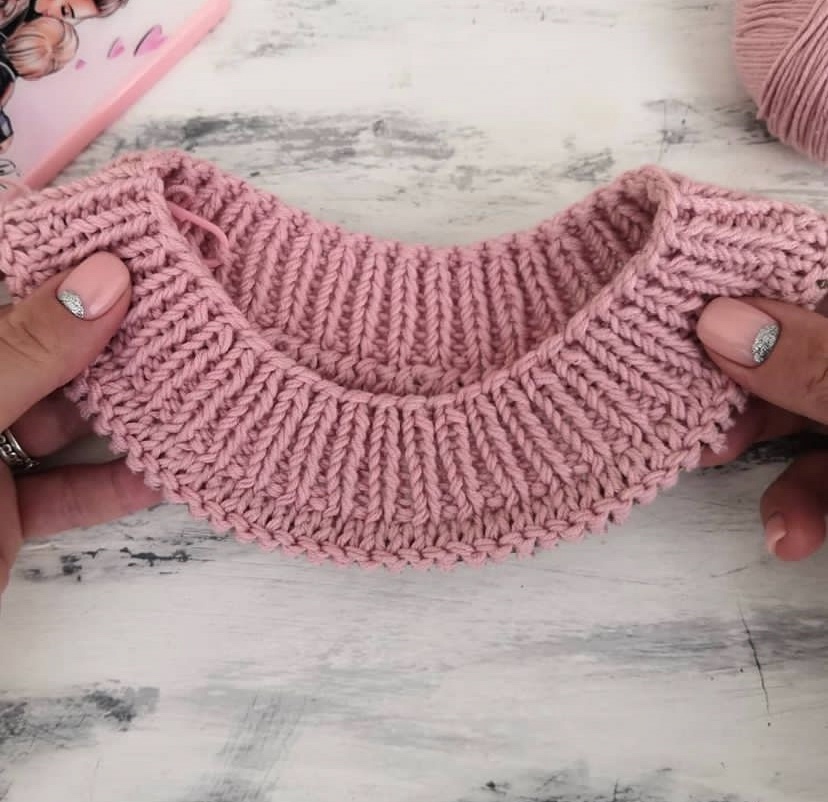
Knitting a raglan from the top. If you simply lengthen the back around the neckline, I'm afraid not many will like it. Although on the forum "Country of Moms," I saw such rectangular growths.
Knitting a raglan from the bottom. Here, you can allow yourself to lengthen the back by
a few centimeters. Of course, the raglan lines
of the sleeves that will be sewn to the back should also be lengthened by the same amount. As a result, the upper line of the sleeve will become slanted.
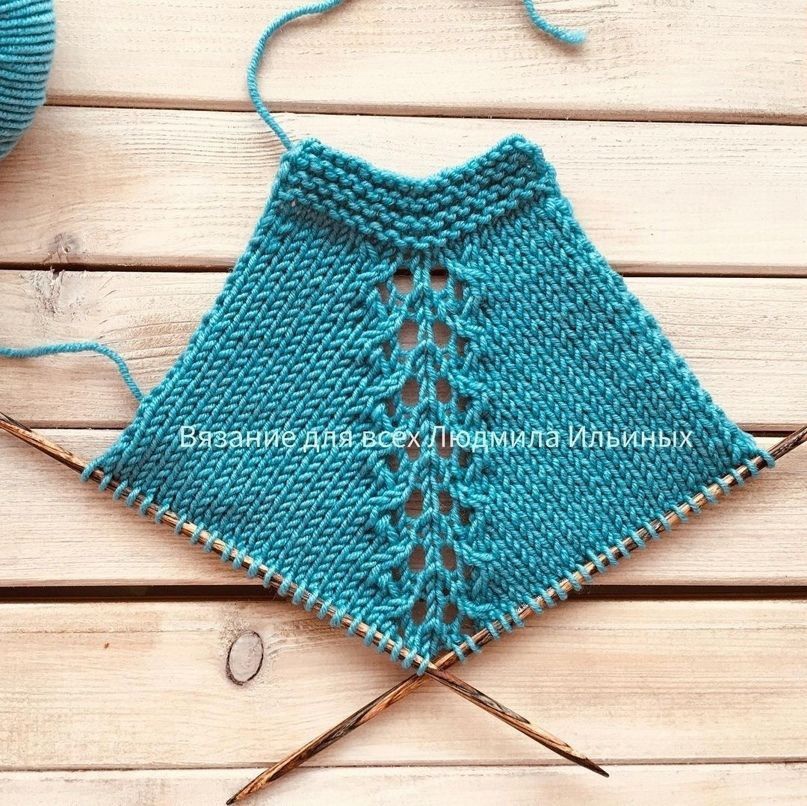
The back can be lengthened inconspicuously, for example, using short or long rows. So, we have 12 rows and 72 stitches. Let's distribute these stitches into 11 groups as follows:
72 = 6 + 6 + 6 + 6 + 6 + 12 + 6 + 6 + 6 + 6 + 6
We execute elongated rows: knit the central 12 stitches, turn the work
Knit 12 + 6 stitches, turn the work
Knit 6
+ 12 + 6 stitches, turn the work
Knit 6 + 12 + 6 + 6 stitches, turn the work
Knit 6 + 6 + 12 + 6 + 6 stitches, turn the work
and so on, in each row involving 6 more stitches until all 72 stitches have been knitted, after which we return to regular circular knitting.
Where to knit the growth? Immediately after the back neckline or a few rows lower, or after the yoke down to
the armpits.