



7 types of dough you must learn to make
Added: 12.08.2018 в 10:44 Views: 21909
7 types of dough you must learn to makeKlubokhttp://klubok.work/4/141/7315/Klubokhttps://klubok.work/css/image/top-logo-en.png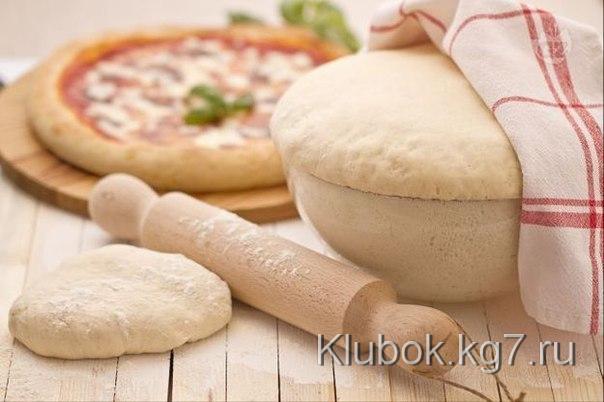
1. Pizza dough
Preparation:
Try making a delicious and aromatic pizza on a thin, crispy crust — you will be surprised at how easy it is. But first, remember a few basic rules:
Always sift the flour — this will enrich it with oxygen and make the dough soft and airy.
Use only quality yeast for the dough; otherwise, it won't rise well and will have an unpleasant beer smell.
Yeast dough does not tolerate drafts, so make sure to close all doors and windows tightly.
For preparation, use cold but not icy water — this will make the dough soft and elastic.
Do not roll out the pizza dough; instead, gently stretch it by hand from the center to the edges.
Make the edges of the crust slightly thicker for the borders.
To prevent the dough from sticking to the pan, grease it with vegetable oil and lightly sprinkle with flour.
Ingredients:
-Water 2/3 cup
-Dry yeast 1 tsp.
-Wheat flour 2 cups
-Salt 1 tsp.
-Olive oil 1 tbsp.
Preparation:
Pour warm water over the yeast and mix well to dissolve any lumps.
In a bowl, add flour, salt, and the dissolved yeast. Knead the dough.
Transfer the dough to a dry, floured surface, and knead, adding flour as necessary, for about 10 minutes until the dough becomes soft and elastic.
Grease the dough on all sides with olive oil and place it in a clean, large bowl.
Cover with plastic wrap and place in a warm, draft-free place for 1.5 hours — the dough should increase in size by about 2 times.
Punch down the dough with your fists, divide it into 2 equal parts, and shape them into balls.
Place the dough balls on a floured surface, cover with plastic wrap, and let sit for 60 minutes.
Stretch the dough by hand to your desired thickness. Add the filling and bake in a preheated oven at 180-200 degrees for about 10 minutes.
2. Puff pastry.
Puff pastry is versatile. It serves as a great base for both pastries and cakes, as well as for pies and turnovers with savory meat or vegetable fillings. Making this dough is not difficult, but there are a few nuances to consider:
Salt, vinegar, and citric acid affect the quality, elasticity, and taste of the dough. Therefore, strictly adhere to the quantities specified in the recipe.
Milk enhances the flavor of the dough but reduces its elasticity. Therefore, dilute the milk with water in a 1:1 ratio.
The butter for the dough should be chilled, not frozen — hard pieces will tear the dough instead of blending into it.
The more times you roll out the dough, the more layers it will have.
Roll the dough with even pressure, moving away from yourself. Do not go beyond the edges of the dough to avoid damaging the structure of the layers.
Before sending the dough to the oven, make slits on its surface to allow steam to escape.
Bake puff pastry items at a temperature of no less than 220 degrees. At lower temperatures, the layers will not rise, and at higher temperatures, the pastry will burn.
Ingredients:
-Flour 300 g
-Butter 150 g
-Milk (diluted with water) 2-3 tbsp.
-Vinegar 1 tsp.
-Egg 1 pc.
-Salt a pinch
Preparation:
On a clean, dry surface, pile 150 grams of flour. Make a well in the center, crack the egg into it, and add vinegar, milk, and salt.
Thoroughly mix the ingredients and knead the dough until bubbles form.
Cut the butter into small pieces and add the remaining flour to it. Mix everything and knead the dough. There is no need to knead the dough for a long time.
Roll out the first dough into a thin layer, place the butter dough in its center, and fold it like an envelope.
Roll out the dough away from yourself, sprinkle it with flour, fold it into thirds, and refrigerate for 30 minutes.
Roll out the dough 4 more times, folding it into thirds each time and refrigerating for 10 minutes after each rolling.
Divide the dough into portions and fill them with filling.
Bake in a preheated oven at 220 degrees.
3. Shortcrust pastry.
Shortcrust pastry is a real find for lovers of sweet baked goods. Crumbly cookies, tartlets with cream, or fruit pies — you can delight your family with new desserts every weekend by following our tips:
The butter for making the dough should be chilled, but not frozen.
For preparation, use cold but not icy water.
Do not skimp on the butter for making the dough — it affects its crumbly texture.
Butter should not be mixed into the flour but rubbed together with it until crumbly.
Do not knead the dough too long; otherwise, the butter will melt, and the dough will not be crumbly.
To make the dough tastier and crumblier, replace the sugar in the recipe with powdered sugar.
Ingredients:
-Wheat flour 2 cups
-Sugar 1/2 cup
-Butter 150 g
-Salt a pinch
-Vanilla to taste
Preparation:
Mix sugar, salt, vanilla, and flour.
Cut the chilled butter into cubes and add it to the mixture.
Rub everything together until you get a consistency similar to bread crumbs.
Gradually add liquid and quickly, but gently, knead the dough. The kitchen should be cool so that the butter does not melt.
Shape the dough into a ball.
Wrap it in plastic wrap and refrigerate for 30 minutes.
Roll out the dough, cut it into the desired shapes, and place them on a baking sheet.
Bake at a temperature of 180-200 degrees.
4. Dumpling dough.
Dumplings are a traditional Russian dish, and being able to make them is a matter of honor for every housewife. If you don’t have your signature secrets for making dumpling dough yet, use our basic recipe. And also remember a few rules:
The flour for the dough must be sifted.
Knead the dough in a circular motion in one direction.
After kneading, let the dough "rest" under a clean towel for 30 minutes.
The thickness of the dough layer should be no more than 1-2 millimeters.
Ingredients:
-Wheat flour 500 g
-Eggs 2 pcs.
-Water 200 ml
-Salt 0.5 tsp.
-Vegetable oil 1 tbsp.
Preparation method:
Sift the flour through a sieve.
Make a well in the resulting mound and pour in a thin stream the mixture of water, eggs, and salt.
Gradually knead the dough in a circular motion, in one direction, constantly pulling flour from the edges to the center. The longer you knead the dough, the more elastic it will be.
Let the finished dough rest for at least 30 minutes.
Roll out the dough into a thin layer, cut out blanks with a glass, fill them with filling, and shape the dumplings.
Boil in salted boiling water for 10-15 minutes.
5. Biscuit dough.
What could be better than an evening with friends over a cup of tea and a piece of the softest biscuit? There are a few nuances in the technology of making this type of dough that we are eager to share with you:
All ingredients for the biscuit and the dishes in which they will be mixed must be at the same cool temperature.
To enrich the flour with oxygen, it must be sifted several times.
Carefully separate the egg whites from the yolks — this affects the quality of the egg white mixture. The egg whites should be cold when beaten.
The ingredients should be mixed briefly; otherwise, you will destroy the air bubbles that enrich the biscuit mixture.
Preheat the oven to 180 degrees in advance. If the dough has to wait for the oven to heat up, the crust will not be fluffy.
Do not open the oven door during the first 20-25 minutes of baking; otherwise, the biscuit will sink.
Ingredients:
-Wheat flour 180 g
-Sugar 150 g
-Eggs 4 pcs.
-Vanilla to taste
Preparation:
Separate the egg whites from the yolks.
Beat the egg whites at the lowest speed of the mixer, gradually adding sugar and vanilla by the teaspoon.
Then, without stopping to beat, add the previously beaten yolks one spoon at a time.
Sift the flour several times.
Add the flour to the bowl with the egg whites, gently mixing with a spoon from the bottom up.
Pour the finished dough into a form with high sides, previously lined with parchment paper.
Send the biscuit to bake in a preheated oven at 190-200 degrees for 20-25 minutes.
6. Choux pastry.
Another type of dough that is worth mastering to perfection. Choux pastry is used to make many delicious pastries — cream puffs, eclairs, and even cakes. Before you start the cooking process, remember these simple rules:
Always sift the flour; otherwise, the dough will have lumps.
Pour the flour into the pot in a careful stream — use a piece of paper folded in half for this purpose.
Add the eggs to the already cooked dough, cooled to room temperature.
The eggs should be at room temperature.
Do not use a mixer for mixing; otherwise, the dough will be too liquid.
Turn on the oven at the same time you start preparing the dough. By the time you place the items in the oven, it should be heated to 200 degrees.
To prevent the finished products from getting soggy, cover them with paper towels — they will absorb moisture.
Ingredients:
-Wheat flour 150 g
-Butter 100 g
-Water 240 g
-Eggs 4 pcs.
-Sugar 1 tsp.
-Salt a pinch
Preparation:
In a saucepan, pour water, add butter and a pinch of salt.
After the butter melts, add the sifted flour, stirring constantly. Cook the mixture, remove from heat, and cool to room temperature.
Beat the mixture with a whisk, adding the eggs one by one. Make sure that the consistency of the dough is not too liquid.
Using a pastry bag or spoon, place the blanks of the desired shape on a baking sheet.
Bake in a preheated oven at 220 degrees for 10 minutes. Then reduce the temperature to 190 degrees and bake for another 10-15 minutes. Be careful not to burn the dough.
7. Pancake batter.
There are countless variations of pancakes — wheat and rye, with honey or caviar, with cottage cheese or mushrooms… By mastering the simple basic rules for making pancakes, you can delight your loved ones with a variety of dishes based on them every day.
Always sift the flour into a separate bowl just before making the batter — this will enrich it with air bubbles.
For making pancakes, use only fresh eggs, not dry egg powder.
First, mix the liquid components (water, milk, kefir, whey, eggs), and only then add the flour.
Add vegetable or butter at the very end. It should not be too much.
Do not beat the batter too long; otherwise, it will become too sticky.
Ingredients:
-Wheat flour 2 cups
-Eggs 5 pcs.
-Vegetable oil 1 tbsp.
-Milk 2.5 cups
-Salt, sugar to taste
Preparation:
Pour the egg yolks into a saucepan and, adding salt and sugar, mix well.
Then add the milk and mix.
Add the flour, add the oil, and knead the liquid batter.
The batter needs to be mixed well, but not for long.
Fry pancakes in the usual way.
Enjoy your meal!