



Pattern for a sweater
Added: 20.07.2025 в 17:44 Views: 34782
Pattern for a sweaterKlubokhttp://klubok.work/1/2/8918/Klubokhttps://klubok.work/css/image/top-logo-en.png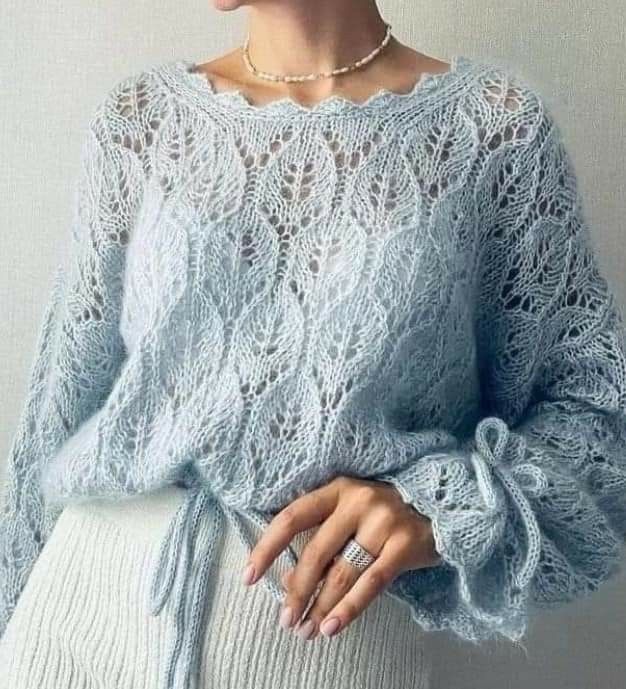
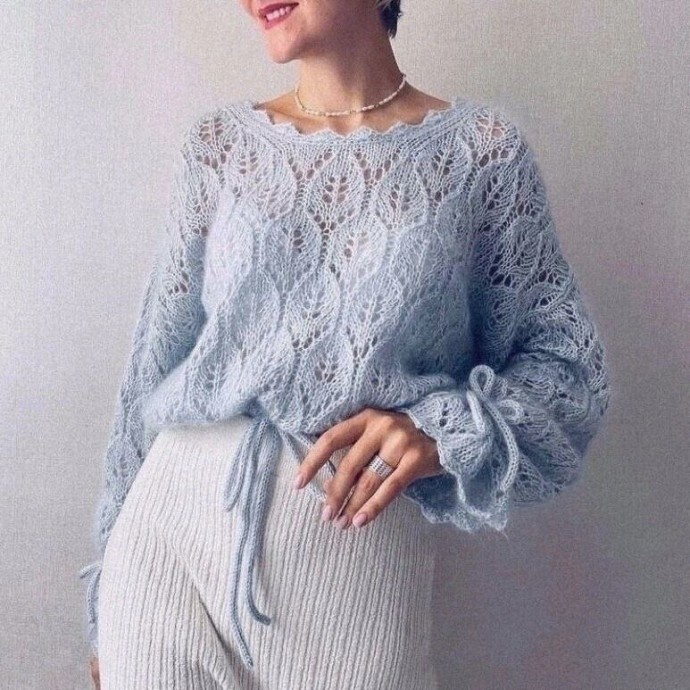
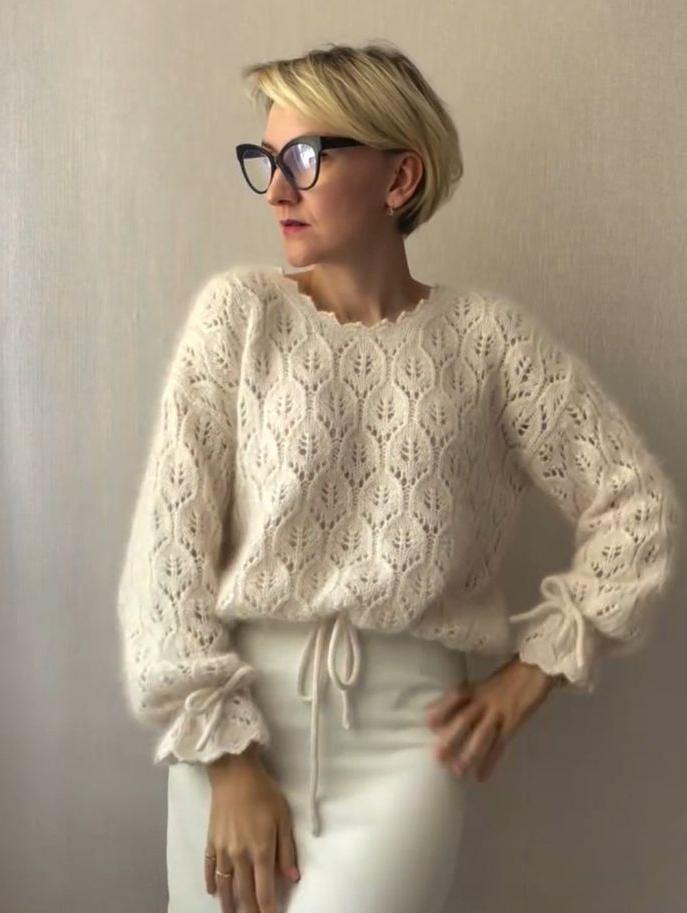
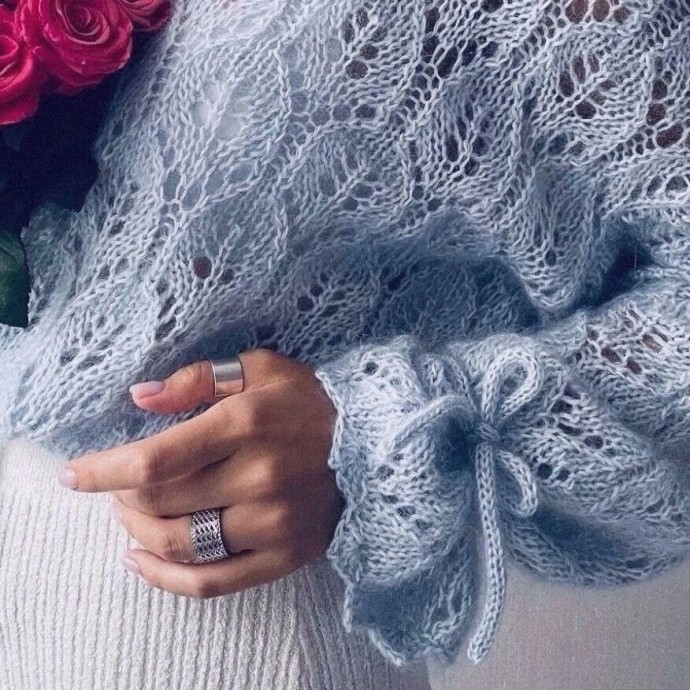
Materials:
● Yarn
variant number 1:
-Katia Babilonia (110m/50g)+Katia seacell cotton/Katia tencel-cotton/Katia cotton 100%/ Katia cotton in love (or any other smooth cotton close in yardage to 120m/50 g for knitting ribbing of the jumper)
Usage
•For size S-M: 7 balls of Katia Babilonia + 1 ball of solid cotton in color;
•For size M-L: 9 balls of Katia Babilonia + 1 ball of solid cotton in color;
*A variant knitting the ribbing with Katia Babilonia is allowed. In that case the consumption of this yarn should be increased by 1 ball
variant number 2:
- Katia Concept Mohair Cotton (225m/50g)+Mohair on silk thread in color any brand 215m/25 g
Usage
•For size S-M: 4 balls of Katia Concept Mohair Cotton + 4 balls of mohair on silk;
•For size M-L: 5 balls of Katia Concept Mohair Cotton + 4 balls of mohair on silk.
Also possible to knit the jumper from mohair on silk (215m/25 g) in 2 strands. Consumption for size S-M – 6 balls, for size M-L – 7 balls
● Stitch markers
● Measuring tape
● Circular needles No. 6 (additional No. 5.5 if you encounter row gauge issues when knitting turning rounds) (60-80 cm), for knitting the body of the jumper
● Circular needles No. 6 (40 cm or special needles for sleeves)
● Crochet hook No. 3-3.5.
● Circular needles No. 2.5 for knitting the ribbing of the “body” of the jumper and cuffs.
● Cord maker (if you are knitting a model with ties).
Gauge.
For guaranteed results you need to knit a swatch. To do this, cast on 25 stitches on needles No. 6 and knit 30 rows in stockinette. Calculate the number of stitches in a 10x10 cm square.
Block the swatch.
Stockinette gauge for Katia Concept Babilonia yarn, on which this pattern is based:
- before blocking 15 stitches and 18.5 rows;
- after blocking 15.5-16 stitches and 21 rows.
Stockinette gauge for the blend of Katia Concept Mohair Cotton+ mohair on silk:
- before blocking 15 stitches and 17 rows;
- after blocking 14 stitches and 18.5 rows
If you get more or less, try larger or smaller needles accordingly.
It is also recommended to knit a swatch in the main pattern (swatch size 28 stitches and 36 rows). Block it and measure its width and height. The pattern by which the width and height are measured is highlighted on the chart with a bright outline.
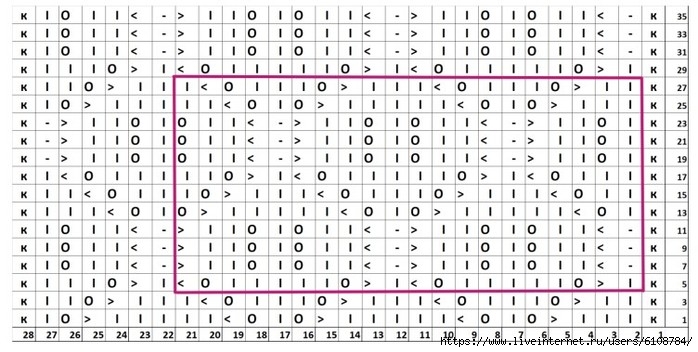
All even rows in the chart are worked according to the pattern.
21 stitches of the main pattern = 13 cm, 24 rows of the pattern = 13 cm ( see video )
When determining gauge, prefer the gauge in the swatch with the pattern.
Note that the gauge for Katia Concept Babilonia yarn changes significantly after blocking, so BE SURE to block the swatch and compare measurements before and after. This will greatly reassure you during knitting the jumper
Legend
P. – stitch
 - Knit (K) – knit
 - Purl (P) – purl
 Dec. with a right-leaning slope
 - Dec. with a left-leaning slope
 - Dec. from 3 sts with a right-leaning slope
 - Dec. from 3 sts with a left-leaning slope
 - Dec. from 3 sts with the top in the center
 - Yarn over
Form a double turning loop from a knit stitch
Form a double turning loop from a purl stitch
Knit the double loop in a knit row
Knit the double loop in a purl row
Edge – selvage
MNR – Start of row marker.
“By chart” - knit according to chart symbols.
“By pattern” - knit knit stitches as knit, purls as purls.
Note! When knitting with turning rounds you should follow the edge stitch rule:
When shaping the armholes for sleeves, each first edge stitch is knitted purl using the eastern method (wrap the yarn around the needle from below), and each last edge stitch is knitted knit ( see video ).
Don't forget to tighten the edge stitches so they don't become stretched.
Tips for joining the yarn
Katia Concept Babilonia ( see video )
Katia Concept Mohair Cotton ( see video )
Technical characteristics of the garment.
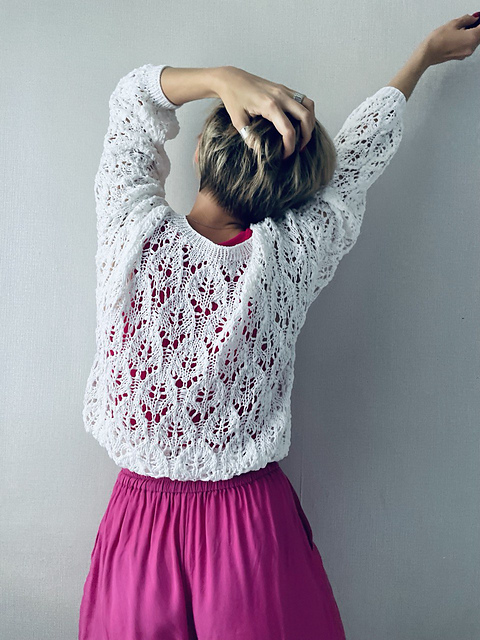
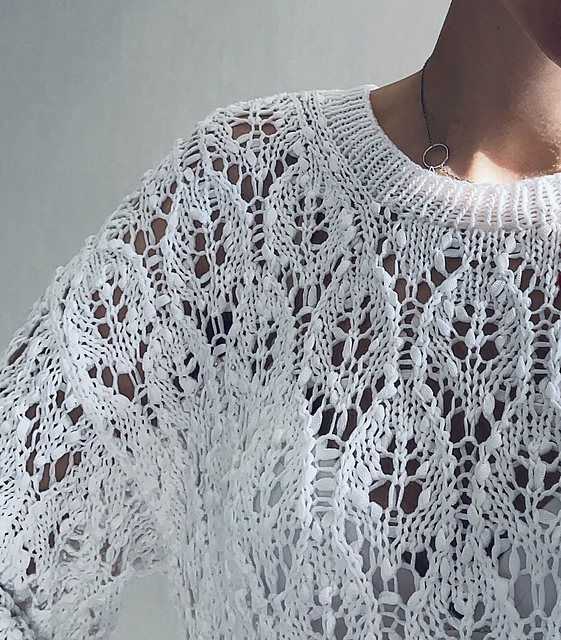
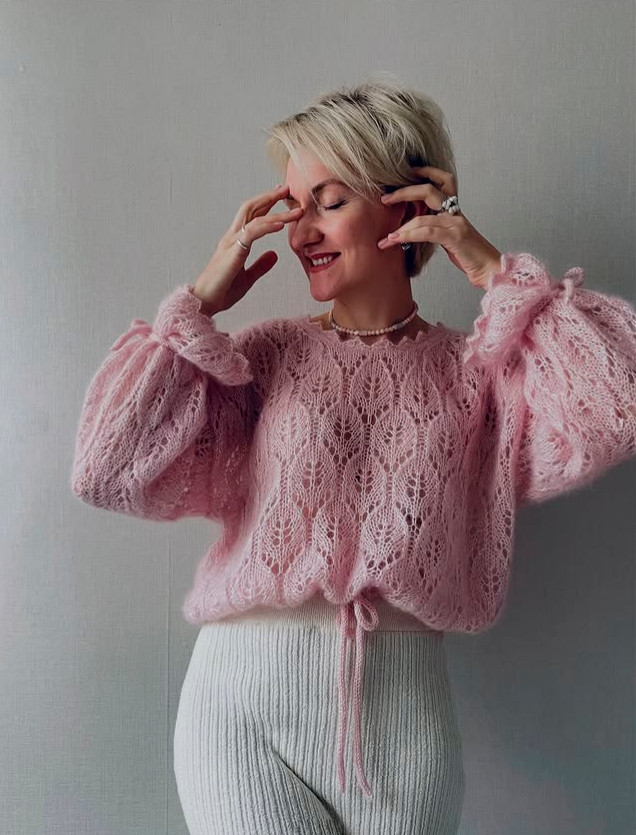
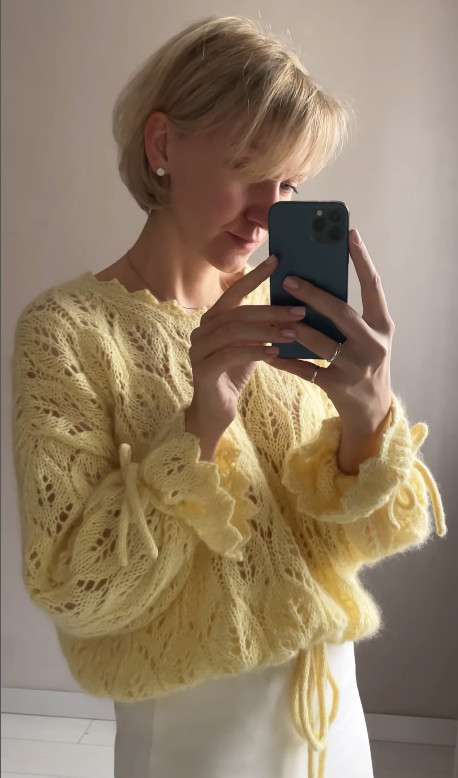
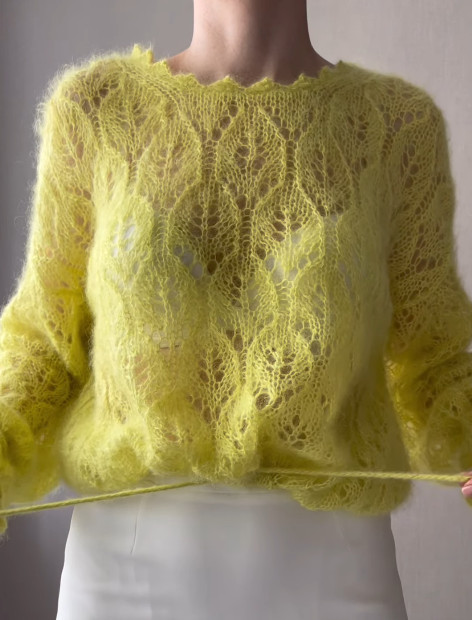
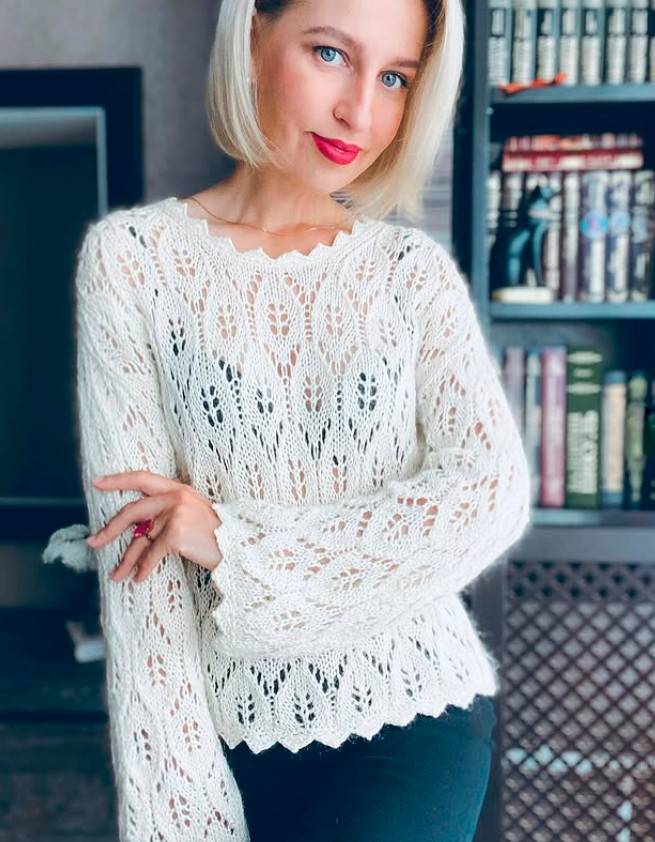
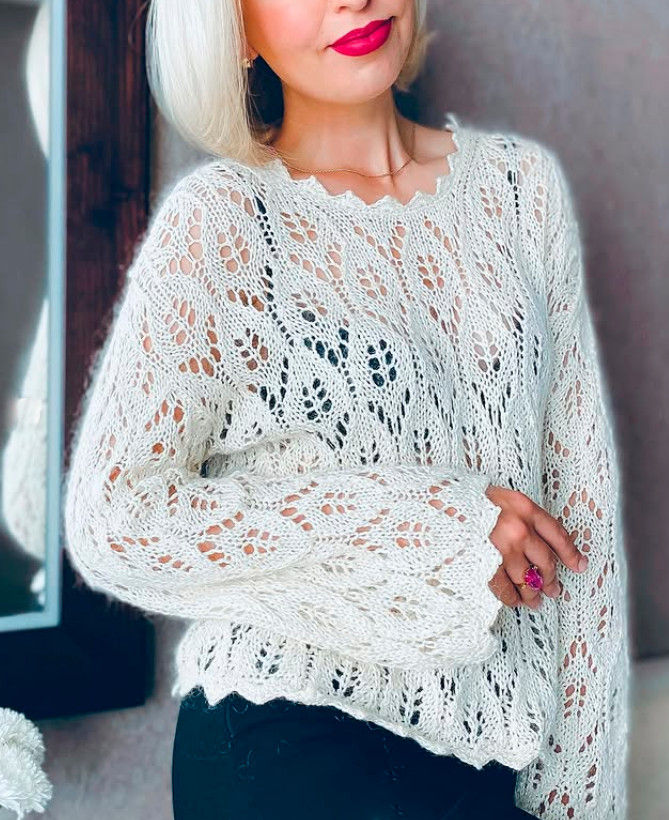
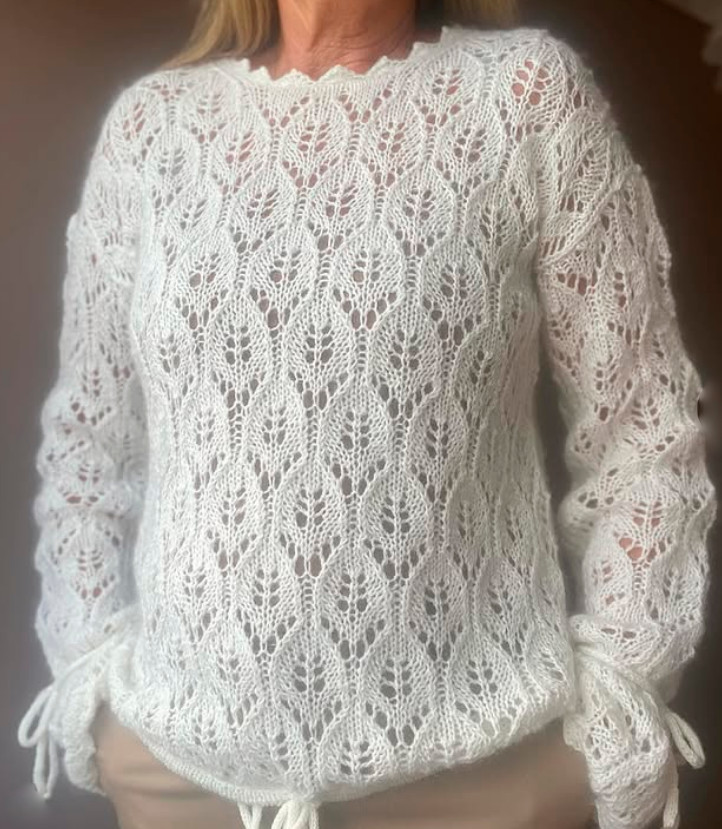
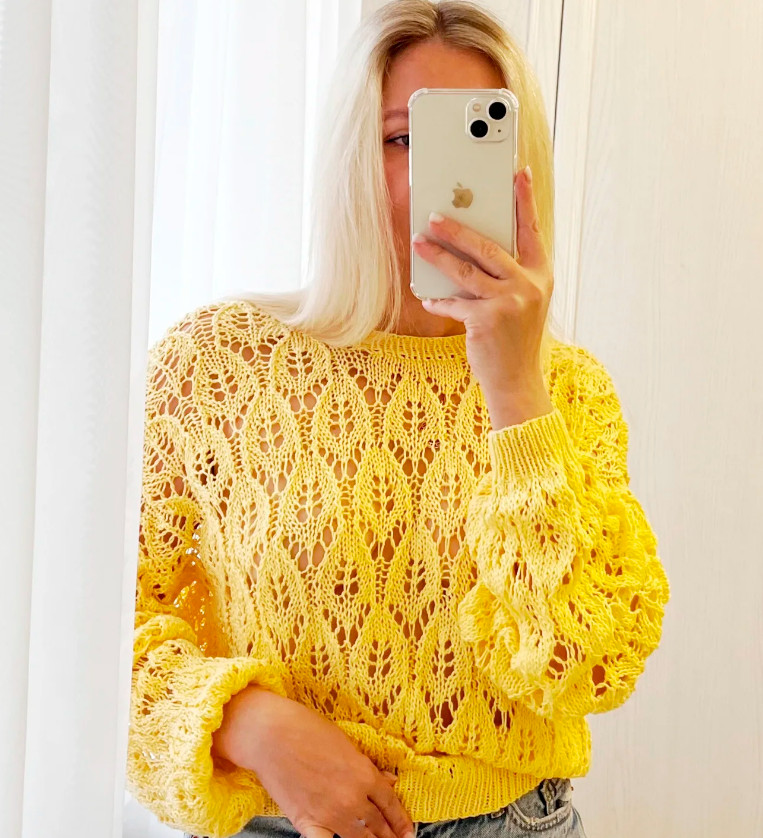
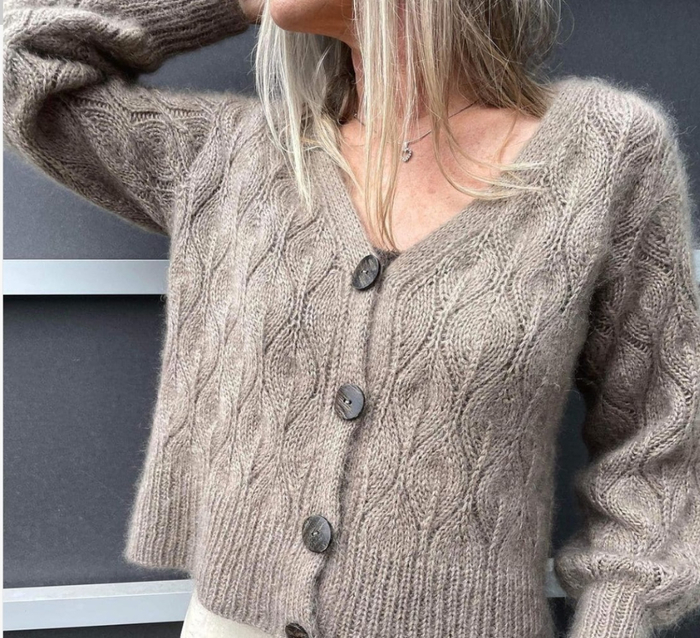
A lace-openwork oversized jumper with a straight cut. The front, back, and sleeves are completely worked in the pattern.
In the pattern there are two methods for knitting the sleeves: top-down (the stitches are picked up from the armhole, the sleeve is knitted downward) and set-in (knitting starts from the cuffs, the sleeve is knitted and sewn to the armhole).
Measurements of the jumper in finished form after blocking
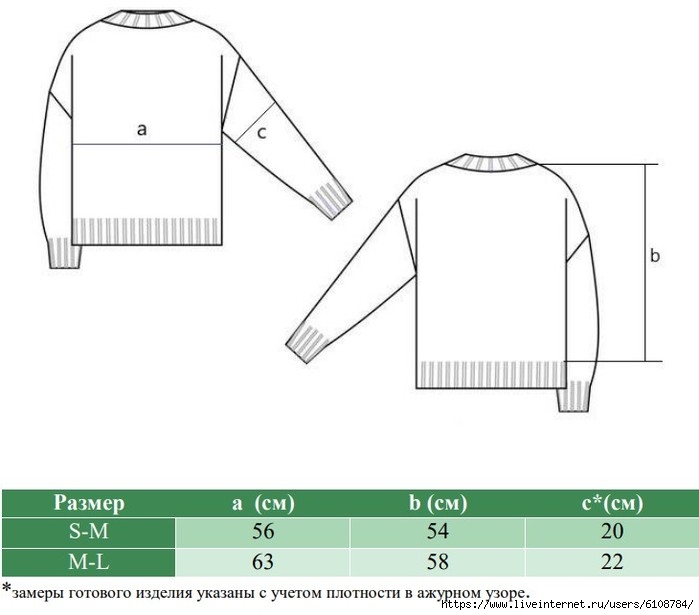
Note! To obtain your height b you need to open the full front schematic for your size and start from the row located next to the desired length.
SIZE S - M
The front and back are knitted as one piece in the round up to the armholes.
Then short-row turning knitting begins.
If you need a fitting to determine the desired length of the ribbing, you can start knitting from the open cast-on edge and immediately knit the main pattern.
Finish the ribbing after knitting from the open stitches (see video)
In this case you need to crochet a chain of air stitches (see video) and on circular needles size 6 (or the size that gave you the required density) pick up 170 stitches (see video).
Knit 1 row in knit stitches and then continue with the main pattern (see video).
If you start knitting with ribbing, then on circular needles size 2.5 you should cast on 170 stitches + 1 stitch for joining in the round (see video), (see video)
Mark the start of the row with a marker and knit 1x1 ribbing to the desired height (3-6 cm).
Switch to the needles that give the density (6) and knit one row in stockinette.
The main pattern repeat consists of 10 stitches and 24 rows (all even rows are knitted in stockinette in circular knitting, and purls – in turning, except for some rows where there are purl stitches (they in even rows are purled, and in turning knitting - knitted).
Below are the full front and back diagrams. You can also knit using the short schematic for the front and back (up to the armholes).
Full back diagram
In row 67 we proceed to knitting the front part of the sweater with turning rows. The front part consists of 85 stitches; the back can be left on the same needle, or transferred to an extra needle.
Watch the gauge in turning knitting. It may change. If so, you need to replace the needle (or even both) with a half-size.
Note: near the edge stitch you should always knit 1 knit stitch.
For reference, below is a stitch-by-stitch description of row 67
67 row (knit): knit the first stitch and slip it onto an extra thread (or onto a marker), edge stitch, 1 knit stitch, (decrease on the left, 2 knit stitches, yarn over, 1 knit, yarn over, 2 knit stitches, decrease on the right, 1 purl.)*repeat 7 times, decrease on the left, 2 knit stitches with yarn over, 1 knit, yarn over, 2 knit stitches, decrease on the right, 1 knit, 1 edge stitch, slip the next stitch onto an extra thread (or marker), turn the knitting to the wrong side.
68 row (purl): edge stitch, 1 purl (9 purls, 1 knit)*repeat 7 times, 10 purls, edge stitch.
Continue knitting, following the pattern repeat, up to row 90 inclusive.
Next we begin shaping the neckline
Neckline
Right front
Before shaping the neckline, we will knit a row according to the pattern; in the central stitches of the neckline opening they will be knit.
91 row (knit): edge, 1 knit, (decrease on the left, 2 knit, yarn over, 1 knit, yarn over, 2 knit, decrease on the right, 1 purl.)*repeat 3 times, 19 knit, (1 purl, decrease on the left, 2 knit, yarn over, 1 knit, yarn over, 2 knit, decrease on the right.)*repeat 3 times, 1 knit, 1 edge stitch, turn the knitting to the wrong side.
92 row (purl): edge, 1 purl (9 purls, 1 knit)*repeat 3 times, 19 purls, (1 purl, 9 purls)*repeat 3 times, 1 purl, edge.
93 row (knit): edge, 1 knit, (decrease on the left, 2 knit, yarn over, 1 knit, yarn over, 2 knit, decrease on the right, 1 purl.)*repeat 3 times, 3 knit, bind off 13 stitches, 2 knit, (1 purl, decrease on the left, 2 knit, yarn over, 1 knit, yarn over, 2 knit, decrease on the right.)*repeat 3 times, 1 knit, edge.
94 row (purl): edge, 1 purl, (9 purl, 1 knit)*repeat 3 times, 2 purls, edge.
95 row (knit): edge, 2 knit, decrease from 3 stitches with the top in the center, 2 knit, yarn over, 1 knit, yarn over, 2 knit, decrease on the right, (1 purl, decrease on the left, 2 knit, yarn over, 1 knit, yarn over, decrease on the right.)*repeat 2 times, 1 knit, edge.
96 row (purl): edge, 10 purl, 1 knit, 9 purl, 1 knit, 11 purl, edge.
97 row (knit): edge, 2 knit, (decrease on the left, 5 knit, decrease on the right, yarn over, 1 knit, yarn over)*repeat 2 times, decrease on the left, 5 knit, decrease on the right, 1 knit, edge.
98 row (purl): edge, 31 purl, edge.
99 row (knit): edge, 2 knit, (decrease on the left, 3 knit, decrease on the right, yarn over, 3 knit, yarn over)*repeat 2 times, yarn over, decrease on the left, 3 knit, decrease on the right, 2 knit, edge.
100 row (purl): edge, 30 purl, edge.
101 row (knit): edge, 2 knit, decrease on the left, (1 knit, decrease on the right, yarn over, 5 knit, yarn over, decrease on the left)*repeat 2 times, 1 knit, decrease on the right, yarn over, 3 knit, edge.
102 row (purl): edge, 29 purl, edge.
103 row (knit): edge, 2 knit, decrease on the left, decrease on the left, 2 knit, yarn over, 1 knit, yarn over, decrease on the right, 1 purl, decrease on the left, 2 knit, yarn over, 1 knit, yarn over, 2 knit, decrease on the right, 1 purl, decrease on the left, 2 knit, yarn over, 1 knit, edge.
104 row (purl): edge, 5 purl, 1 knit, 9 purl, 1 knit, 12 purl, edge.
105 row (knit): edge, 2 knit, decrease from 3 stitches with a left-leaning, 2 knit, yarn over, 1 knit, yarn over, 2 knit, decrease on the right, 1 purl, decrease on the left, 2 knit, yarn over, 1 knit, yarn over, 2 knit, decrease on the right, 1 purl, decrease on the left, 2 knit, yarn over, 1 knit, edge.
106 row (purl): edge, 5 purl, 1 knit, 9 purl, 1 knit, 11 purl, edge.
We begin shaping the shoulder slope. We will knit it with turning rows using the “double stitch” method.
107 row (knit): edge, 2 knit, decrease from 3 stitches with a left leaning, 1 knit, yarn over, 1 knit, yarn over, 2 knit, decrease on the right, 1 purl, decrease on the left, 2 knit, yarn over, 1 knit, yarn over, 2 knit, decrease on the right, 1 purl, turn the knitting to the wrong side.
108 row (purl): form a double turning loop, 9 purl, 1 knit, 10 purl, edge.
109 row (knit): form a double turning loop, yarn over, decrease on the left, 5 knit, decrease on the right, yarn over, 1 knit, turn the knitting to the wrong side.
110 row (purl): form a double turning loop, 9 purl, turn the knitting to the right side.
111 row (knit): form a double turning loop, 1 knit, yarn over, decrease on the left, 6 knit, edge.
112 row (purl): edge, 25 purl, edge.
Slip the stitches onto an extra thread.
Proceed to knitting the back.
Back
We begin knitting from the right side.
67 row (knit): knit the first stitch and slip it onto an extra thread, edge stitch, (1 knit, yarn over, 2 knit, decrease on the right, 1 purl, decrease on the left, 2 knit, yarn over)*repeat 8 times, 1 knit, 1 edge stitch, slip the next stitch onto an extra thread.
68 row (purl): edge, 5 purl, (1 knit, 9 purl)*repeat 7 times, 1 purl, 5 purl, edge.
Continue knitting following the pattern repeat up to row 102 inclusive.
Next we shape the neckline.
103 row (knit): edge, 1 knit, (decrease left, 2 knit, yarn over, 1 knit, yarn over, 2 knit, decrease right, 1 purl.)*repeat 2 times, decrease left, 2 knit, yarn over, 1 knit, yarn over, 2 knit, decrease right, 4 knit, bind off 13 stitches, 3 knit, (decrease left, 2 knit, yarn over, 1 knit, yarn over, 2 knit, decrease right, 1 purl)*repeat 2 times, decrease left, 2 knit, yarn over, 1 knit, yarn over, 2 knit, decrease right, 1 knit, edge.
104 row (purl): edge, 10 purl, (1 knit, 9 purl)*repeat 2 times, 3 purl, edge.
105 row (knit): cast off 3 stitches, (decrease left, 2 knit, yarn over, 1 knit, yarn over, 2 knit, decrease right, 1 purl)*repeat 2 times, decrease left, 2 knit, yarn over, 1 knit, yarn over, 2 knit, decrease right, 1 knit, edge.
106 row (purl): edge, 10 purl, 1 knit, 9 purl, 1 knit, 9 purl, edge.
We begin shaping the shoulder slope. We will knit it with turning rows using the “double stitch” method.
Row 107 (RS/front): bind off 3 stitches, 2 knit stitches, yarn over, 2 knit stitches, decrease NP, 1 purl stitch, decrease NL, 2 knit stitches, yarn over, 1 knit stitch, yarn over, 2 knit stitches, decrease NP, 1 purl stitch, decrease NL, 2 knit stitches, yarn over, 1 knit stitch, turn the work to the wrong side.
Row 108 (WS): form a double turning stitch, 4 purl stitches, 1 knit stitch, 9 purl stitches, 1 knit stitch, 6 purl stitches, edge stitch.
Row 109 (RS):bind off 2 stitches, 2 knit stitches, decrease NP, yarn over, 1 knit stitch, yarn over, decrease NL, 3 knit stitches, turn the work to the wrong side.
Row 110 (WS): form a double turning stitch, 9 purl stitches, edge stitch.
Row 111 (RS): edge stitch, 1 knit stitch, decrease NP, yarn over, 3 knit stitches, yarn over, decrease NL, 1 knit stitch, double stitch, 2 knit stitches, decrease NP, yarn over, 1 knit stitch, yarn over, decrease NL, 2 knit stitches, double stitch, yarn over, 2 knit stitches, decrease NP, 1 knit stitch, edge stitch.
Row 112 (WS): edge stitch, 25 purl stitches, edge stitch.
Slip the stitches onto an auxiliary thread, do not cut the working yarn.
Proceed to sew the shoulder seams.
SIZE M-L
The front and back are knitted as one piece in the round up to the armholes.
Next comes turning knitting.
If you need a try-on to determine the desired length of the ribbing, you can start knitting from an open cast-on edge and immediately knit the main pattern.
Finish the ribbing after the open stitches
In this case, crochet a chain of chain stitches (see video) and on circular needles size 6 (or the size that gives the required gauge) pick up 190 stitches (see video).
Knit 1 row with knit stitches and then continue knitting the main pattern (see video).
If you start knitting with ribbing, on circular needles size 2.5 cast on 190 stitches plus 1 stitch to join the round (see video), (see video).
Mark the beginning of the round with a marker and knit ribbing to the desired height (3–6 cm).
Switch to the needle size that matches the above gauge (6) and knit one row in stockinette stitch.
The main pattern repeat consists of 10 stitches and 24 rows (all even rows are worked as knit stitches in circular knitting, and as purl stitches in turning knitting, except for some rows where there are purl stitches (in even rows they should be purled as well, and in turning knitting - knit).
Below are the full front and back charts. You can also knit using the short chart for the front and back (up to the armholes).
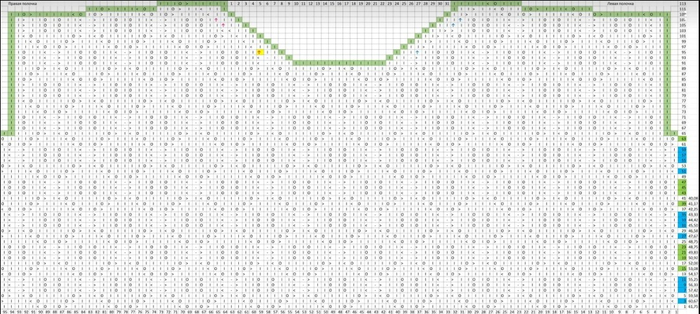
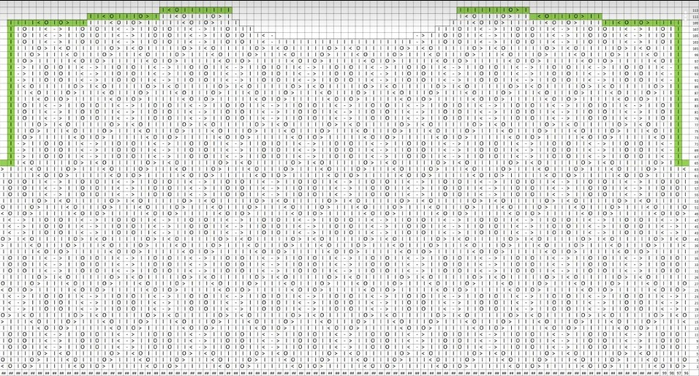
Note!! in the right column are the calculated numbers for the garment length. For example, if you want a garment length of 50 cm (excluding the ribbing), you should begin knitting from row 19 of the chart.
Green color in the chart highlights the rows at the beginning of which the MNR should be shifted one stitch to the left, blue color – the rows where the MNR should be shifted one stitch to the right.
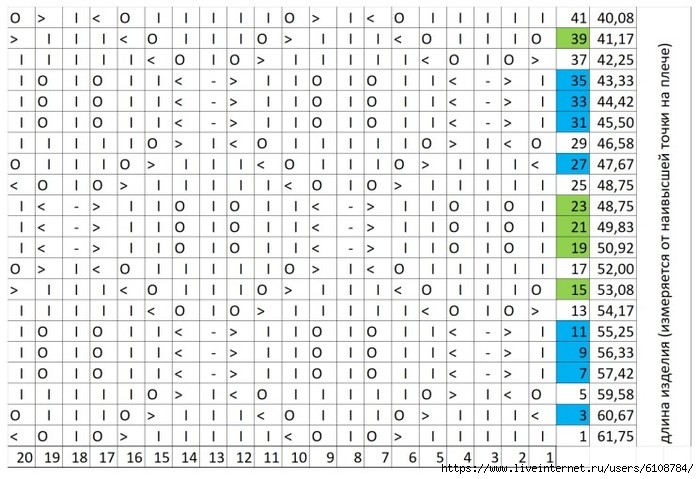
Knit following the pattern repeat up to row 64 inclusive.
In row 65 we begin knitting the front part of the jumper with turning rows. The front part consists of 95 stitches; the back can stay on the same cord, or be moved to an additional one.
Note: next to the edge stitch you should always knit 1 knit stitch.
For reference, below is a stitch-by-stitch description of row 65
Row 65 (RS): knit the first stitch and slip it onto an auxiliary thread (or onto a marker), edge stitch, 3 knit stitches, yarn over, decrease NL, (1 knit stitch, decrease NP, yarn over, 5 knit stitches, yarn over, decrease NL) repeat 8 times, 1 knit stitch, decrease NP, yarn over, 3 knit stitches, edge stitch, slip the next stitch onto an auxiliary thread (or marker), turn the knitting to the purl side.
Row 66 (WS): edge stitch, 91 purl stitches, edge stitch.
Continue knitting, following the pattern repeat, up to row 90 inclusive.
Next we form the neckline.
Neckline
Right Front
Before shaping the neckline, knit a row according to the pattern in which the central stitches of the neckline will be knit.
Row 91 (RS): edge stitch, (1 knit, yarn over, 2 knit, decrease NP, 1 purl, decrease NL, 2 knit, yarn over) repeat 3 times, 1 knit, yarn over, 2 knit, decrease NP, 1 purl, 19 knit stitches, (1 purl, decrease NL, 2 knit, yarn over, 1 knit, yarn over, 2 knit, decrease NP) repeat 3 times, 1 purl, decrease NL, 2 knit, yarn over, 1 knit, edge stitch.
Row 92 (WS): edge stitch, 5 purl (1 knit, 9 purl) repeat 3 times, 1 knit, 19 purl, (1 knit, 9 purl) repeat 3 times, 1 knit, 5 purl, edge stitch.
Row 93 (RS): edge stitch, (1 knit, yarn over, 2 knit, decrease NP, 1 purl, decrease NL, 2 knit, yarn over) repeat 3 times, 1 knit, yarn over, 2 knit, decrease NP, 1 purl, 3 knit, bind off 13 stitches, 2 knit, (1 purl, decrease NL, 2 knit, yarn over, 1 knit, yarn over, 2 knit, decrease NP) repeat 3 times, 1 purl, decrease NL, 2 knit, yarn over, 1 knit, edge stitch.
Row 94 (WS): edge stitch, 5 purl, (1 knit, 9 purl) repeat 3 times, 1 knit, 2 purl, edge stitch.
Row 95 (RS): edge stitch, 2 knit stitches, decrease from 3 stitches with a left-leaning decrease, 2 knit stitches, yarn over, 1 knit, yarn over, 2 knit, decrease NP, (1 purl, decrease NL, 2 knit, yarn over, 1 knit, yarn over, 2 knit, decrease NP) repeat 2 times, 1 purl, decrease NL, 2 knit, yarn over, 1 knit, edge stitch.
Row 96 (WS): edge stitch, 5 purl, (1 knit, 9 purl) repeat 3 times, 2 purl, edge stitch.
Row 97 (RS): edge stitch, 2 knit stitches, (decrease NL, 5 knit stitches, decrease NP, yarn over, 1 knit, yarn over) repeat 3 times, decrease NL, 3 knit stitches, edge stitch.
Row 98 (WS): edge stitch, 36 purl, edge stitch.
Row 99 (RS): edge stitch, 2 knit stitches, (decrease NL, 3 knit, decrease NP, yarn over, 3 knit, yarn over) repeat 3 times, decrease NL, 2 knit, edge stitch.
Row 100 (WS): edge stitch, 35 purl, edge stitch.
Row 101 (RS): edge stitch, 2 knit stitches, decrease NL, (1 knit, decrease NP, yarn over, 5 knit, yarn over, decrease NL) repeat 3 times, 1 knit, edge stitch.
Row 102 (WS): edge stitch, 34 purl, edge stitch.
Row 103 (RS): edge stitch, 2 knit stitches, decrease NL, (decrease NL, 2 knit, yarn over, 1 knit, yarn over, 2 knit, decrease NP, 1 purl) repeat 2 times, decrease NL, 2 knit, yarn over, 1 knit, yarn over, 2 knit, decrease NP, 1 knit, edge stitch.
Row 104 (WS): edge stitch, 10 purl, 1 knit, 9 purl, 1 knit, 12 purl, edge stitch.
Row 105 (RS): edge stitch, 2 knit stitches, decrease from 3 stitches with a left-leaning decrease, 2 knit stitches, yarn over, 1 knit, yarn over, 2 knit, decrease NP, 1 purl, decrease NL, 2 knit, yarn over, 1 knit, yarn over, 2 knit, decrease NP, 1 purl, decrease NL, 2 knit, yarn over, 1 knit, yarn over, 2 knit, decrease NP, 1 knit, edge stitch.
Row 106 (WS): edge stitch, 10 purl, 1 knit, 9 purl, 1 knit, 11 purl, edge stitch.
Row 107 (RS): edge stitch, 2 knit stitches, decrease from 3 stitches with a left-leaning decrease, 1 knit, yarn over, 1 knit, yarn over, 2 knit, decrease NP, 1 purl, decrease NL, 2 knit, yarn over, 1 knit, yarn over, 2 knit, decrease NP, 1 purl, decrease NL, 2 knit, yarn over, 1 knit, yarn over, 2 knit, decrease NP, 1 knit, edge stitch.
Row 108 (WS): edge stitch, 10 purl, 1 knit, 9 purl, 1 knit, 10 purl, edge stitch.
We begin forming the shoulder slope. We will knit it in turning rows using the 'double loop' method.
Row 109 (RS): edge stitch, 2 knit stitches, decrease to the left, 4 knit stitches, decrease to the right, yarn over, 1 knit stitch, yarn over, decrease to the left, 5 knit stitches, decrease to the right, yarn over, 1 knit stitch, turn the work to the purl side.
Row 110 (WS): form a double turning stitch, 19 purl stitches, edge stitch.
Row 111 (RS): edge stitch, 2 knit stitches, decrease to the left, 2 knit stitches, decrease to the right, yarn over, 2 knit stitches, turn the knitting to the purl side.
Row 112 (WS): form a double turning stitch, 8 purl stitches, edge stitch.
Row 113 (RS): edge stitch, 4 knit stitches, decrease to the right, yarn over, 2 knit stitches, double stitch, 1 knit stitch, yarn over, decrease to the left, 3 knit stitches, decrease to the right, yarn over, 1 knit stitch, double stitch, yarn over, decrease to the left, 5 knit stitches, decrease to the right, yarn over, 1 knit stitch, edge stitch.
Row 114 (WS): edge stitch, 29 purl stitches, edge stitch.
Slip the stitches onto an extra thread.
Left Front
We begin knitting the left front. Start from the wrong side, from the neckline opening.
Row 94 (WS): edge stitch, 2 purl stitches, (1 knit stitch, 9 purl stitches)*repeat 3 times, 1 knit stitch, 5 purl stitches, edge stitch.
Row 95 (RS): edge stitch, 1 knit stitch, yarn over, 2 knit stitches, decrease to the right, (1 purl stitch, decrease to the left, 2 knit stitches, yarn over, 1 knit stitch, yarn over, 2 knit stitches, decrease to the right,)*repeat 2 times, 1 purl stitch, decrease to the left, 2 knit stitches, yarn over, 1 knit stitch, yarn over, 2 knit stitches, decrease from 3 stitches with a right-leaning decrease, 2 knit stitches, edge stitch.
Row 96 (WS): edge stitch, 11 purl stitches, (1 knit stitch, 9 purl stitches)*repeat 2 times, 1 knit stitch, 5 purl stitches, edge stitch.
Row 97 (RS): edge stitch, 3 knit stitches, (decrease to the right, yarn over, 1 knit stitch, yarn over, decrease to the left, 5 knit stitches)*repeat 3 times, decrease to the right, 2 knit stitches, edge stitch.
Row 98 (WS): edge stitch, 36 purl stitches, edge stitch.
Row 99 (RS): edge stitch, 2 knit stitches, (decrease to the right, yarn over, 3 knit stitches, yarn over, decrease to the left, 3 knit stitches)*repeat 3 times, decrease to the right, 2 knit stitches, edge stitch.
Row 100 (WS): edge stitch, 35 purl stitches, edge stitch.
Row 101 (RS): edge stitch, (1 knit stitch, decrease to the right, yarn over, 5 knit stitches, yarn over, decrease to the left)*repeat 3 times, 1 knit stitch, decrease to the right, 2 knit stitches, edge stitch.
Row 102 (WS): edge stitch, 34 purl stitches, edge stitch.
Row 103 (RS): edge stitch, 1 knit stitch, yarn over, 2 knit stitches, decrease to the right, (1 purl stitch, decrease to the left, 2 knit stitches, yarn over, 1 knit stitch, yarn over, 2 knit stitches, decrease to the right, 1 purl stitch)*repeat 2 times, decrease to the left, 2 knit stitches, yarn over, 1 knit stitch, yarn over, 2 knit stitches, decrease to the right, decrease to the right, 2 knit stitches, edge stitch.
Row 104 (WS): edge stitch, 12 purl stitches, 1 knit stitch, 9 purl stitches, 1 knit stitch, 10 purl stitches, edge stitch.
Row 105 (RS): edge stitch, 1 knit stitch, yarn over, 2 knit stitches, decrease to the right, (1 purl stitch, decrease to the left, 2 knit stitches, yarn over, 1 knit stitch, yarn over, 2 knit stitches, decrease to the right)*repeat 3 times, 1 purl stitch, bind off 19 stitches, (decrease to the left, 2 knit stitches, yarn over, 1 knit stitch, yarn over, 2 knit stitches, decrease to the right, 1 purl stitch)*repeat 3 times, decrease to the left, 2 knit stitches, yarn over, 1 knit stitch, edge stitch.
Row 106 (WS): edge stitch, 5 purl stitches, (1 knit stitch, 9 purl stitches)*repeat 3 times, edge stitch.
Row 107 (RS):nbsp;close 3 stitches, 2 knit stitches, yarn over, 2 knit stitches, decrease to the right, (1 purl stitch, decrease to the left, 2 knit stitches, yarn over, 1 knit stitch, yarn over, 2 knit stitches, decrease to the right)*repeat 2 times, 1 purl stitch, decrease to the left, 2 knit stitches, yarn over, 1 knit stitch, edge stitch.
Row 108 (WS): edge stitch, 5 purl stitches, (1 knit stitch, 9 purl stitches)*repeat 2 times, 1 knit stitch, 6 purl stitches, edge stitch.
We begin forming the shoulder slope. We will knit it in turning rounds by the 'double loop' method.
Row 109 (RS): bind off 2 stitches, 2 knit stitches, decrease to the right, yarn over, 1 knit stitch, yarn over, decrease to the left, 5 knit stitches, decrease to the right, yarn over, 1 knit stitch, yarn over, decrease to the left, 3 knit stitches, turn the work to the WS.
Row 110 (WS): form a double turning stitch, 19 purl stitches, edge stitch.
Row 111 (RS): bind off 1 stitch, decrease to the right, yarn over, 3 knit stitches, yarn over, decrease to the left, 2 knit stitches, turn the knitting to the WS.
Row 112 (WS): form a double turning stitch, 8 purl stitches, edge stitch.
Row 113 (RS): edge stitch, 6 knit stitches, yarn over, decrease to the left, double stitch, 1 knit stitch, decrease to the right, 3 knit stitches, yarn over, decrease to the left, 1 knit stitch, double stitch, 2 knit stitches, decrease to the right, yarn over, 1 knit stitch, yarn over, decrease to the left, 3 knit stitches, edge stitch.
Row 114 (WS): edge stitch, 29 purl stitches, edge stitch.
Slip the stitches onto an extra thread, do not cut the working thread.
Proceed to knit the back.
Back
We start knitting the back on the right side.
Row 65 (RS): knit the first stitch and slip it onto an extra thread, edge stitch, (1 knit stitch, decrease to the right, yarn over, 5 knit stitches, yarn over, decrease to the left)*repeat 9 times, 1 knit stitch, 1 edge stitch, slip the next stitch onto an extra thread.
Row 66 (WS): edge stitch, 91 purl stitches, edge stitch.
Continue knitting following the pattern repeat up to row 102 inclusive.
Next, begin forming the neckline.
Row 103 (RS): edge stitch, 1 knit stitch, yarn over, 2 knit stitches, decrease to the right, (1 purl stitch, decrease to the left, 2 knit stitches, yarn over, 1 knit stitch, yarn over, 2 knit stitches, decrease to the right)*repeat 3 times, 1 purl stitch, 19 knit stitches, 1 purl stitch, (decrease to the left, 2 knit stitches, yarn over, 1 knit stitch, yarn over, 2 knit stitches, decrease to the right, 1 purl stitch)*repeat 3 times, decrease to the left, 2 knit stitches, yarn over, 1 knit stitch, edge stitch.
Row 104 (WS): edge stitch, 5 purl stitches, (1 knit stitch, 9 purl stitches)*repeat 3 times, 1 knit stitch, 19 purl stitches, (1 knit stitch, 9 purl stitches)*repeat 3 times, 1 knit stitch, 5 purl stitches, edge stitch.
Row 105 (RS):edge stitch, 1 knit stitch, yarn over, 2 knit stitches, decrease to the right, (1 purl stitch, decrease to the left, 2 knit stitches, yarn over, 1 knit stitch, yarn over, 2 knit stitches, decrease to the right)*repeat 3 times, 1 purl stitch, bind off 19 stitches, (decrease to the left, 2 knit stitches, yarn over, 1 knit stitch, yarn over, 2 knit stitches, decrease to the right, 1 purl stitch)*repeat 3 times, decrease to the left, 2 knit stitches, yarn over, 1 knit stitch, edge stitch.
Row 106 (WS): edge stitch, 5 purl stitches, (1 knit stitch, 9 purl stitches)*repeat 3 times, edge stitch.
Row 107 (RS): close 3 stitches, 2 knit stitches, yarn over, 2 knit stitches, decrease to the right, (1 purl stitch, decrease to the left, 2 knit stitches, yarn over, 1 knit stitch, yarn over, 2 knit stitches, decrease to the right)*repeat 2 times, 1 purl stitch, decrease to the left, 2 knit stitches, yarn over, 1 knit stitch, edge stitch.
Row 108 (WS): edge stitch, 5 purl stitches, (1 knit stitch, 9 purl stitches)*repeat 2 times, 1 knit stitch, 6 purl stitches, edge stitch.
We begin forming the shoulder slope. We will knit it in turning rounds by the 'double loop' method.
Row 109 (RS): bind off 2 stitches, 2 knit stitches, decrease to the right, yarn over, 1 knit stitch, yarn over, decrease to the left, 5 knit stitches, decrease to the right, yarn over, 1 knit stitch, yarn over, decrease to the left, 3 knit stitches, turn the work to the WS.
Row 110 (WS): form a double turning stitch, 19 purl stitches, edge stitch.
Row 111 (RS): bind off 1 stitch, decrease to the right, yarn over, 3 knit stitches, yarn over, decrease to the left, 2 knit stitches, turn the knitting to the WS.
Row 112 (WS): form a double turning stitch, 8 purl stitches, edge stitch.
Row 113 (RS): bind off, 6 knit stitches, yarn over, decrease to the left, double stitch, 1 knit stitch, decrease to the right, 3 knit stitches, yarn over, decrease to the left, 1 knit stitch, double stitch, 2 knit stitches, decrease to the right, yarn over, 1 knit stitch, yarn over, decrease to the left, 3 knit stitches, edge stitch.
Row 114 (WS): edge stitch, 29 purl stitches, edge stitch.
Slip the stitches onto an extra thread, do not cut the working thread.
Proceed to perform shoulder seams.
SHOULDER SEAMS
Having knit the front and back parts of the jumper, transfer the stitches of both halves back onto the needles (if they were previously held on an auxiliary thread).
Shoulder seams should be worked on the wrong side using a crochet hook.
It is not recommended to sew with a knitted seam, since this model requires a fixed seam at the shoulder.
Turn the garment to the wrong side. Hold the back to your body. With the crochet hook, slip a stitch from the far needle, then from the back needle, catch the working thread and crochet them together. Then again slip a stitch from the far needle, then from the back needle and crochet the resulting 3 stitches together.
Similarly close the second shoulder.
After completing the shoulder seams, it is necessary to wash and block the finished jumper.
Be sure to take gauge measurements of knitting density and record the garment's width and length before blocking. After it is completely dry, repeat the measurements. This will be useful to you when knitting the sleeve.
NECKLINE EDGING.
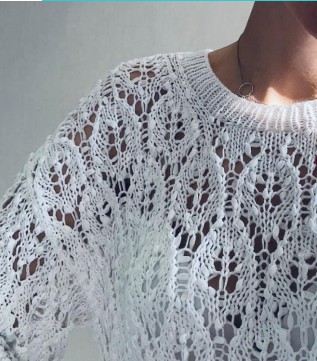
For classic 1x1 rib edging, you need to use needles size 2.5-3. For a garment made from Katia Concept Mohair Cotton you can use needles size 3.5.
Raise the stitches under both sides of the neckline edge ( see video ).
Total number of picked-up stitches:
S-M – 100 stitches
M-L – 106 stitches
Knit in 1x1 rib for 8-9 rows, bind off in a non-elastic manner ( see video ).
To perform a lace crochet edging (hook size 3.5) you need to perform several steps:
✓ crochet the neckline with slip stitches.
The hook should be inserted under both walls of the edge stitches.
Drawing up each new stitch, pass it through the previous one.
Note: at this stage you can slightly adjust the neckline and make it more rounded.
✓ Next row to be worked in single crochet along the created chain.
✓ Pattern. To begin, make a yarn over on the hook and insert it into the 4th stitch from the working one, draw up the yarn and crochet a double crochet. Crochet two more double crochets in this same stitch. Make one chain stitch and crochet a slip stitch in its base. Crochet another 3 double crochets. Skip 3 stitches and in the 4th stitch crochet a slip stitch. Repeat the entire repeat ( see video ).
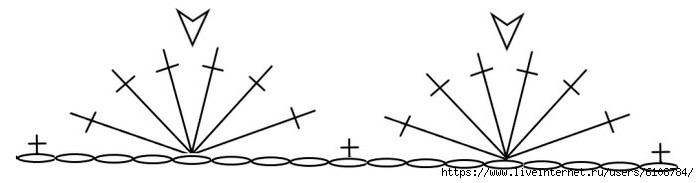
 - slip stitch
 - picot (chain + slip stitch)
 - double crochet
SLEEVES
The description provides two methods for knitting the sleeve:
First: Sleeves are knitted as separate pieces and then sewn to the “body” of the jumper. In this case the direction of the sleeve pattern and the jumper’s “body” pattern will coincide.
Second: The sleeve is picked up from the armhole and the pattern is knitted in the reverse direction relative to the jumper body pattern.
Note! When knitting on circular short needles, the gauge may shift toward a larger measurement. In that case, for knitting the sleeve you should use needles 0.5-1 size larger.
First method for size S-M
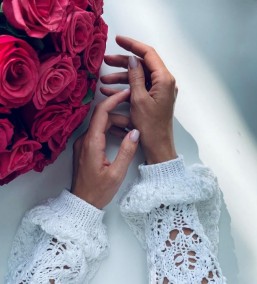
If you are knitting sleeves with cuffs, then on needles size 3 you should cast on 48 stitches + 1 stitch for joining in the round ( see video ), ( see video ). Mark the start of the round with a marker and knit in 1x1 rib to the desired height (3-6 cm).
Knit the desired length, then knit a row of knit stitches, increasing every 4 stitches ( see video ). The final number of stitches for the sleeve is 60.
If you are knitting sleeves with crochet edging, then begin knitting from the open cast-on edge (so that the start of the row does not become tight). To do this, crochet a chain of chain stitches and on circular needles size 6 (or the size you used to obtain the required gauge) pick up 60 stitches. Knit 1 row in knit stitches and then continue with the main pattern
Below is the chart for knitting the sleeve.
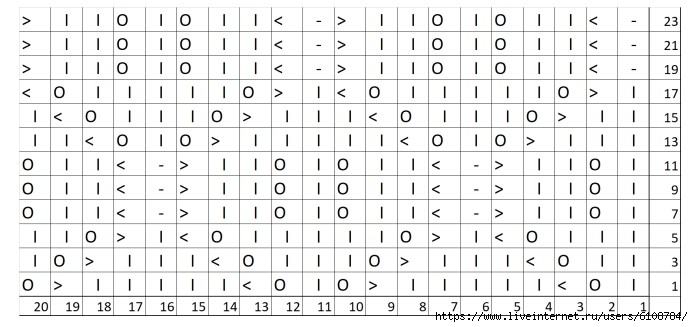
Remember that each odd row (RS) should be worked according to the chart, and each even row should be worked following the pattern.
During knitting you should try on (be sure to try the sleeve on yourself, placing it against the lower part of the armhole).
You can finish knitting the sleeve on any even row.
Next it is recommended to perform blocking (the sleeve can be left on a cable) to ensure its length.
To ensure the sleeve has the correct shape and corresponds to the angle of the shoulder slope, you need to complete a small shaping on it.
Open the chart and find the last row you knitted.
The turning stitches are highlighted in red.
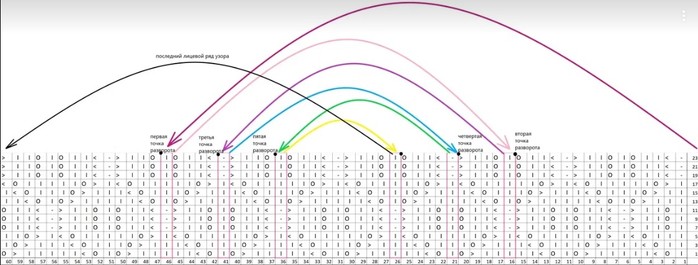
Place markers around the stitches adjacent to these on your garment. Begin shaping.
Row 1 (RS): Following the pattern repeat, knit up to the first turning point 46 stitches (for greater convenience, cross out the stitches you've worked from the chart), turn the knitting to the WS.
Row 2 (WS): form a double turning stitch, knit 30 stitches according to the pattern, turn the knitting to the RS.
Row 3 (RS): form a double turning stitch, knit 25 stitches according to the next row's chart, turn the knitting to the WS.
Row 4 (WS): form a double turning stitch, knit 20 stitches according to the pattern, turn the knitting to the RS.
Row 5 (RS): form a double turning stitch, knit 15 stitches according to the next row's chart.
Row 6 (WS): form a double turning stitch, knit 10 stitches according to the pattern, turn the knitting to the RS.
Row 7 (RS): form a double turning stitch, knit 9 stitches according to the next row's chart, dc, 4 stitches according to the previous row's chart, dc, 4 stitches according to the previous row's chart, dc, 14 stitches according to the previous row's chart.
Row 8: 15 stitches in pattern, dc, 4 stitches in pattern, dc, 4 stitches in pattern, dc, 34 stitches in pattern.
In the next row, bind off the stitches.
Leave the working yarn tail about 1.5 m.
Proceed to sewing the sleeve.
Provided the gauge matches the specified density, the sleeve should be sewn with the following step: 3 sleeve stitches = 4 armhole stitches.
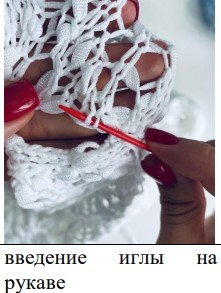
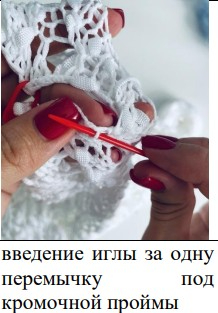
On the sleeve, pick up with a needle under both walls of the last stitch, and at the armhole — under one bridge under the edge stitch (and this 3 times in a row), then pick up the fourth sleeve stitch and insert the needle right under the two bridges at the armhole.
Watch the yarn tension so that the seam does not turn out tight.
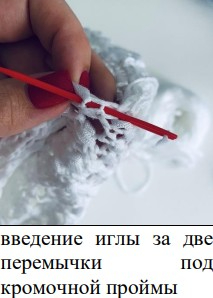
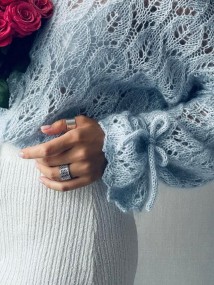
If you knit the sleeve with a crochet edging, after it is ready you should go back to the cast-on row, release the stitches from the extra thread (see video) and bind them off (not tight) (see video). Then, without cutting the yarn, proceed to crochet edging (see video)
The legend with symbols is provided in the “Neckline Edging” section.
To fix the sleeve with a tie you need to braid a cord 73-75 cm long (see video). Tie into a bow and thread the ribbing (see video).
Second method for size S-M
The sleeve stitches will be picked up along the armhole edge, starting from the underarm stitches on needles No. 5.5 (or on needles a half-size smaller than those you used to obtain the required gauge).
The garment is kept in stockinette stitch with the right side facing out. Insert the needle under both walls of the edge stitch. Pick up stitches with the following step: from 3 stitches pick up 2.
(i.e., from 12 stitches you should pick up 9 stitches) (see video). The number of picked-up stitches should be the same on both sides of the sleeve’s armhole.
Thus, we should have 60 sleeve stitches. We will continue knitting with the main size needles.
To ensure the sleeve has the correct shape and matches the angle of the shoulder slope, we will begin knitting with turning rows to “grow” the missing part.
The start of the row will be marked at the center of the sleeve's underarm.
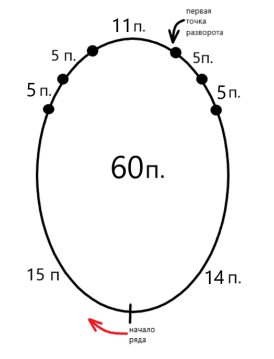
Row 1 (RS): (1 knit stitch, yarn over, 2 knit stitches, decrease, 1 purl stitch, decrease, 2 knit stitches, yarn over)* repeat 3 times, 1 knit stitch, yarn over, 2 knit stitches, decrease, 1 purl stitch, turn the knitting to the WS.
Row 2 (WS): form a double turning stitch from the knit stitch, 9 purl stitches, 1 knit stitch, turn the knitting to the RS.
Row 3 (knit side): form a double turning stitch from a purl stitch, decrease NL, 2 knit stitches, yarn over, 1 knit stitch, yarn over, 2 knit stitches, decrease NP, double stitch (purl), decrease NL, 2 knit stitches, yarn over, 1 knit stitch, turn the knitting to the wrong side.
Row 4 (purl side): form a double turning stitch from a purl stitch, 4 purl stitches, 1 knit stitch, 9 purl stitches, double stitch (knit) 5 purl stitches, turn the knitting to the knit side.
Row 5 (knit): form a double turning stitch from a knit stitch, yarn over (toward you), 2 knit stitches, decrease NP, 1 purl stitch, decrease NL, 2 knit stitches, yarn over, 1 knit stitch, yarn over, 2 knit stitches, decrease NP, 1 purl stitch, decrease NL, 2 knit stitches, yarn over, double stitch (knit), yarn over, 2 knit stitches, decrease NP, 1 purl stitch, turn the knitting to the purl side.
Row 6 (purl): form a double turning stitch from a knit stitch, 9 purl stitches, 1 knit stitch, 9 purl stitches, 1 knit stitch, 4 purl stitches, double stitch (purl), 4 purl stitches, 1 knit stitch, turn the knitting to the knit side.
Row 7 (knit): form a double turning stitch from a purl stitch, decrease NL, 2 knit stitches, yarn over, 1 knit stitch, yarn over, 2 knit stitches, decrease NP, 1 purl stitch, decrease NL, 2 knit stitches, yarn over, 1 knit stitch, yarn over, 2 knit stitches, decrease NP, 1 purl stitch, decrease NL, 2 knit stitches, yarn over, 1 knit stitch, yarn over, 2 knit stitches, decrease NP, double stitch (purl), decrease NL, 2 knit stitches, yarn over, 1 knit stitch, yarn over, 2 knit stitches, decrease NP, 1 purl stitch, decrease NL, 2 knit stitches, yarn over, MNR.
Row 8: 5 knit stitches, 1 purl, 9 knit stitches, double stitch (purl), (9 knit stitches, 1 purl) repeat 4 times, 4 knit stitches.
At this point the shaping of the sleeve angle is finished. We will continue knitting the sleeve in the round, following the pattern repeat.
We follow the diagram provided below.
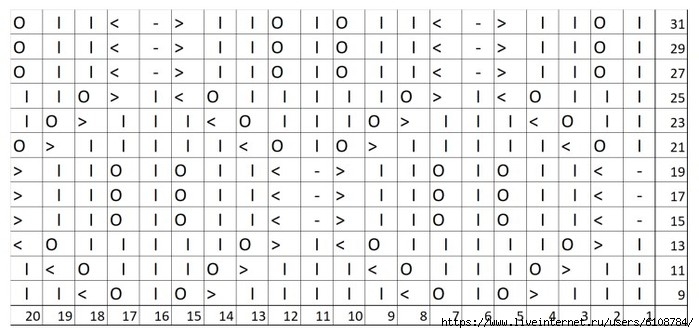
All odd rows are knitted according to the chart. Even rows – in pattern.
Repeat the pattern repeat from rows 9 to 32 as many times as needed.
During knitting, it is recommended to try on the sleeve to determine the desired length. If necessary, the pattern repeat can be finished by knitting any odd row.
The sleeve is straight. It is knitted without decreases.
When transitioning to cuffs, there should be 12 decreases: knit the last row in knit stitches and make decreases every 3 stitches.
The cuffs are knitted in 1x1 rib on needles size 2.5 – 3 (3-4 cm).
If you are knitting the sleeve with crochet edging, after its completion you should bind off the stitches. Then, without cutting the yarn, proceed to the crochet edging.
The chart with symbol definitions is provided in the section “Neckline Edging.”
To fix the sleeve with a tie, braid a cord 73-75 cm long. Tie into a bow and thread the ribbing.
Second method for size M-L
We will lift the sleeve stitches along the edge of the armhole, starting from the bound-off stitches on needles #5.5 (or on needles a half size smaller than those you used to obtain the required gauge).
The garment is kept with the right side facing out. Insert the needle under both walls of the edge stitch. Lift stitches with the following step: from 3 stitches pick up 1.
(i.e., from 12 stitches you should pick up 9 stitches), before and after the shoulder seam the step of picked-up stitches should be 2 stitches every 1 stitch. The number of picked-up stitches should be equal on both sides of the sleeve opening.
Thus, we should have 70 stitches for the sleeve. We will continue knitting on needles of the main size.
To ensure the sleeve has the correct shape and matches the angle of the shoulder slope, we will begin knitting with turning rows to “grow” the missing part.
The start of the row is conditionally marked in the center of the sleeve’s underarm.
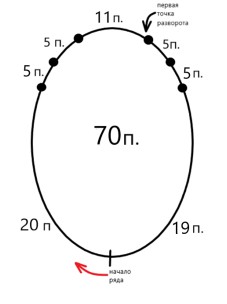
Row 1 (knit): (1 knit stitch, yarn over, 2 knit stitches, decrease NP, 1 purl, decrease NL, 2 knit stitches, yarn over) repeat 4 times, 1 knit stitch, turn the knitting to the purl side.
Row 2 (purl): form a double turning stitch from a purl stitch, 4 purl stitches, 1 knit stitch, 5 purl stitches, turn the knitting to the knit side.
Row 3 (knit): form a double turning stitch from a knit stitch, yarn over (toward you), 2 knit stitches, decrease NP, 1 purl stitch, decrease NL, 2 knit stitches, yarn over, double stitch (knit), yarn over, 2 knit stitches, decrease NP, 1 purl stitch, turn the knitting to the purl side.
Row 4 (purl): form a double turning stitch from a knit stitch, 9 purl stitches, 1 knit stitch, 4 purl stitches, double stitch (purl) 4 purl stitches, 1 knit stitch, turn the knitting to the knit side.
Row 5 (knit): form a double turning loop from a purl stitch, decrease on the left, 2 knit stitches, yarn over, 1 knit stitch, yarn over, 2 knit stitches, decrease on the right, 1 purl stitch, decrease on the left, 2 knit stitches, yarn over, 1 knit stitch, yarn over, 2 knit stitches, decrease on the right, double stitch (purl), decrease on the left, 2 knit stitches, yarn over, 1 knit stitch, turn the knitting to the purl side.
Row 6 (purl): form a double turning loop from a purl stitch, 4 purl stitches, 1 knit stitch, 9 purl stitches, 1 knit stitch, 9 purl stitches, double stitch (knit), 5 purl stitches, turn the knitting to the knit side.
Row 7 (knit): form a double turning loop from a knit stitch, yarn over (toward oneself), 2 knit stitches, NP., 1 purl stitch, decrease on the left, 2 knit stitches, yarn over, 1 knit stitch, yarn over, 2 knit stitches, decrease on the NP., 1 purl stitch, decrease on the left, 2 knit stitches, yarn over, 1 knit stitch, yarn over, 2 knit stitches, decrease on the NP., 1 purl stitch, decrease on the left, 2 knit stitches, something, double stitch (knit), yarn over, 2 knit stitches, NP., 1 purl stitch, decrease on the left, 2 knit stitches, yarn over, 1 knit, yarn over, 2 knit stitches, decrease on the NP., 1 purl stitch, decrease on the left, 2 knit stitches, yarn over, MNR.
Row 8: 5 knit stitches, 1 purl stitch, 9 knit stitches, 1 purl stitch, 4 knit stitches, double stitch (knit), 4 knit stitches, (1 purl stitch, 9 knit stitches)*repeat 4 times, 1 purl stitch, 4 knit stitches.